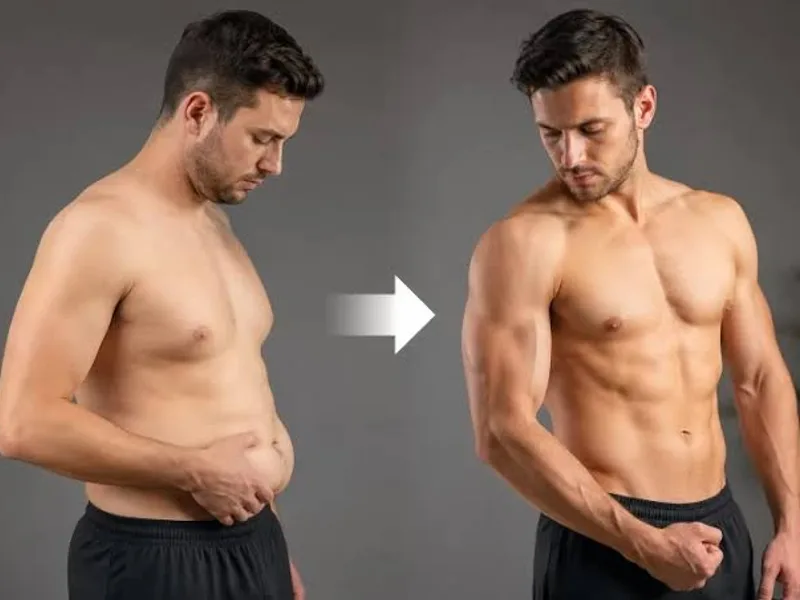
Why "Losing Fat" and "Gaining Muscle" Aren't the Same Goal
Most people walk into a gym thinking there's one goal: look better. But fat loss and muscle gain are actually two different biological processes, and they don't always cooperate.
Fat loss happens when your body burns more energy than it takes in. Muscle gain, on the other hand, usually needs extra energy and protein to repair and build tissue after training. Doing both at once means asking your body to do two things that normally pull in opposite directions.
That's not impossible. It's just harder than the phrase "just eat clean and lift weights" makes it sound.
What Body Recomposition Actually Means
Body recomposition is the technical term for losing fat and gaining muscle at roughly the same time, without huge swings in your overall body weight. The scale might barely move, but your body shape and composition change.
This is different from a typical "bulk" or "cut" cycle, where you deliberately gain weight to build muscle, then cut calories later to lose the fat that came along with it. Recomposition tries to skip the back-and-forth.
In clinical practice, this confuses a lot of people because their weight stays flat for weeks, and they assume nothing is working. It usually is. Just not in a way the bathroom scale can show.
Who Actually Sees Good Results With Recomp
Recomposition doesn't work equally well for everyone, and that's a fact worth being upfront about.
Beginners to strength training tend to see the best results. If your muscles haven't been challenged with resistance training before, your body is primed to build new tissue even while you're in a calorie deficit — a state where you eat slightly less than you burn.
People returning to training after a break also do well here, because muscle memory kicks in faster than building from zero. Advanced lifters, though, usually see slower or smaller changes. Their bodies are closer to their natural muscular ceiling, so simultaneous fat loss and muscle gain becomes a much narrower window.
Older adults and people managing conditions like insulin resistance may also see different timelines. This is one reason a quick chat with a dietitian or an endocrinologist is worth it before committing to an aggressive plan, especially if there's an existing hormonal or metabolic condition involved.
The Role of Protein (and Why More Isn't Always Better)
Protein is the building block your body uses to repair muscle fibers after exercise. Without enough of it, you can train hard and still lose muscle along with fat.
Most research on this topic points toward higher protein intake helping during a calorie deficit, but exact numbers vary by body weight, activity level, age, and health status. This is exactly the kind of detail where guessing can backfire, so getting a personalized number from a dietitian is more useful than following a number you saw on social media.
Protein timing gets a lot of hype too. Honestly? Total daily intake matters far more than whether you eat it right after a workout. The "anabolic window" panic is mostly marketing.
Training: Why Lifting Matters More Than Cardio Here
If the goal is recomposition, resistance training has to be the backbone of the plan, not an afterthought.
Cardio burns calories, which helps with fat loss, but it doesn't send your body the signal to preserve or build muscle. Lifting weights does. A mix of both is usually smarter than picking just one, but if you had to choose, strength training pulls more weight for this specific goal.
Recovery matters just as much as the workout itself. Muscles don't grow in the gym, they grow while you sleep and eat afterward. Skipping recovery is one of the most common — and quietly damaging — mistakes people make when they're impatient for results.
Sleep, Stress, and the Part Nobody Wants to Talk About
Poor sleep and chronic stress raise cortisol, a hormone that can make fat loss harder and muscle recovery slower. This isn't a minor footnote. It's often the missing piece for people who are doing "everything right" on paper but not seeing change.
If sleep problems or persistent fatigue are part of the picture, it's worth raising with a doctor rather than assuming it's just a discipline issue. A general physician can help rule out underlying causes before you blame your diet plan.
Realistic Expectations Matter
Body recomposition is slow. Visible changes often take 8 to 12 weeks of consistent effort, sometimes longer, and progress photos or measurements tend to show change before the scale does.
There isn't a solid, universally agreed-upon number for exactly how much fat loss or muscle gain to expect in a given month, and any article that gives you a precise figure without knowing your body is probably guessing. Be wary of exact promises