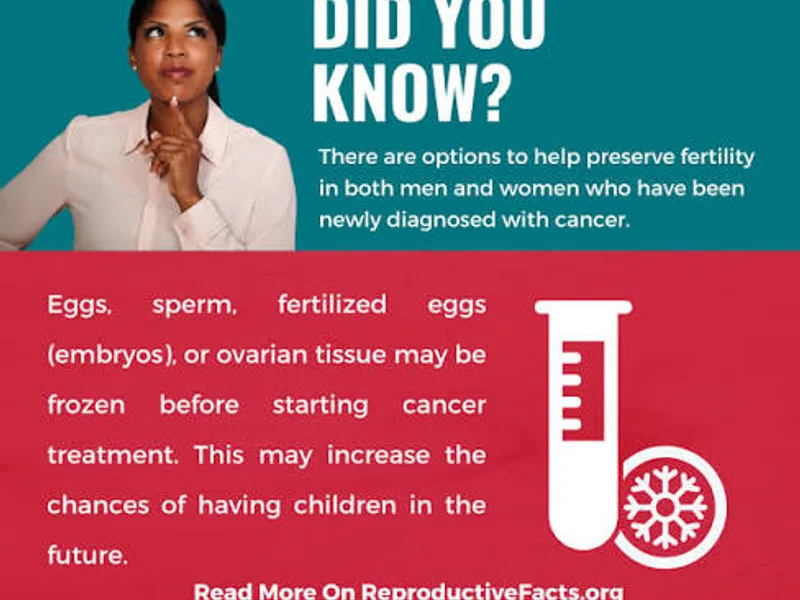
Why Fertility Preservation Awareness Matters
Fertility can be affected by more than age. Cancer treatment, some surgeries, reproductive conditions and certain medical treatments can also interfere with the ability to have biological children later.
That is why fertility preservation awareness matters. The key question is not simply, "Can I freeze my eggs or sperm?" It is whether preservation is medically appropriate, when it should happen and what it can realistically achieve.
DOCTAR's egg freezing guide for Indian women explains egg freezing, its potential benefits, risks and the factors that influence outcomes.
Fertility preservation is particularly important when a medical treatment may affect reproductive function. A discussion that happens before treatment can sometimes provide options that may be harder to pursue afterward.
What Does Fertility Preservation Mean?
Fertility preservation means storing reproductive cells or embryos for possible future use.
For women, this can include egg freezing, also called oocyte cryopreservation. For men, sperm can be collected and frozen. Embryos can also be created through assisted reproductive treatment and preserved for later use.
These approaches are not interchangeable. The most suitable option depends on age, health, reproductive plans, relationship circumstances and the reason preservation is being considered.
DOCTAR's fertility clinic guide discusses fertility preservation alongside IVF, IUI, egg freezing, sperm freezing and embryo freezing.
Who May Consider Fertility Preservation?
Fertility preservation can be relevant in several different situations.
One group includes people who are preparing for cancer treatment. Chemotherapy and radiation can sometimes damage the ovaries or testes, and the effect depends on the treatment and the individual.
DOCTAR's guide to pregnancy after chemotherapy explains why fertility can be affected by cancer treatment and discusses egg, embryo and ovarian tissue preservation.
Another group includes people who want to delay parenthood for personal reasons. Egg freezing may provide an option to preserve eggs at their current age, although it does not guarantee a future pregnancy.
The decision should be individual. A celebrity story, social-media post or fertility advertisement cannot determine whether preservation is appropriate for you.
Age Is One Part of the Picture
Egg quality generally declines with age, which is one reason age at freezing matters.
But fertility is not controlled by a single number. Ovarian reserve, which refers broadly to the remaining egg supply, can vary considerably between individuals of the same age.
DOCTAR's egg freezing resource discusses age, ovarian stimulation, egg retrieval and the limitations of egg freezing.
This is where online fertility discussions can become confusing. One person's experience should not be treated as a prediction for another person's reproductive future.
Egg Freezing: What Actually Happens?
Egg freezing usually begins with medication that stimulates the ovaries to develop several follicles, the small structures that contain eggs.
Doctors monitor the response using ultrasound and sometimes blood tests. Mature eggs are then collected through an egg-retrieval procedure and frozen using a rapid-freezing technique called vitrification.
The process requires medical supervision and laboratory support. It is not simply a matter of collecting eggs and putting them into long-term storage.
DOCTAR's fertility treatment information describes fertility assessment, hormone testing, ultrasound monitoring and egg retrieval as parts of assisted reproductive care.
Sperm Freezing Is Another Important Option
Fertility preservation is not only a women's health issue.
Men facing cancer treatment or other medical circumstances that could impair sperm production may be advised to consider sperm banking before treatment, depending on their individual situation.
Sperm cryopreservation involves collecting and freezing semen samples for possible future use. DOCTAR's reproductive health information for men discusses sperm banking as an established fertility-preservation approach in certain treatment situations.
For some men, timing is particularly important because treatment may affect sperm production.
Cancer Treatment Can Change the Conversation
Cancer treatment can shift fertility preservation from a personal planning choice to a time-sensitive medical discussion.
The effect on fertility depends on factors such as the person's age, treatment type, treatment intensity and reproductive health before treatment.
DOCTAR's cancer and fertility guide advises discussing fertility with the oncology and fertility teams before treatment where possible.
This does not mean every patient will become infertile after cancer treatment. Some people recover reproductive function; others may experience temporary or permanent changes.
The important point is timing. If fertility matters to the patient, the discussion should not be left until treatment is already underway.
Reproductive Conditions Can Affect Fertility
Fertility preservation awareness also means understanding conditions that can influence reproductive health.
PCOS, for example, can affect ovulation and menstrual regularity. DOCTAR's PCOS and menopause guide explains how hormonal changes can affect menstrual cycles and fertility.
Irregular periods can have several causes, including PCOS and other hormonal or reproductive problems. Persistent changes deserve medical attention rather than being dismissed as a normal variation.
Endometriosis is another important consideration. It can cause pelvic pain and may affect fertility in some people. DOCTAR's endometriosis information explains its relationship with pain, inflammation and fertility.
Severe period pain also deserves attention. DOCTAR's guide to painful periods and fertility explains why severe menstrual pain can sometimes be associated with conditions that affect reproductive health.
Ovarian Reserve Tests Need Careful Interpretation
People considering fertility preservation may hear about AMH, FSH and antral follicle count.
These tests can provide useful information about ovarian reserve and how someone might respond to ovarian stimulation. They do not, however, function as a simple fertility score or guarantee of future pregnancy.
DOCTAR's fertility assessment information describes tests including AMH, FSH, LH, estradiol and ultrasound-based antral follicle count in fertility assessment.
A result should therefore be interpreted alongside age, menstrual history, medical conditions and reproductive goals.
Fertility Tracking Has Limits
Fertility apps and hormone trackers can help people understand menstrual patterns and possible fertile windows.
But these tools do not measure every aspect of fertility. They also cannot replace a medical assessment when someone has persistent reproductive concerns.
DOCTAR's fertility tracking app guide explains when people may need professional evaluation, including persistent irregular periods, pelvic pain or known conditions such as PCOS and endometriosis.
The Mira fertility tracker guide similarly stresses that tracking data should not replace professional medical guidance.
Technology can provide information. It cannot provide the whole clinical picture.
Fertility Preservation Does Not Guarantee a Baby
This is perhaps the most important message in fertility preservation awareness.
Frozen eggs, sperm or embryos create an option for future treatment. They do not guarantee conception, a healthy pregnancy or a live birth.
With egg freezing, outcomes can depend on age at freezing, the number and maturity of eggs stored, laboratory performance and what happens when the eggs are eventually thawed and fertilised.
IVF may be used later, but treatment outcomes vary between individuals. DOCTAR's IVF and fertility treatment information outlines IVF and IUI as different assisted reproductive approaches.
That uncertainty should be discussed openly before anyone pays for preservation.
The Role of Fertility Specialists
A fertility specialist can help translate a general concern into an individual plan.
The consultation may cover reproductive history, age, menstrual patterns, previous surgery, medical conditions, ovarian reserve and the possible effects of future treatment.
For someone who has been trying to conceive rather than simply planning for future fertility, the situation is different. DOCTAR's infertility doctor guide discusses evaluation and treatment approaches including ovulation support, IUI and IVF.
A fertility clinic should also explain realistic outcomes, risks, laboratory processes and costs before treatment begins.
What About Fertility After 35?
Age becomes increasingly relevant to reproductive planning as fertility changes over time.
That does not mean pregnancy becomes impossible after a particular birthday. Many people conceive in their late 30s and beyond, while others may experience fertility difficulties earlier.
DOCTAR's perimenopause and pregnancy guide explains that fertility changes gradually during the years leading toward menopause rather than stopping suddenly on a specific date.
For someone considering preservation, the useful question is not simply, "Am I too young?" or "Am I too old?" It is, "What are my reproductive goals, and what does my individual assessment show?"
Fertility Preservation Is Also About Choice
There is an emotional side to fertility preservation that medical articles sometimes overlook.
People may feel pressure from family, relationships, career expectations or the fear of running out of time. A decision made under that pressure deserves careful counselling, not a sales pitch.
The goal of preservation is to create options where possible. It should not create another source of anxiety.
In clinical practice, fertility preservation is sometimes discussed too late because the immediate medical problem receives all the attention. For patients whose future fertility matters, bringing the conversation forward can be valuable.
Questions to Ask Before Fertility Preservation
A useful consultation should answer practical questions, not just explain a procedure.
Ask which preservation method is appropriate for your situation, how age and medical history affect the expected outcome, what the procedure involves, what complications are possible and whether more than one treatment cycle might be considered.
Ask about storage arrangements and future costs as well. The price of the initial procedure is not necessarily the full cost of using preserved eggs, sperm or embryos later.
If cancer treatment is planned, ask the oncology team and fertility specialist about preservation before treatment begins, when medically feasible.
Fertility Preservation and Future Pregnancy Planning
Preservation is only one part of reproductive planning.
Some people may eventually try to conceive naturally. Others may need IUI or IVF. Some may require treatment for conditions affecting ovulation, the uterus, fallopian tubes or sperm.
For women planning pregnancy after contraception, DOCTAR's pregnancy planning after IUD removal guide discusses factors such as ovulation, PCOS, uterine health and sperm health.
DOCTAR's preconception care information is also relevant for people preparing for pregnancy rather than preserving fertility for later.
The right plan depends on the person's circumstances.