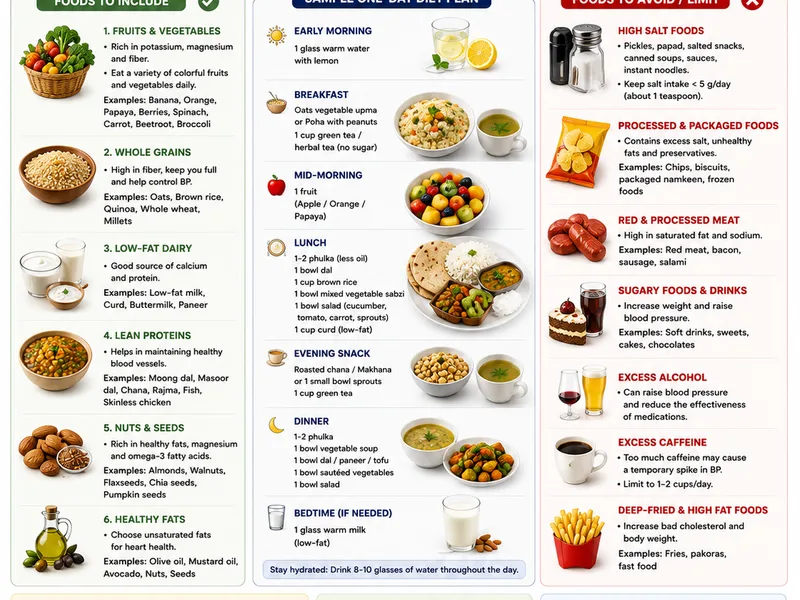
The foods most worth avoiding with hypertension aren't necessarily the ones that taste the saltiest — they're everyday staples like bread, deli meat, and canned soup, which quietly supply most of the sodium in a typical American diet. Roughly 75% of dietary sodium comes from processed, packaged, and restaurant food rather than the salt shaker at home.
That distinction changes where it's actually worth focusing attention. Here's what the evidence points to.
The American Heart Association has identified six food categories that contribute the most sodium to American diets overall, even though none of them necessarily taste overtly salty:
Breads and rolls. Yeast breads rank first among sodium contributors to the American diet — a single slice of whole wheat sandwich bread can contain about as much sodium as 22 potato chips, and it adds up meal after meal simply from being a daily staple.
Pizza. A single slice of frozen cheese pizza can contain 370–730 mg of sodium, and a restaurant slice often runs higher still — a combination of bread, sauce, and cheese that stacks sodium sources on top of each other.
Cold cuts and cured meats. Deli meats like ham, roast beef, and bologna are consistently high in sodium regardless of brand — even "low-salt" versions remain relatively high. Just six thin slices of deli meat can account for roughly half of a 1,500 mg daily sodium target.
Canned soups. A single cup of chicken noodle soup can contain close to 940 mg of sodium, nearly two-thirds of a lower daily target in one bowl.
Poultry (processed or seasoned). Even plain-looking chicken can be injected with a salt-water solution during processing — something worth checking for on the label, since it's a genuinely easy-to-miss source.
Sandwiches. As a category, sandwiches combine several of the items above — bread, deli meat, cheese, sauces — meaning a single lunch can quietly account for over half a day's recommended sodium.
[REVIEWER: add clinical insight here — e.g., which of these categories patients are most surprised to learn about, in your experience.]
Other High-Sodium Foods Worth Watching
Beyond the "salty six," a few other common items add up quickly:
Pickled and brined foods — pickles, kimchi, and sauerkraut can carry several hundred milligrams of sodium per serving
Fast food — often high in sodium by design, for shelf life and flavor consistency
Packaged snacks — chips, crackers, and some popcorn, though low- or no-sodium versions are widely available
Bottled sauces, dressings, and condiments — often overlooked, since they're used "just a splash at a time" but add up with repeated use
Canned or bottled tomato-based products, including tomato juice — fresh tomatoes are a lower-sodium alternative with comparable nutritional benefits
Foods High in Saturated Fat
Sodium isn't the only concern. Health guidance also points to limiting foods high in saturated fat, since these can affect cardiovascular health more broadly alongside blood pressure. Common sources include:
Fatty cuts of red meat and processed meats like sausage and bacon
Full-fat dairy products
Butter, lard, and tropical oils such as coconut or palm oil
Fried foods and many packaged baked goods
The American Heart Association generally recommends limiting alcohol as well — no more than two drinks a day for men and one for women — since excess intake is linked to higher blood pressure.
Added Sugar and Sweetened Beverages
Excess added sugar is linked to weight gain, which increases the heart's workload and raises blood pressure risk, and separately, to higher triglyceride levels, a type of blood fat linked to cardiovascular risk. The AHA generally recommends limiting added sugar to about 25 grams a day for women and 36 grams for men. Sugar-sweetened beverages are a particularly easy place for added sugar to accumulate, since a single serving can use up a large share of the daily target at once.
[REVIEWER: add clinical insight here — e.g., how you counsel patients on sugar intake specifically in the context of blood pressure, versus general weight management.]
What to Eat Instead
Avoiding these foods works best paired with foods that actively support healthy blood pressure — particularly those rich in potassium, which helps offset some of sodium's effects. Potassium-rich options include bananas, oranges, beans and lentils, spinach, broccoli, and salmon. Getting potassium from whole foods, rather than supplements, is generally the recommended approach, and a healthcare provider can advise on an appropriate target for your situation.
Practical Swaps That Don't Require Overhauling Everything
Choose fresh, unseasoned meats and cook them yourself rather than relying on deli counters or pre-seasoned packaged meat
Make sandwiches at home, going light on processed meat and cheese and heavy on vegetables
Check nutrition labels for sodium content, especially on bread, canned soup, and frozen meals — labels often reveal higher numbers than expected
Use herbs, spices, citrus juice, or vinegar in place of salt or bottled sauces for flavor
When ordering out, ask for low-sodium options or sauces on the side, since restaurant food is a major sodium source
Frequently Asked Questions
What are the worst foods for high blood pressure? Processed meats, canned soups, pizza, and bread are among the largest contributors to sodium intake in a typical diet, even though they don't always taste especially salty. These, along with foods high in saturated fat and added sugar, are generally recommended to be limited.
Is bread really bad for blood pressure? Bread itself isn't inherently unhealthy, but yeast breads are the single largest sodium contributor in the American diet overall, mainly because they're eaten so frequently. Choosing lower-sodium bread options and watching portion size can help.
How much sodium should someone with high blood pressure eat per day? General guidance suggests limiting sodium to 2,300 mg a day, with 1,500 mg a day considered an even lower, more protective target for some people. An appropriate personal target can vary, so it's worth confirming with a healthcare provider.
Can I still eat deli meat if I have high blood pressure? Occasional deli meat is unlikely to be harmful on its own, but it's one of the more concentrated sodium sources in a typical diet, and even "low-sodium" versions tend to remain relatively high. Fresh, home-cooked meat is generally a lower-sodium alternative.
Does sugar affect blood pressure the same way sodium does? Sugar and sodium affect blood pressure through different mechanisms — sodium directly affects fluid retention, while added sugar contributes to weight gain and higher triglycerides, both of which are separately linked to increased blood pressure risk.
The Takeaway
The food group most worth double-checking isn't the salt shaker — it's the bread aisle, the deli counter, and the soup can, since that's genuinely where most sodium hides in a typical diet. Start by reading labels on the staples you eat most often, since small, repeated swaps there tend to matter more than cutting out any single "worst" food entirely.