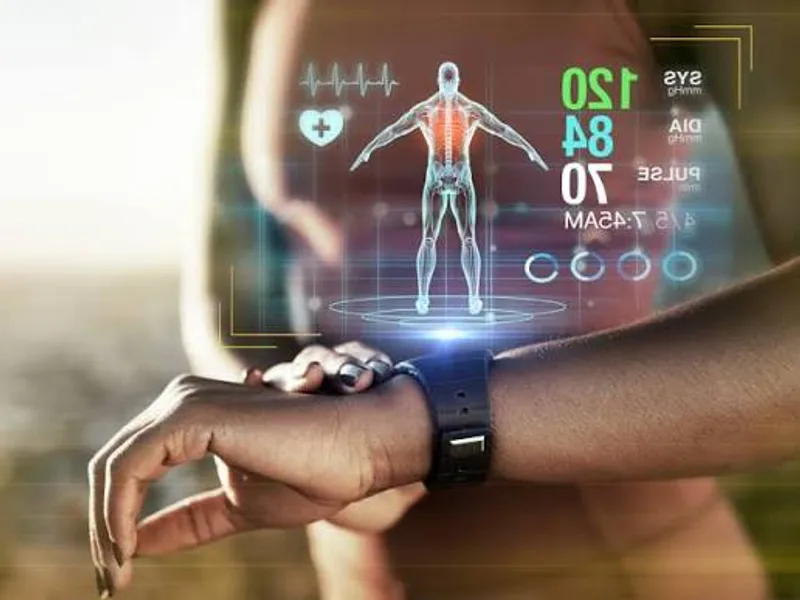
A smartwatch can now tell you much more than how many steps you took before dinner. Modern health tech wearables can continuously collect information about heart rate, activity, sleep and, on some devices, heart rhythm, oxygen saturation and other body signals.
That sounds impressive, and it is. But the more health information a watch produces, the easier it becomes to mistake a useful clue for a medical diagnosis.
Research supports that distinction. Reviews have generally found that some consumer wearables can measure steps and heart rate reasonably well, while measurements such as energy expenditure are considerably less reliable. Accuracy also changes between devices and real-world situations.
What can a smartwatch actually track?
Heart rate is one of the more useful measurements
Most smartwatches use optical sensors to estimate heart rate from changes in blood flow near the skin. This can provide useful information about resting heart rate, exercise response and longer-term trends.
For people interested in understanding their cardiovascular health, DOCTAR's guide to understanding a healthy heart rate provides useful background on what pulse readings mean.
A wearable can be particularly helpful when it shows a pattern rather than one isolated number. A single unusual reading may have many explanations, including movement, poor sensor contact or temporary changes in the body.
ECG features are different from ordinary heart-rate tracking
Some watches can record an electrocardiogram, or ECG. An ECG measures the heart's electrical activity, rather than simply estimating pulse from the skin.
That distinction matters. Certain wearable ECG features can help identify patterns that may suggest an irregular rhythm such as atrial fibrillation, but they do not rule out every heart problem.
A dedicated device such as KardiaMobile illustrates how portable heart-rhythm monitoring is becoming part of consumer healthcare technology. A clinician still needs to interpret concerning findings in context.
Sleep tracking is useful, but don't worship the score
Sleep tracking has become one of the most popular smartwatch features. Devices may estimate total sleep time, periods of wakefulness and different sleep stages.
That information can help users notice habits. If bedtime keeps shifting, sleep duration is consistently falling or nights become more disrupted, the trend may be worth discussing with a healthcare professional.
DOCTAR's sleep health resources also cover sleep trackers and the broader role of technology in understanding sleep.
But a "sleep score" is not a medical verdict. Different manufacturers use different algorithms, and a watch cannot directly observe everything happening in the brain during sleep.
Blood oxygen and other numbers need context
Some wearables estimate blood oxygen saturation, often called SpO2. Others track skin temperature, breathing rate, stress-related measures or body composition.
These features can be interesting, but they should not all be treated as equally reliable. A recent study examining wearable body-composition measurements found mixed validity, particularly for skeletal-muscle estimates, showing why a convenient number should not automatically be treated as a clinical measurement.
DOCTAR's Wearable Health Tech 2026 guide discusses several of these emerging sensors, including SpO2, ECG, heart-rate variability and skin temperature.
Can smartwatches detect disease?
Sometimes they can provide an early signal, but that is different from diagnosing a disease.
A 2024 systematic review and meta-analysis found promising results for some wearable-based detection tasks, including atrial fibrillation, while also concluding that further research is needed before wearables can be treated as reliable diagnostic tools across medical conditions.
That is probably the most sensible way to think about these devices: they are monitoring tools that may raise a question, not machines that always provide the answer.
In clinical practice, this is often missed because patients arrive with pages of smartwatch readings and assume the numbers speak for themselves. They don't. A doctor needs symptoms, medical history, examination and, when appropriate, conventional tests.
The biggest benefit may be spotting trends
The real strength of a wearable is not necessarily one perfect reading. It is the ability to collect information repeatedly.
Imagine that your resting heart rate has gradually changed over several weeks. Or your activity has fallen while your sleep has become more fragmented. Those trends can give a doctor useful context, especially when they match symptoms or other clinical findings.
DOCTAR's WHOOP 4.0 review looks at another approach, with emphasis on recovery, sleep, heart rate, respiratory rate and related measurements.
Likewise, Oura Ring focuses heavily on sleep, heart rate variability, temperature and recovery-related information.
Accuracy remains the catch
There is no single answer to the question, "How accurate is my smartwatch?"
It depends on what the watch is measuring, which device is being used, how it is worn and what the person is doing. A systematic review found relatively good performance for some step-count and heart-rate measurements, but energy-expenditure estimates were much less reliable.
Movement can also interfere with optical heart-rate sensors. Research on smartwatch photoplethysmography, or PPG, has identified motion and environmental factors as potential sources of error.
That is why a watch reading should be interpreted alongside the situation in which it was recorded.
Smartwatch data can also create anxiety
More information is not automatically better information.
Someone who checks heart rate dozens of times a day may start worrying about ordinary fluctuations. Exercise, caffeine, stress, illness, sleep and even the simple act of walking across a room can change heart rate.
The same problem can occur with sleep scores. A poor score can make someone anxious about having slept badly, which is hardly helpful when trying to rest.
The goal should be to use wearable data as a health diary, not as a constant alarm system.
Choosing a health wearable
The best device is not necessarily the one with the longest list of sensors.
DOCTAR's guide to fitness trackers for women compares different approaches to activity, heart-rate, sleep and women's-health tracking. Its Fitbit Charge 5 review also examines features such as heart rate, ECG, sleep and stress-related measurements.
Before buying, ask a simpler question: What do I actually want to track?
Someone training for a marathon may care about GPS, exercise load and recovery. Someone trying to improve sleep may value comfortable overnight wear and useful sleep trends. A person monitoring a known heart condition should discuss the suitability of a particular device with their clinician rather than choosing one solely from an online ranking.
Health data brings a privacy question too
A smartwatch can collect intimate information about your body and daily routine. Heart rate, sleep patterns, location, activity and health-related app data can together reveal far more than a simple step count.
DOCTAR's article on AI, medical data and privacy discusses wearable and health-app data as part of the broader medical-data privacy issue.
Before switching on a new health feature, check what information the app collects, where it is stored, which services receive it and what permissions you have granted.
Where wearable technology is heading
The next generation of wearables is likely to focus less on isolated numbers and more on combining multiple signals.
DOCTAR's wearable health technology overview describes the move toward continuous monitoring, AI-assisted analysis and remote patient monitoring.
There is real promise here. But better technology does not remove the need for good medical judgment.
Other DOCTAR resources show how wearable technology is already moving into more specific healthcare applications, including insulin pumps, medical alert wearables for older adults and health and wellness product reviews.