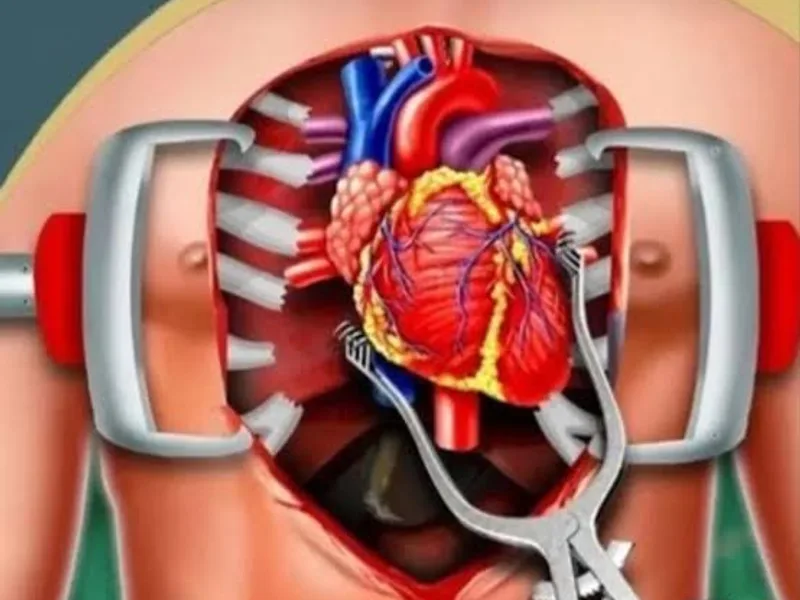
Coronary artery bypass grafting, usually just called bypass surgery or CABG, remains one of the most reliable treatments doctors have for blocked heart arteries. It works by taking a healthy blood vessel from elsewhere in the body, often from the chest wall or a leg, and using it to reroute blood flow around a blocked section of a coronary artery.
It's not a new idea. Surgeons have been performing bypass procedures since the 1960s, and the traditional version, done through a full sternotomy where the breastbone is split open, is still considered the gold standard for complex, multi-vessel disease. That's worth saying plainly, because a lot of coverage of "new" surgical techniques implies the old method is obsolete. It isn't, not for everyone.
What has changed, gradually and meaningfully, is how much of that surgery now happens through much smaller incisions, sometimes with robotic assistance, and how doctors decide who's actually a good candidate for that.
The Real Shift: Robotic and Minimally Invasive Approaches
The biggest technical advance covered in recent 2026 surgical literature isn't one single new device, it's the steady maturing of robotic-assisted minimally invasive direct coronary bypass, known in the field as RA-MIDCAB. Instead of opening the chest fully, surgeons use a robotic system to harvest the artery needed for the graft through small incisions, then complete the actual bypass connection through a small opening between the ribs.
A more advanced version, totally endoscopic coronary bypass or TECAB, goes a step further and avoids the larger opening entirely, performing the whole procedure through small ports. It's technically demanding and not available everywhere, which is an honest limitation worth naming rather than glossing over.
The appeal is straightforward: smaller incisions generally mean less trauma, shorter hospital stays, and fewer wound complications. A recent narrative review covering the evolution of these techniques through mid-2026 found that robotic and minimally invasive approaches can match or come close to traditional CABG on measures like how long the graft stays open over time, while offering faster recovery for well-selected patients.
Who Actually Qualifies, and Why That Matters More Than the Headline
In clinical practice, this is the detail that gets lost in "robotic surgery is the future" style coverage: not every patient with blocked arteries is a good candidate for the minimally invasive route. Complex, multi-vessel disease, certain anatomical patterns, or prior chest surgery can all push a surgeon back toward the traditional open approach, because it still offers the most complete and thoroughly proven access to the heart.
There's also a practical reality behind the scenes. Robotic and totally endoscopic bypass require a surgical team with specific training and a real learning curve, and the equipment itself is expensive. That's part of why these techniques remain concentrated at specialized centers rather than being standard everywhere, even years after being introduced.
Hybrid approaches have also gained ground, combining a minimally invasive bypass graft to one artery with a separate procedure, called angioplasty, to open up other blocked arteries using a catheter instead of surgery. For patients with disease in more than one vessel, this kind of combined strategy can sometimes offer a middle path between fully open surgery and a purely catheter-based approach.
Recovery Differences Worth Knowing About
Recovery timelines are where patients tend to notice the biggest practical difference. Traditional open bypass through a full sternotomy typically means a longer hospital stay and several weeks of restricted activity while the breastbone heals. Minimally invasive and robotic approaches, when appropriate for the patient, have generally been associated with shorter hospital stays and a quicker return to normal activity in published case series, since there's no breastbone to heal from in the first place.
That said, "quicker recovery" doesn't mean risk-free. Any heart surgery, minimally invasive or otherwise, carries real risks including bleeding, infection, irregular heart rhythms afterward, and in rare cases, stroke. A surgeon weighing these techniques against each other is doing exactly that, weighing trade-offs, not picking a fashionable new option over a supposedly outdated one.
What This Means If Bypass Surgery Is on the Table for You
Should you specifically ask about robotic or minimally invasive bypass if you're facing this decision? It's a fair question to raise, yes, but go in without assuming it's automatically the better choice for your case.
The right next step is a direct conversation with a cardiologist or cardiac surgeon about your specific coronary anatomy, since that's what actually determines which approach fits. Getting imaging and test results reviewed properly by a general surgeon or cardiac specialist beforehand matters more than which technique sounds more advanced on paper.