Heavy drinking is again under the microscope
The latest heavy drinking death risk data are hard to ignore. A large prospective study of 340,924 UK Biobank participants found that people with high alcohol consumption had a 24% higher relative risk of death from any cause compared with people who never drank or drank only occasionally. The same high-intake group had a 36% higher relative risk of cancer death and a 14% higher relative risk of cardiovascular death.
The study followed participants for an average of 13.4 years and recorded 22,381 deaths. Those figures make the research substantial, but they do not mean that every heavy drinker faces exactly the same level of risk. Age, smoking, existing illness, genetics, drinking pattern and other lifestyle factors can change an individual's risk.
For readers looking for cardiovascular care, Doctar currently lists cardiologists in Kolkata, including specialists practising across Alipore, Salt Lake and other parts of the city.
What does “high alcohol intake” mean?
The study did not simply ask whether someone was a “heavy drinker.” Researchers grouped participants according to the amount of alcohol they reported consuming each week and day, using sex-specific thresholds.
The highest category was more than 40 grams of alcohol per day for men and more than 20 grams per day for women. The researchers then compared mortality outcomes with people reporting 20 grams or less per week.
That distinction matters. Alcohol content varies substantially between beer, wine and spirits, so looking only at the number of glasses or bottles can be misleading.
Doctar also has a broader doctor directory in Kolkata, where people can search by specialty rather than trying to interpret research numbers without professional context.
Why the overall death risk rises
Alcohol affects more than the liver. Long-term alcohol use is associated with cardiovascular disease, several cancers, liver disease, mental health conditions and alcohol-use disorders. The World Health Organization says alcohol has a causal role in more than 200 diseases, injuries and other health conditions.
Heavy drinking can also increase risks that do not appear neatly in a mortality table. Injuries, impaired driving, falls, violence and other acute harms can occur alongside longer-term disease.
The WHO also says there is no completely risk-free form of alcohol consumption. Risk depends on the amount and frequency of drinking as well as factors such as age, health status and individual circumstances.
For someone already experiencing heart-related concerns, a cardiologist in Kolkata can help assess cardiovascular risk rather than relying on general alcohol statistics.
Cancer risk deserves particular attention
Cancer is one of the clearest reasons researchers remain cautious about alcohol. The WHO identifies alcohol as an established carcinogen and links alcohol consumption with cancers including those of the breast, liver, head and neck, oesophagus and colorectum.
The WHO's cancer guidance says there is no safe level of alcohol consumption in relation to cancer risk, and that the risk generally increases as consumption increases.
That is important when interpreting studies in which some lower drinking groups appear to have better outcomes. A lower observed mortality rate in one group does not automatically mean alcohol caused the apparent benefit.
Patients concerned about liver health can look for a gastroenterologist in Kolkata, while people with known or suspected liver disease should discuss alcohol exposure directly with their healthcare professional.
The “moderate drinking is healthy” debate
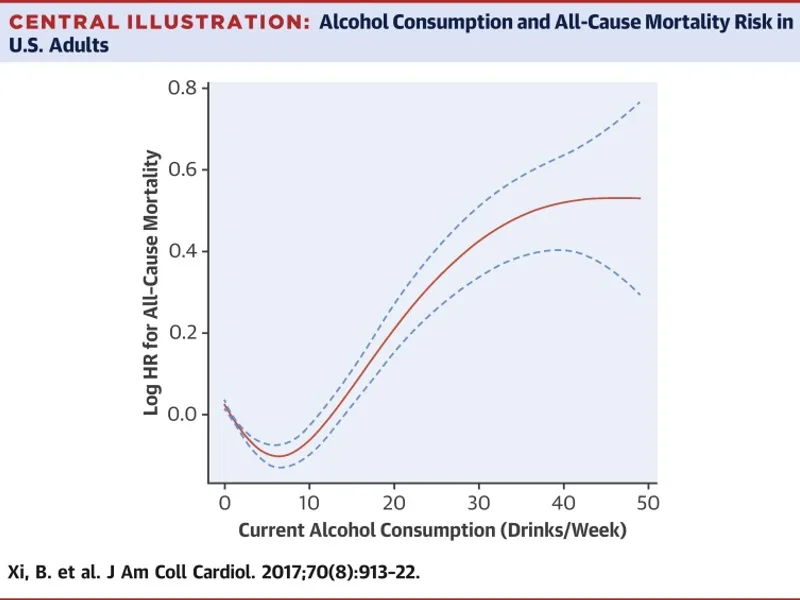
For years, some observational studies appeared to show that light or moderate drinkers had better cardiovascular outcomes than non-drinkers. That finding helped create the familiar idea that a small amount of alcohol might be protective.
The problem is that observational research cannot fully separate alcohol from the lifestyle of the person drinking it. Moderate drinkers may differ from non-drinkers in diet, income, physical activity, smoking habits, social circumstances and access to healthcare.
The WHO has specifically warned that earlier claims about protective effects can be influenced by the comparison groups and statistical methods used.
In clinical practice, this is often missed because patients understandably want a simple answer: Is one drink good or bad? The answer depends on the person, but alcohol should not be started for supposed health benefits.
People managing diabetes or metabolic conditions can also explore Doctar's endocrinologist listings in Kolkata, which include specialists in hormone and diabetes care.
Does the type of alcohol change the risk?
This is where recent research becomes particularly interesting.
The 2026 UK Biobank study found different mortality associations for wine, beer/cider and spirits at lower intake levels. However, at high overall alcohol intake, the direction was much less reassuring: greater alcohol consumption was associated with greater mortality.
The finding should not be turned into “wine is safe” or “spirits are the problem.” Ethanol is the alcohol component shared by alcoholic drinks, and the WHO states that alcohol-related cancer risk applies regardless of whether the alcohol comes from beer, wine or spirits.
Doctar's gastroenterology and digestive-health specialists can be useful for readers seeking appropriate care for persistent digestive or liver-related concerns.
What heavy drinking can do to the heart
Alcohol-related cardiovascular damage can take several forms. Long-term heavy consumption has been associated with conditions including high blood pressure, irregular heart rhythms and alcohol-related cardiomyopathy, a weakening of the heart muscle.
The latest mortality study found a 14% higher relative risk of cardiovascular death in the high-consumption group compared with never or occasional drinkers.
That number is a population-level association, not an individual forecast. Someone with high blood pressure, previous heart disease or other cardiovascular risks may have a very different clinical picture.
Doctar profiles include experienced specialists such as Dr. Shuvo Dutta, Dr. Bhuban Majhi, Dr. Anil Mishra and Dr. ASIM KUMAR BARDHAN. Their profiles provide qualifications, experience and practice information.
Alcohol can affect mental health too
Death statistics often focus on cancer and heart disease, but alcohol-related harm can also involve mental health and dependence.
The WHO lists depression, anxiety and alcohol-use disorders among conditions associated with alcohol consumption.
Someone who finds it difficult to control drinking may need more than general lifestyle advice. Professional assessment can help determine what kind of support is appropriate.
Doctar also lists mental-health facilities such as the Mental Health Research Centre in Tollygunge, which reports psychiatric and addiction-psychiatry services.
A psychiatrist may also be appropriate for people dealing with alcohol dependence alongside anxiety, depression or other mental-health concerns. Doctar's psychiatrist listings provide another route for finding specialist care, while Dr. ARINDAM MONDAL is one psychiatrist profile listed on the platform.
What the numbers do not tell you
A mortality percentage cannot tell an individual patient exactly what will happen next year, or even whether alcohol is the main contributor to their current health problem.
Research like the UK Biobank analysis is valuable because it identifies patterns across a very large population. But researchers rely on reported alcohol intake and observational data, so the study cannot prove that alcohol consumption alone caused every difference in mortality.
That distinction is especially important when headlines turn relative-risk figures into personal predictions.
For patients with neurological symptoms or concerns that may overlap with alcohol-related conditions, Doctar lists specialists such as Dr. Nikhil Prasun, Dr. Amit Haldar, Dr. S.S. Chowdhury and Dr. Haseeb Hassan.
The practical message from heavy drinking death risk data
The strongest takeaway from current evidence is not that one alcoholic beverage is “healthy” and another is dangerous. Higher alcohol consumption is consistently associated with greater health risk, and the burden includes cancer, cardiovascular disease, liver disease and mental-health problems.
Anyone worried about their drinking, liver, heart, blood pressure or mental health should discuss the issue with a qualified healthcare professional. Do not use this article to diagnose yourself or to make abrupt changes to prescribed treatment.