A hospital is designed to treat infection, but it can also become a place where vulnerable patients are exposed to infectious germs.
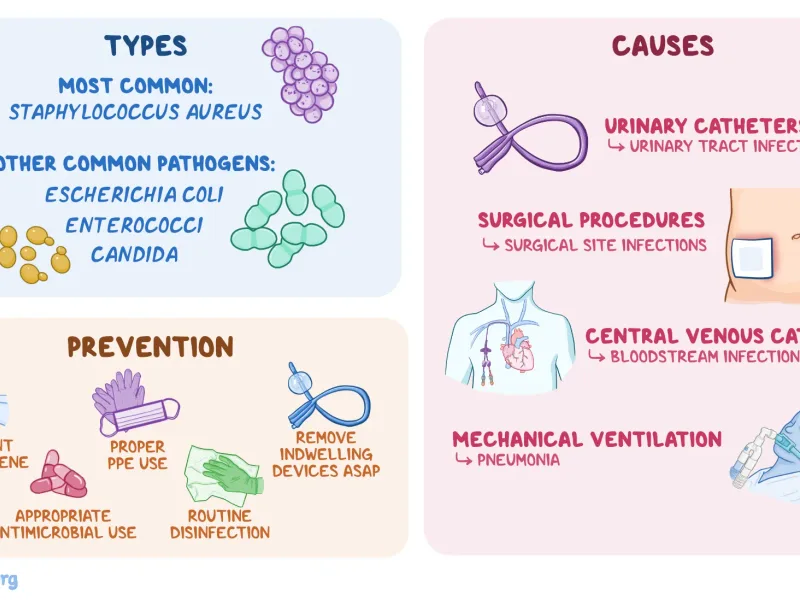
Hospital-acquired infections, more commonly called healthcare-associated infections or HAIs, are infections patients develop while receiving healthcare or soon afterward. The CDC lists surgical-site infections, catheter-associated urinary tract infections, central-line bloodstream infections and ventilator-associated pneumonia among the major types.
That sounds alarming, but it needs context. Hospitals have extensive infection-prevention systems precisely because patients may be exposed to procedures, equipment and other people while their bodies are already under stress.
The World Health Organization says many HAIs can be prevented through effective infection prevention and control measures, including appropriate water, sanitation and hygiene.
What Causes Hospital-Acquired Infections?
HAIs usually occur when germs find a route into the body or move from one person or surface to another.
A surgical incision, urinary catheter, intravenous line or breathing tube can create an opportunity for microorganisms to enter areas that are normally protected. The CDC also identifies unclean hands and improper cleaning or reuse of equipment as possible routes of transmission.
Patients can also arrive at a hospital already carrying bacteria without knowing it. Some organisms may cause no symptoms until illness, surgery or another medical problem weakens the body's defenses.
DOCTAR's guide to MRSA and hospital-acquired infections explains how methicillin-resistant Staphylococcus aureus can cause infections ranging from skin problems to serious bloodstream or lung infections.
Who Faces Higher Risk?
The risk is not evenly distributed across hospital patients.
People in intensive care, those undergoing major surgery, premature babies, older adults and people with weakened immune systems can be particularly vulnerable. Prolonged hospital stays and invasive medical devices can add further exposure.
DOCTAR's neonatal meningitis guide discusses how premature newborns in neonatal intensive care may face greater infection risks because of immature immunity, prolonged hospitalization and invasive procedures.
Patients receiving cancer treatment can also be vulnerable. DOCTAR's infection guide for people with B-cell lymphoma covers bacterial infections, pneumonia, urinary infections and sepsis among concerns that may arise when immunity is reduced.
Surgical Site Infections
Surgery creates a deliberate opening in the body's protective barrier, so preventing infection around an operation is a major patient-safety task.
A surgical-site infection can involve the skin around an incision or deeper tissues and organs. Symptoms can include increasing redness, swelling, warmth, pain or drainage, although the exact presentation varies.
DOCTAR's post-surgery infection guide explains why changes around a surgical wound should not simply be dismissed as part of normal recovery.
Other conditions can also begin around damaged skin. DOCTAR's cellulitis guide explains how bacteria can enter through surgical wounds, cuts and other breaks in the skin.
A separate cellulitis overview describes how a bacterial skin infection can spread into deeper tissue when it is not appropriately managed.
Catheters and Urinary Infections
Urinary catheters can be extremely useful, but they are also an important infection-control consideration.
A catheter creates a pathway into the urinary tract, and the longer it remains in place, the greater the opportunity for bacteria to enter. DOCTAR's recurrent UTI guide specifically identifies catheter use as a risk factor, particularly in hospitalized and long-term-care patients.
Some catheter-related infections can become serious if they spread beyond the bladder. DOCTAR's UTI emergency guide describes warning symptoms that may require urgent medical attention.
A rare but serious example is emphysematous cystitis. DOCTAR's emphysematous cystitis guide also identifies indwelling urinary catheters as a possible risk factor.
Central Lines and Bloodstream Infections
Central venous lines can be essential for patients who need long-term intravenous treatment or intensive care.
The problem is that any device entering the bloodstream requires careful insertion and maintenance. Infection at or around a central line can potentially develop into a bloodstream infection.
DOCTAR's PICC line and port guide describes signs such as redness, swelling, warmth, pus or fever that should be reported to the healthcare team.
Its chemotherapy port guide also discusses infection as a potential concern around implanted ports.
This is why sterile technique, proper dressing care and regular assessment of whether a device is still necessary matter so much.
Pneumonia in Hospitalized Patients
Breathing support can save a life, but invasive ventilation can introduce additional infection risks.
Ventilator-associated pneumonia is one of the HAIs recognized by the CDC. Patients who are critically ill may also have difficulty clearing secretions and may require procedures that increase exposure.
DOCTAR's pneumonia guide for older adults specifically identifies healthcare-associated pneumonia as a form that can occur in hospitals or long-term-care facilities.
The site's pneumonia guide for children provides additional information about pneumonia in younger patients.
Antibiotic Resistance Adds Another Layer
A hospital-acquired infection can be harder to treat when the organism is resistant to commonly used antibiotics.
MRSA is one well-known example. DOCTAR's MRSA guide explains that hospital-associated MRSA can affect the bloodstream, lungs and surgical sites.
Another resistant organism is methicillin-resistant Staphylococcus epidermidis. DOCTAR's MRSE versus MRSA guide discusses how these bacteria can be associated with medical devices and healthcare exposure.
DOCTAR's Gram-positive bacteria guide explains why laboratory testing and antibiotic-susceptibility testing can help clinicians choose appropriate treatment.
In clinical practice, this is often missed because the focus naturally falls on treating the infection itself. But infection control and antibiotic stewardship have to happen alongside treatment if hospitals want to prevent the next case.
How Hospitals Reduce Infection Risk
Infection prevention is not one procedure. It is a chain of small practices that need to work consistently.
Hand hygiene remains central. WHO describes infection prevention and control as an evidence-based approach covering hand hygiene, antimicrobial resistance, safe injections, water and sanitation, and prevention of healthcare-associated infections in India.
The CDC similarly describes infection control as measures that prevent or stop infections from spreading in healthcare settings.
WHO's 2025 patient-safety goals also emphasize hand hygiene, environmental cleaning, sterile equipment, safe management of invasive devices and appropriate use of personal protective equipment.
DOCTAR's hospital infection-control guidance discusses infection-control practices as an important part of evaluating hospital quality.
Its guide to hospitals in Godda similarly highlights sterilization, hand hygiene and surgical-site infection prevention.
What Patients and Families Can Do
Patients cannot control every part of infection prevention, but they can participate.
Hand hygiene is one of the simplest measures. Patients and visitors should clean their hands at appropriate times and avoid touching wounds, catheters or medical devices unnecessarily.
Visitors who are sick should also follow hospital restrictions rather than assuming a quick visit is harmless.
DOCTAR's doctor-on-call guide for Uttar Dinajpur notes that people recovering after surgery or those with weakened immunity may benefit from avoiding unnecessary healthcare exposure when appropriate.
Its doctor-on-call guide for Dumka also discusses how remote or home-based consultations may reduce exposure for selected patients, while stressing that serious illness still requires appropriate medical care.
Warning Signs After Hospital Care
An infection does not always appear immediately.
After surgery or hospitalization, symptoms such as worsening wound redness, increasing pain, pus or unusual drainage, persistent fever, chills, new breathing difficulty or sudden deterioration should be discussed with a healthcare professional.
A fever alone does not prove that an HAI has occurred. Many hospitalized patients have non-infectious reasons for fever, and diagnosis may require examination, blood tests, cultures or imaging.
DOCTAR's cellulitis warning guide highlights rapidly spreading redness, severe pain, fever and chills as reasons for prompt medical attention.
For urinary symptoms, DOCTAR's Streptococcus UTI guide explains why some bacterial urinary infections can become more serious when they spread.
Why Infection Control Is a Quality Issue
A hospital's infection-control programme tells patients something important about how the institution approaches safety.
WHO says HAIs remain a daily threat in healthcare settings and that a substantial proportion can be prevented through infection-prevention measures and basic water, sanitation and hygiene services.
That makes infection prevention more than a housekeeping concern. It involves nurses, doctors, surgeons, laboratory teams, pharmacists, cleaning staff, administrators and patients.
DOCTAR's hospital-selection guide for Sahibganj advises patients to consider infection-control practices when assessing healthcare facilities.
The hospital guide for Bokaro similarly lists infection-control measures among patient-safety considerations.
The Goal Is Prevention, Not Fear
Hospitals remain essential places for surgery, emergency treatment, childbirth, cancer care and intensive care. The existence of HAI risk does not mean patients should avoid necessary medical treatment.
The better response is informed care: strong infection-control systems, appropriate use of invasive devices, careful antibiotic prescribing, clean equipment and good communication with patients.
For families, the practical role is modest but useful. Clean your hands, follow hospital instructions, protect surgical wounds and tell the healthcare team when something changes.