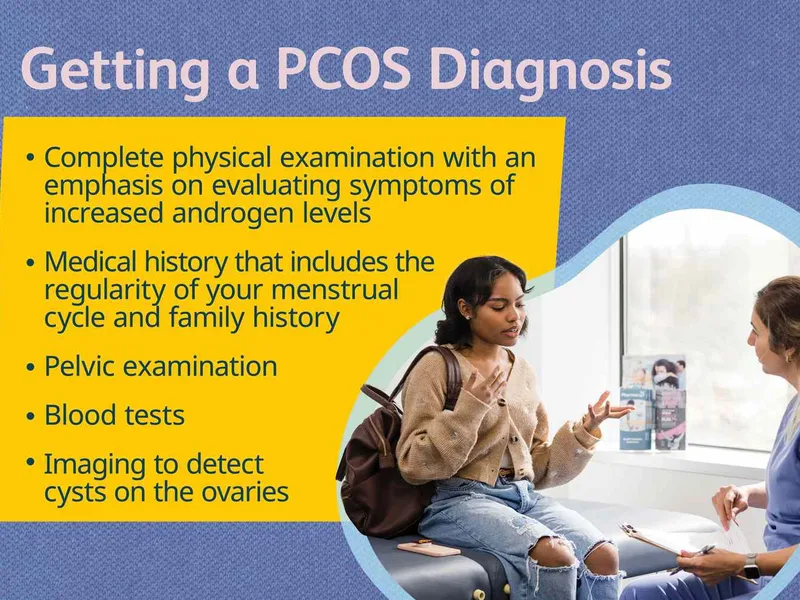
How doctors diagnose PCOS
There is no single blood test that says, “This is PCOS.” Diagnosis usually involves medical history, symptoms, physical assessment and selected tests.
Depending on the situation, a clinician may assess menstrual patterns, signs of higher androgen levels, thyroid function, blood sugar or other hormone-related conditions. An ultrasound may also be considered, but seeing multiple small follicles in the ovaries does not by itself establish PCOS.
This is where online symptom checklists can become misleading. A person can have PCOS without the classic ultrasound appearance, while someone with ovarian cyst-like findings may not have PCOS at all.
For patients who need a broader hormonal assessment, an endocrinologist consultation can be considered alongside gynecological care.
PCOS and weight: the conversation needs care
Weight can be part of the PCOS picture, but it should not become the entire conversation.
Some people with PCOS gain weight more easily or have difficulty losing it. Others are not overweight at all. The condition can still affect menstrual cycles, hormones and metabolic health in people with a lower body weight.
A sustainable eating pattern, regular physical activity and adequate sleep can support overall health. But there is no single “PCOS diet” that works for everyone, and extreme calorie restriction or unverified supplements are not sensible substitutes for medical care.
If blood sugar or cholesterol is a concern, an endocrinologist can help assess the wider metabolic picture. Doctar lists endocrinologists in Kolkata who manage hormonal and metabolic conditions.
Does PCOS always cause infertility?
No. PCOS can interfere with regular ovulation, but many people with PCOS become pregnant, either naturally or with medical support when needed.
For someone trying to conceive, the focus is usually on understanding whether ovulation is occurring and whether there are other factors affecting fertility. Treatment depends on age, medical history, reproductive goals and other findings.
A gynecologist with fertility experience can help determine what evaluation is appropriate. Doctar's gynecologist profile for Dr. Sunipa Chatterjee notes her work in infertility and reproductive health.
Treatment depends on what you need help with
PCOS treatment is not one-size-fits-all. A person who is not trying to become pregnant may need help with cycle control, acne or excess hair, while someone trying to conceive may need an approach focused on ovulation.
Doctors may use hormonal medicines, fertility treatments or medicines aimed at specific metabolic problems depending on the patient's circumstances. The choice should come from a clinician rather than from social media recommendations.
Lifestyle changes can also be part of management. Regular movement, nutritious meals, adequate sleep and attention to metabolic health are useful foundations, but they should support medical care rather than replace it.
Doctar's endocrinology services include specialist care for hormonal and metabolic health.
PCOS can matter beyond fertility
PCOS is a long-term health issue, not just a condition that matters when someone wants a baby.
Some people with PCOS have increased risks related to blood sugar, cholesterol, blood pressure and the uterine lining, particularly when menstrual periods are very infrequent. Individual risk varies, so the appropriate monitoring plan should be discussed with a clinician.
Mental health deserves attention too. Living with acne, unwanted hair growth, weight changes or fertility concerns can affect confidence and emotional wellbeing. If anxiety, low mood or distress becomes persistent, it deserves medical attention rather than being dismissed as part of PCOS.
A doctor such as Dr. Rachna Mazumder, endocrinologist, may be relevant when hormonal and metabolic concerns overlap.
Choosing the right doctor
A gynecologist is often a sensible starting point for menstrual irregularity, PCOS symptoms and fertility concerns. An endocrinologist may be useful when blood sugar, insulin-related concerns or other hormonal conditions need closer assessment.
Doctar also lists individual gynecologists such as Dr. Damayanti Banerjee, Dr. Priyanka Sinha, Dr. Sujata Datta, and Dr. Prachi Sharda.
For additional specialist options, patients can review Dr. Sudipta Dutta, Dr. Sujit Bhattacharya, Dr. Subir Ray, and Dr. Debashis Maitra.
Doctar's PCOS and menopause guide is another relevant internal resource for readers interested in how PCOS may relate to later reproductive health.