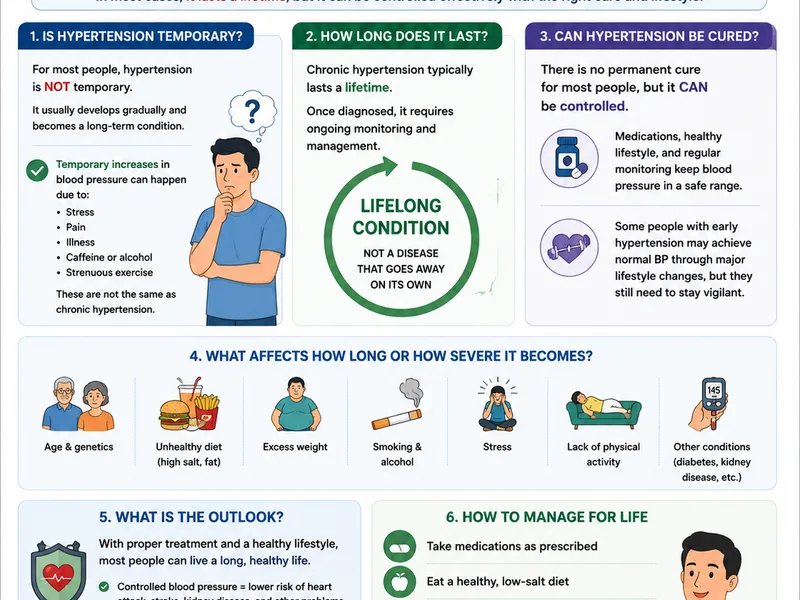
For most people, hypertension lasts for life. It's classified as a chronic condition, meaning it typically doesn't go away on its own — but it can be controlled indefinitely with treatment, and in some specific cases, it resolves completely once its cause is addressed.
That single sentence hides a lot of nuance, and the answer really depends on which type of hypertension a person has.
Chronic (Primary) Hypertension: A Lifelong Condition
Roughly 90–95% of hypertension cases are "primary" or "essential" hypertension — high blood pressure with no single identifiable cause, developing gradually from a mix of genetics, age, diet, and lifestyle factors. This is the type most people mean when they say "high blood pressure."
Primary hypertension doesn't resolve on its own. [REVIEWER: add clinical insight here — e.g., what you typically tell patients about the "lifelong" framing, and how it affects their mindset toward treatment.] Once it develops, the medical consensus is that it persists indefinitely without intervention. That doesn't mean a person is stuck with dangerously high readings forever, though — it means ongoing management, not a cure, is the realistic goal.
Population data backs up how common and persistent this condition is. National health survey data shows hypertension remains above public health targets, with nearly half of U.S. adults affected and only about a quarter of those with high blood pressure achieving full control of it. Among adults 85 and older, hypertension is the single most common chronic condition, affecting roughly two-thirds of that age group.
Secondary Hypertension: This Type Can Go Away
Secondary hypertension is different. It's high blood pressure caused by an identifiable underlying issue — kidney disease, a hormonal disorder, sleep apnea, or certain medications, for example. Because there's a specific trigger, treating that trigger can bring blood pressure back down to normal, sometimes fully resolving the hypertension.
This is the category where "how long does it last" has a more hopeful answer: it can last only as long as the underlying cause is active and untreated.
Gestational and Pregnancy-Related Hypertension
Hypertension that develops during pregnancy — gestational hypertension — typically resolves after delivery, usually within a matter of weeks. It's distinct from chronic hypertension that existed before pregnancy or was diagnosed in the first 20 weeks, which persists after birth just as it would in a non-pregnant adult. [REVIEWER: add clinical insight here — e.g., guidance on postpartum blood pressure monitoring timelines.]
Medication- or Substance-Induced Hypertension
Certain medications (decongestants, NSAIDs, some hormonal treatments) and substances (excess caffeine, alcohol, stimulants) can raise blood pressure temporarily. In these cases, blood pressure often normalizes within days to weeks after the substance is stopped, though this should be confirmed with a doctor rather than assumed.
A few factors shape how long elevated blood pressure sticks around for a given person:
Type of hypertension. Primary hypertension is lifelong; secondary, gestational, and substance-induced forms can resolve.
How early it's caught. Research tracking hypertension duration has found that a longer duration of uncontrolled high blood pressure is associated with greater cardiovascular risk — meaning earlier diagnosis and treatment doesn't just shorten suffering, it changes long-term outcomes.
Treatment adherence. Hypertension is described by health authorities as treatable even when it isn't curable — consistent medication use, monitoring, and lifestyle changes can keep it controlled indefinitely, even if it never technically "ends."
Lifestyle factors. Diet (particularly sodium intake), physical activity, weight, and stress management all influence how easily blood pressure stays in a healthy range.
Living With a Lifelong Diagnosis
For the majority of people with primary hypertension, the more useful question isn't "when will this end" but "how well can this be controlled." The chronic disease management model — regular monitoring, medication as prescribed, and lifestyle adjustment — is what keeps a lifelong diagnosis from translating into lifelong health damage.
Frequently Asked Questions
Does hypertension ever go away completely? Primary hypertension, the most common type, typically doesn't go away — it's managed long-term rather than cured. Secondary hypertension, caused by an identifiable condition or medication, can resolve once that underlying cause is treated or removed.
How long does high blood pressure last after pregnancy? Gestational hypertension usually resolves within a few weeks after delivery. If blood pressure stays elevated longer, or existed before pregnancy, it's typically reclassified as chronic hypertension requiring ongoing care.
Can lifestyle changes cure hypertension? Lifestyle changes — lower sodium intake, regular exercise, weight management — can significantly lower blood pressure and sometimes bring it into a normal range without medication. This is different from a permanent cure, since the underlying tendency toward high blood pressure can return if those habits lapse.
Is hypertension considered a disability or permanent illness? Hypertension is classified medically as a chronic condition, meaning it's expected to persist over time rather than resolve like an acute illness. It's not automatically a disability, but uncontrolled hypertension can contribute to conditions that are.
How quickly can blood pressure medication lower hypertension? Many blood pressure medications begin lowering readings within days to a few weeks, though reaching a stable, controlled target often takes longer as a doctor adjusts dosage or combination of drugs.
The Takeaway
If you've just been diagnosed with hypertension, the honest answer is that it will probably be part of your life going forward — but "lifelong" doesn't mean "unmanageable." The exceptions (pregnancy-related, medication-induced, or secondary hypertension tied to a fixable cause) are worth ruling out with a doctor, since they change the outlook considerably. Either way, the timeline matters less than what happens next: consistent monitoring and treatment.