Understanding the Mosquito Behind Dengue
Dengue spreads through the bite of an infected Aedes aegypti or Aedes albopictus mosquito, not from person to person directly. These mosquitoes are most active during early morning and late afternoon, unlike the mosquitoes associated with malaria, which tend to bite at night.
Aedes mosquitoes thrive in urban and suburban areas and can breed in surprisingly small containers — a bottle cap, a discarded tire, or a clogged gutter is enough.
Eliminate Standing Water Around the Home
Breeding site control is considered the most effective long-term dengue prevention strategy, since it targets mosquitoes before they can bite anyone.
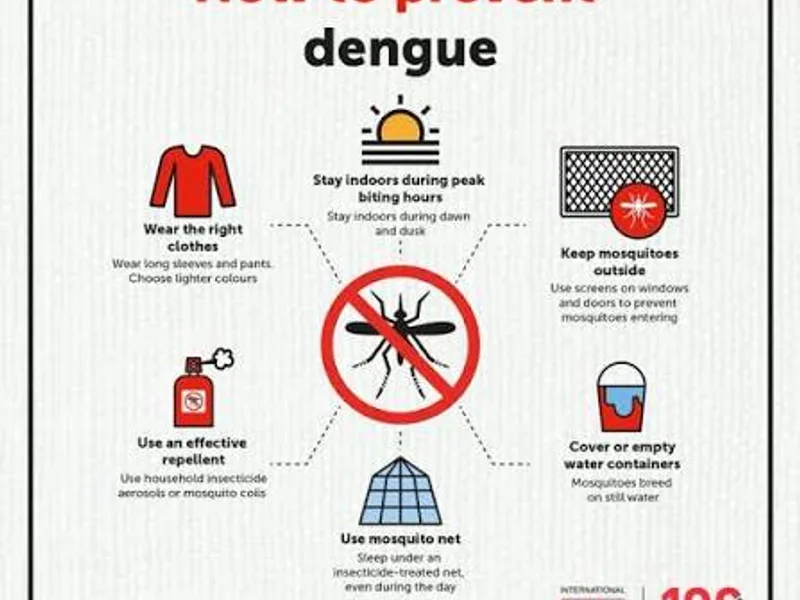
Empty and scrub containers that collect water — buckets, flowerpot trays, birdbaths — at least once a week, since mosquito eggs can survive on dry surfaces and hatch when they get wet again.
Cover water storage containers tightly with lids or mesh if water can't be emptied regularly.
Clear gutters and drains of debris that can trap water after rain.
Dispose of or store tires, cans, and other trash that can collect rainwater, even in small amounts.
A single bottle cap of stagnant water is enough for Aedes mosquitoes to lay eggs, which is why community-wide cleanup matters as much as individual households.
Protect Against Mosquito Bites
Even with breeding control, bite prevention adds another layer of protection, especially in areas with known dengue transmission.
EPA-registered insect repellents containing DEET, picaridin, IR3535, oil of lemon eucalyptus, para-menthane-diol, or 2-undecanone are recommended by the CDC for effective mosquito protection.
Long sleeves and long pants reduce exposed skin during peak Aedes activity hours (dawn and dusk, though these mosquitoes can bite throughout the day).
Permethrin-treated clothing offers additional protection and remains effective through multiple washes.
Apply sunscreen first, then repellent, if using both, following CDC guidance on product layering.
Physical barriers reduce indoor exposure, which matters since Aedes mosquitoes often rest indoors between bites.
Window and door screens in good repair keep mosquitoes from entering living spaces.
Air conditioning, where available, reduces the need for open windows and doors.
Bed nets are less critical for dengue than for night-biting mosquitoes but can help those resting during the day, including young children napping.
Who's Most at Risk
Dengue risk is highest in tropical and subtropical regions with established Aedes populations, but travelers to these areas are also at risk.
Infants, pregnant women, adults over 65, and people with a prior dengue infection face a higher risk of severe disease, according to the CDC, since a second dengue infection with a different serotype carries greater risk of complications than a first infection.
[REVIEWER: add clinical insight here — e.g., how you counsel higher-risk patients or travelers on prevention before a trip]
A dengue vaccine exists but has specific eligibility requirements. According to the CDC, the vaccine is recommended only for children aged 9–16 with laboratory-confirmed previous dengue infection living in areas where dengue is common, since vaccinating those without prior infection can increase the risk of severe disease with a first natural infection.
Vaccination doesn't replace mosquito bite prevention and breeding site control, even for eligible individuals. A doctor can advise on eligibility and whether vaccination makes sense for a specific situation.
Frequently Asked Questions
What time of day are dengue mosquitoes most active?
Aedes mosquitoes that spread dengue are most active during early morning and late afternoon, though they can bite throughout the day. This differs from malaria-carrying mosquitoes, which are primarily active at night.
Does DEET actually work against dengue mosquitoes?
Yes. EPA-registered repellents containing DEET are recommended by the CDC for protection against Aedes mosquitoes. Following label instructions for concentration and reapplication timing matters for effectiveness.
Can dengue mosquitoes breed indoors?
Yes. Aedes mosquitoes can breed in small water containers indoors, such as vases, plant saucers, or pet water bowls, not just outdoor standing water. Checking indoor containers weekly is part of effective prevention.
Is there a vaccine to prevent dengue?
A dengue vaccine exists but is only recommended by the CDC for children aged 9–16 with confirmed prior dengue infection in high-transmission areas. It isn't a substitute for mosquito bite prevention for the general population.
How is dengue different from malaria in terms of prevention?
Dengue-carrying Aedes mosquitoes bite mainly during the day and breed in small water containers, while malaria-carrying Anopheles mosquitoes bite at night and breed in larger bodies of water. Bed nets matter more for malaria; daytime repellent use matters more for dengue