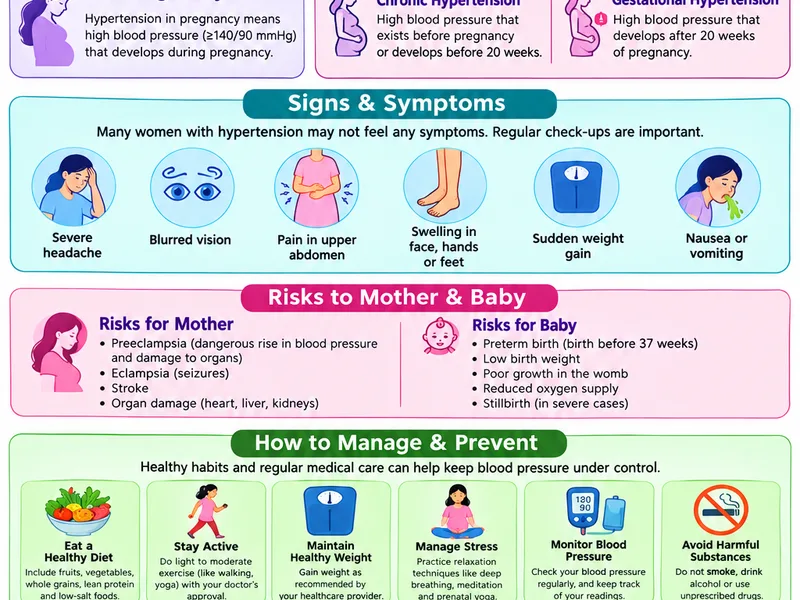
Hypertension during pregnancy falls into several distinct categories: chronic hypertension that existed before pregnancy, gestational hypertension that develops after 20 weeks without other complications, and preeclampsia, a more serious multi-system condition that can develop with or without a prior hypertension diagnosis. According to the American College of Obstetricians and Gynecologists (ACOG), high blood pressure usually causes no symptoms on its own, but severe or uncontrolled hypertension during pregnancy can create serious problems for both the pregnant person and the fetus.
[REVIEWER: add clinical insight here — e.g., how you counsel patients on the difference between routine prenatal blood pressure checks and more frequent monitoring once a hypertensive disorder is suspected]
The main types of hypertensive disorders in pregnancy
Chronic hypertension refers to high blood pressure that was present before pregnancy or diagnosed before 20 weeks of gestation. It carries its own monitoring needs throughout pregnancy and raises the risk of developing superimposed preeclampsia later on.
Gestational hypertension is defined by ACOG as new-onset high blood pressure developing after 20 weeks of pregnancy, without the protein-in-urine finding (proteinuria) or other severe features associated with preeclampsia. Most people with gestational hypertension have only a modest blood pressure increase, though some go on to develop more severe hypertension or preeclampsia, which is why ongoing monitoring matters even for a milder initial diagnosis.
Preeclampsia is a more serious, pregnancy-specific condition involving new-onset hypertension typically after 20 weeks, often together with signs that other organ systems are affected. According to a practice bulletin from ACOG summarized in American Family Physician, preeclampsia occurs in up to 8% of pregnancies globally and is one of the leading causes of maternal death worldwide.
Eclampsia is the most severe manifestation, defined as new-onset seizures in someone with a hypertensive disorder of pregnancy that can't be explained by another cause. It represents a medical emergency and a significant contributor to maternal death globally.
How preeclampsia is diagnosed
Preeclampsia was historically defined by new-onset hypertension combined with proteinuria, but current ACOG criteria recognize that the diagnosis can be made without proteinuria if hypertension appears alongside other specific findings — including a low platelet count, signs of kidney or liver dysfunction, fluid in the lungs, or a new headache that doesn't respond to medication and has no other explanation.
If a blood pressure reading during pregnancy comes back high, ACOG notes it's typically confirmed with a repeat reading, along with a urine test to check for protein and blood tests to assess liver and kidney function and platelet count. This layered approach reflects that a single elevated reading isn't enough on its own to diagnose preeclampsia — it's the combination of findings that matters.
[REVIEWER: add clinical insight here — e.g., how frequently you see gestational hypertension progress to preeclampsia in your practice, and what that monitoring conversation looks like]
Warning signs that need urgent attention
Because high blood pressure itself often has no symptoms, ACOG emphasizes watching for specific warning signs that can indicate preeclampsia is developing or worsening, especially in the second half of pregnancy. These include a severe or persistent headache that doesn't improve, vision changes such as blurriness, seeing spots, or sensitivity to light, pain in the upper right side of the abdomen or below the ribs, sudden swelling in the face or hands, shortness of breath, and nausea or vomiting that's new or severe.
Anyone experiencing these symptoms during pregnancy, particularly in the second half, should contact their obstetric provider right away rather than waiting for a scheduled appointment — ACOG specifically frames this as a "call right away" situation, not a "mention at the next visit" one.
Risk factors worth knowing
Research on hypertensive disorders of pregnancy points to several established risk factors: having a first pregnancy, carrying multiples, a previous history of preeclampsia, obesity, and pre-existing conditions such as chronic hypertension or diabetes. Age at the extremes — younger than 20 or older than 40 — has also been associated with increased risk in some research. Having any of these risk factors doesn't mean preeclampsia will develop, but it's a reason for closer monitoring throughout pregnancy.
How these conditions are monitored and managed
ACOG notes that people with gestational hypertension are typically monitored frequently, often weekly, to watch for signs of progression to preeclampsia and to make sure blood pressure doesn't rise to dangerous levels. Severe hypertension in pregnancy — a systolic reading of 160 mm Hg or higher, or a diastolic reading of 110 mm Hg or higher — is treated as a signal of serious risk requiring closer management.
Management decisions balance limiting complications for the pregnant person against delivering as healthy a baby as possible, and they depend heavily on how far along the pregnancy is and whether severe features are present. Current guidance summarized in American Family Physician notes that preeclampsia or gestational hypertension with severe features at 34 weeks or later generally leads to delivery, while earlier in pregnancy, closer monitoring without immediate delivery may be considered depending on the specific clinical picture.
What happens after delivery
Gestational hypertension usually resolves after childbirth, according to ACOG, but it's not without longer-term significance — having had gestational hypertension increases the risk of developing high blood pressure later in life. That's a reason for continued blood pressure awareness well beyond the postpartum period, not just during pregnancy itself.
A practical takeaway
If you're pregnant, know the specific warning signs — severe headache, vision changes, upper abdominal pain, sudden swelling, and new shortness of breath — and treat any of them as a same-day call to your provider, not something to mention at your next scheduled visit. If you've had gestational hypertension or preeclampsia, ask your provider what that means for your blood pressure monitoring after delivery, since the risk doesn't necessarily end when the pregnancy does.
FAQ
What's the difference between gestational hypertension and preeclampsia? Gestational hypertension is new-onset high blood pressure after 20 weeks without proteinuria or other severe features. Preeclampsia involves hypertension along with signs of other organ system involvement, such as proteinuria, low platelets, or liver or kidney dysfunction, and carries a higher risk of complications.
What are the warning signs of preeclampsia? Key warning signs include a severe or persistent headache, vision changes like blurriness or light sensitivity, pain in the upper abdomen, sudden swelling, and shortness of breath. ACOG advises calling your obstetric provider immediately if these develop, especially in the second half of pregnancy.
Does gestational hypertension go away after birth? Usually, yes. ACOG notes gestational hypertension typically resolves after childbirth, though having had it increases the risk of developing high blood pressure later in life, which is a reason to stay attentive to blood pressure after delivery.
How common is preeclampsia? Preeclampsia occurs in up to 8% of pregnancies globally, according to ACOG guidance summarized in American Family Physician, and is one of the leading causes of maternal death worldwide, making early recognition and monitoring important.
Can hypertension during pregnancy be prevented? Not entirely, but some risk can be managed. Sources note that treating pre-existing hypertension before pregnancy and certain preventive measures may reduce risk for some people; anyone with risk factors like obesity, chronic hypertension, or a prior history of preeclampsia should discuss individualized prevention strategies with their provider.