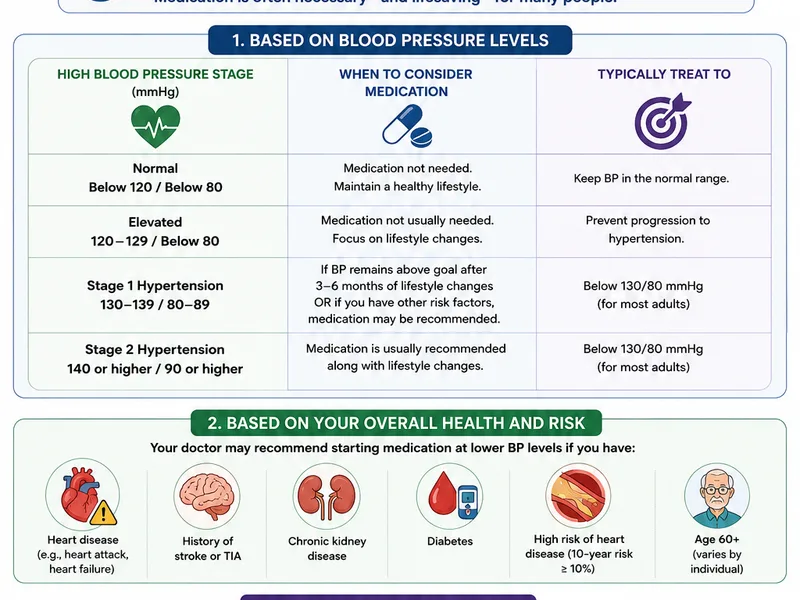
There's no single recovery time for hypertension, because "recovery" means different things depending on the treatment. Blood pressure medication can start working within hours to days, lifestyle changes typically take a few weeks to show measurable results, and doctors generally allow three to six months to judge whether lifestyle changes alone are enough before considering medication.
That range surprises a lot of people expecting a quick before-and-after. Here's what actually happens at each stage.
The First Few Days: Medication Response
For people who start blood pressure medication, some effect can show up fast. Certain calcium channel blockers begin working almost immediately, though it can still take a few weeks to reach their full effect. Angiotensin receptor blockers may start acting within about an hour, with full impact building over three to six weeks.
[REVIEWER: add clinical insight here — e.g., what you tell patients to expect in the first week of starting a new blood pressure medication, and warning signs that would prompt a follow-up sooner than scheduled.]
Some structured lifestyle programs report even faster shifts. One medically supervised program has reported that within just a few days of intensive diet and exercise changes, some participants' blood pressure dropped enough that their medications needed to be reduced. That's not the typical at-home experience, but it illustrates how quickly the body can respond under the right conditions.
Two to Four Weeks: Early Lifestyle Effects
For most people making changes on their own — without a supervised program — the first meaningful movement in blood pressure numbers from diet and exercise tends to show up within two to four weeks. A study following men with hypertension found significantly healthier blood pressure levels within three weeks of starting a structured diet-and-exercise program. Reducing sodium intake gradually has also been shown to lower blood pressure over roughly four weeks.
This is also the point where home monitoring becomes genuinely useful — checking blood pressure with an upper-arm cuff, ideally in the morning before medication or breakfast, helps track whether early changes are actually moving the needle.
One to Three Months: Steady Control
Getting blood pressure to move is one thing; getting it to stay in a healthy range consistently is another. Steady, dependable control from sodium reduction and other habit changes often takes one to three months of consistent effort, not just a couple of good weeks.
This is also roughly the window randomized trials use to measure real impact — a six-month lifestyle-change trial in adults with hypertension found a meaningful reduction in systolic blood pressure compared with usual care, with benefits building steadily rather than appearing all at once.
Three to Six Months: The Decision Point
Three to six months is a meaningful marker for another reason: it's roughly the window health guidelines point to for deciding whether lifestyle changes alone are working. A 2021 American Heart Association scientific statement recommended that people with mildly elevated blood pressure (130–139/80–89 mmHg) try lifestyle changes first, and consider adding medication if blood pressure hasn't improved after about six months.
That timeline isn't a failure point — it's simply the point where a doctor can meaningfully assess whether lifestyle changes are enough on their own, or whether medication should be added alongside them (not usually instead of them).
For most adults, hypertension is a chronic condition rather than a temporary illness, so it helps to think of these timelines as milestones in ongoing management rather than a finish line. Even after blood pressure normalizes, both medication and healthy habits typically need to continue — stopping either one can allow blood pressure to climb back up.
[REVIEWER: add clinical insight here — e.g., how you counsel patients who feel discouraged that "recovery" doesn't mean they can stop treatment.]
What Can Slow Recovery Time Down
A few factors commonly stretch these timelines out:
Starting blood pressure level. Higher starting readings generally take longer to bring into a healthy range and may need medication sooner rather than waiting out the full lifestyle-change window.
Inconsistency. Sporadic exercise or diet changes reset a lot of the progress; consistency, not intensity, tends to predict success.
Underlying causes. If high blood pressure is secondary to another condition (kidney disease, sleep apnea, certain medications), timelines depend on how quickly that root cause can be treated.
Age and other health conditions. Personal risk factors affect how aggressively a doctor may want to intervene, which can shorten the "wait and see" period.
Frequently Asked Questions
How fast does blood pressure medication start working? Many blood pressure medications begin having some effect within hours to days, but reaching their full impact typically takes a few weeks. Your doctor may adjust the dose or add a second medication if targets aren't met within that window.
How long before lifestyle changes lower blood pressure? Initial improvements from diet and exercise changes often appear within two to four weeks, with more dependable, steady control typically building over one to three months of consistent habits.
How long should I try lifestyle changes before starting medication? Health guidelines generally suggest three to six months of consistent lifestyle changes for people with mildly elevated blood pressure before considering medication, though your doctor may recommend starting sooner depending on your overall risk.
Can hypertension fully recover without medication? Some people bring blood pressure into a healthy range through diet, exercise, and weight management alone, especially with mild elevations. However, this generally requires maintaining those habits indefinitely, since blood pressure can rise again if they lapse.
Does blood pressure ever go back to normal permanently? For some people with secondary or temporary causes of high blood pressure, yes — treating the underlying cause can normalize it long-term. For primary hypertension, blood pressure can be kept in a normal range, but this generally requires continued treatment rather than a one-time recovery.
The Takeaway
If you're a few weeks into treatment and don't see dramatic change yet, that's normal — early movement in the first few weeks, real stabilization over one to three months, and a full reassessment around the three-to-six-month mark is a realistic timeline, not a slow one. The more useful question to track with your doctor isn't "when will this be over," but "are my numbers trending the right way at each checkpoint."