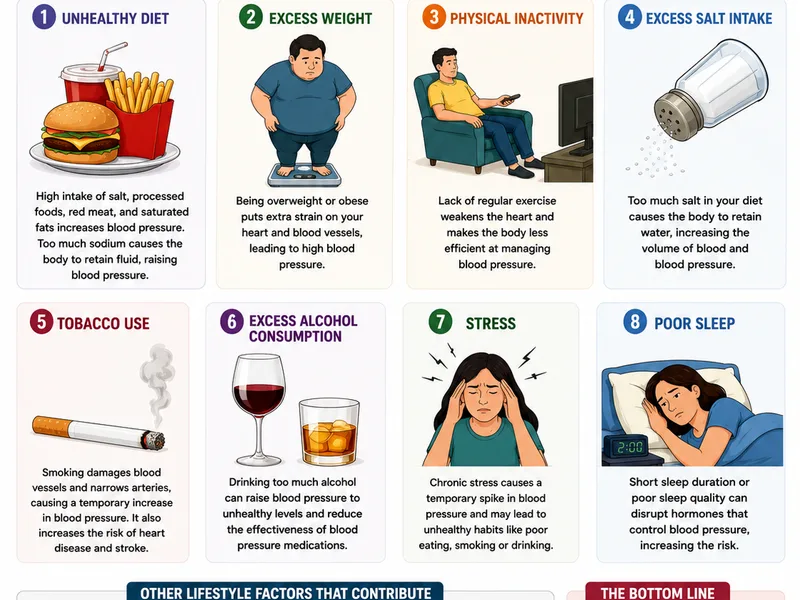
Hypertension risk factors fall into two groups: things you can't change, like age, family history, and race, and things you can, like diet, physical activity, weight, and alcohol use. Nearly half of U.S. adults already have high blood pressure, which makes understanding your personal risk factors a genuinely useful first step, whether you're trying to catch it early or prevent it altogether.
Here's what actually moves the needle, broken into what you can and can't control.
Age. The risk of high blood pressure increases with age. Until around age 64, high blood pressure is more common in men; after age 65, women are more likely to develop it.
Family history. Having a parent or sibling with hypertension raises your own risk. Genetics play some role, though exactly how much varies from person to person.
Race and ethnicity. High blood pressure is particularly common among Black adults in the U.S., and it tends to develop at an earlier age in Black people than in white people. Risk also varies by ethnicity more broadly, and your risk profile is worth discussing with a doctor as part of routine care.
[REVIEWER: add clinical insight here — e.g., how you talk with patients about fixed risk factors like family history or age without making the conversation feel fatalistic.]
None of these factors can be changed, but they do help determine how closely blood pressure should be monitored and how proactively the factors below should be managed.
Risk Factors You Can Change
Physical inactivity. A sedentary lifestyle is directly linked to higher risk for high blood pressure, largely because the heart and blood vessels function less efficiently without regular activity.
Unhealthy diet. Diets heavy in processed foods tend to be high in sodium, saturated fat, and trans fat, while providing too little potassium — a combination linked to higher blood pressure.
Excess weight. Having overweight or obesity means the heart has to work harder to pump blood and oxygen through the body, which adds strain to the heart and blood vessels over time. Excess weight can also contribute to sleep apnea, which further raises blood pressure.
Tobacco use. Smoking is a well-established risk factor for high blood pressure and compounds the cardiovascular risks that hypertension already carries.
Heavy alcohol use. Drinking more than moderate amounts of alcohol is linked to increased blood pressure, and can also make blood pressure medications less effective for people already being treated.
Too little sleep. Lack of sleep is associated with a higher risk of developing high blood pressure over time.
High sodium, low potassium intake. Sodium and potassium intake work in something of a balance — too much sodium and too little potassium together are linked to higher blood pressure risk, independent of overall diet quality.
Medical Conditions That Raise Risk
Some existing health conditions increase the likelihood of developing hypertension:
Diabetes — managing blood sugar well is part of managing blood pressure risk, and the two conditions are frequently discussed together in care plans.
Chronic kidney disease — the kidneys play a direct role in blood pressure regulation, so kidney disease can both cause and worsen hypertension.
Persistent chronic stress — ongoing stress is associated with elevated blood pressure, separate from its other health effects.
Certain medications — some drugs, including certain pain relievers and decongestants, can raise blood pressure as a side effect.
A Special Case: Pregnancy
High blood pressure can also develop during pregnancy, distinct from chronic hypertension that exists beforehand. This is monitored closely during prenatal care because of its potential impact on both the parent and baby.
Why "White Coat Hypertension" Complicates the Picture
Sometimes, simply being at a medical appointment causes blood pressure to spike — a phenomenon known as white coat hypertension. It's a reminder that a single high reading isn't necessarily a diagnosis on its own; providers typically look at readings over multiple visits, or use home monitoring, to get an accurate picture before making a diagnosis.
[REVIEWER: add clinical insight here — e.g., how often you see white coat hypertension complicate a diagnosis, and what you recommend patients do about it.]
Why Knowing Your Risk Factors Matters
High blood pressure typically has no symptoms, which is part of why it's often called a "silent" condition — many people don't know they have it until it's found during a routine check or, in more serious cases, after it's already contributed to a heart attack, stroke, or other complication. Knowing which risk factors apply to you is one of the few tools available for catching it before symptoms — or complications — show up, since the condition itself often gives no warning on its own.
What You Can Actually Do
For the risk factors that are modifiable, the response is fairly consistent across health guidance:
Get regular physical activity
Follow a diet lower in sodium and processed food, higher in potassium-rich whole foods
Maintain a healthy weight
Limit alcohol intake
Avoid or quit tobacco use
Prioritize consistent, adequate sleep
Manage chronic stress where possible
Get blood pressure checked regularly, especially if any of the unchangeable risk factors apply to you
Frequently Asked Questions
What is the biggest risk factor for hypertension? There isn't one single biggest risk factor — age, family history, weight, diet, and physical activity level all contribute meaningfully. Having multiple risk factors at once, especially a combination of fixed and lifestyle factors, generally raises overall risk more than any one factor alone.
Can hypertension risk factors be reversed? Modifiable risk factors like weight, diet, physical activity, and alcohol use can be changed, which can lower risk or blood pressure itself. Fixed risk factors like age, family history, and race can't be changed, but knowing about them helps guide how closely blood pressure should be monitored.
At what age does hypertension risk increase the most? Risk increases steadily with age rather than jumping at one specific point. Before about age 64, men are more likely to have high blood pressure; after 65, women are more likely to develop it.
Does stress alone cause high blood pressure? Persistent chronic stress is associated with elevated blood pressure, though it's typically considered one contributing risk factor among several rather than a standalone cause on its own.
Is high blood pressure hereditary? Family history is a recognized risk factor — having a parent or sibling with hypertension increases your own risk. Genetics appear to play a role, but lifestyle factors still significantly influence whether that inherited risk turns into an actual diagnosis.
The Takeaway
You can't change your age, genetics, or family history, but they're still useful information — they tell you how seriously to take the risk factors you can change, and how often to get checked. If several of the modifiable factors above apply to you, that's a reasonable prompt to talk with a doctor about your personal risk and how often you should be monitoring your blood pressure.