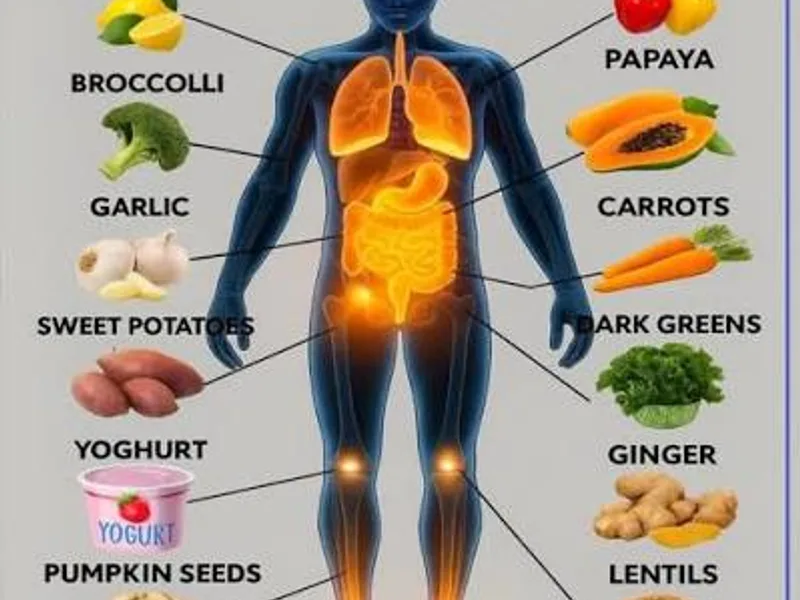
Immunity booster foods are useful, but there is no magic ingredient
Search for “immunity booster foods” and you will quickly find lists promising to make the body's defences stronger overnight. The reality is much less dramatic. The immune system is a complex network, and no single food can switch it into a permanently “stronger” setting.
Nutrition still matters. Immune cells need a steady supply of nutrients, including vitamin C, vitamin D, zinc, selenium, iron and protein. A varied diet is generally a better strategy than concentrating on one supposedly powerful ingredient.
In clinical practice, nutrition-related immune concerns are often missed because people look for a quick supplement rather than asking whether their everyday diet is varied enough. That distinction matters. Correcting a genuine nutrient deficiency is different from taking large amounts of a nutrient when you are already getting enough.
For a broader look at everyday nutrition, see Doctar.in's guide to [nutrient-dense foods for an Indian diet]nutrient-dense foods for an Indian diet.
Which foods support normal immune function?
Vitamin C-rich fruits and vegetables
Vitamin C is one of the nutrients most closely associated with immune health. It contributes to normal immune-cell function and also acts as an antioxidant. A lack of vitamin C can impair immune function, although taking extra vitamin C does not mean an otherwise healthy person will become infection-proof.
Amla, guava, oranges, lemons, strawberries and peppers are practical food sources. Doctar.in's guide to [Vitamin C-rich foods]Vitamin C-rich foods covers several options that fit easily into an Indian diet.
Citrus is not the only answer. Broccoli, spinach and other vegetables can contribute vitamin C along with fibre and other nutrients. The Doctar.in guide to [healthy vegetables]healthy vegetables is useful for building variety rather than relying on one fruit every morning.
Pomelo, or chakotra, is another citrus option. Its [nutrition and health benefits]pomelo nutrition and health benefits include vitamin C and fibre.
Zinc-rich foods deserve attention
Zinc is involved in immune-cell development and function. Good food sources include meat, seafood, dairy products, legumes, nuts and seeds.
That makes zinc less exotic than social media sometimes makes it sound. Dal, chana, beans, seeds and nuts can all contribute. Doctar.in's detailed guide to [zinc-rich foods]zinc-rich foods explains the main dietary sources and factors that can affect absorption.
The key point is not to chase high-dose zinc supplements. Too much zinc can cause problems, and supplements are most useful when there is a specific nutritional reason for them.
Protein matters too
Protein is not just about muscle. The body uses protein to build and repair tissues, and immune components such as antibodies are proteins. A diet that consistently lacks adequate protein is therefore not a sensible foundation for good health.
Indian meals offer plenty of options. Lentils, chickpeas, rajma, paneer, curd, eggs, fish and poultry can all contribute. Doctar.in's guide to [protein-rich Indian foods]protein-rich Indian foods offers a useful starting point.
Vegetarians have choices too. [Plant-based protein foods]plant-based protein foods such as pulses, soy foods, nuts and seeds can be part of a balanced eating pattern.
Even vegetables can contribute some protein while supplying fibre and micronutrients. Doctar.in's guide to [high-protein vegetables]high-protein vegetables explores these options.
Don't overlook fermented foods
The gut and immune system are closely connected, although the science is more complicated than the phrase “gut health equals immunity” suggests. Fermented foods such as curd and some other traditionally fermented foods can provide beneficial microorganisms, depending on how they are made and processed.
Doctar.in's guide to [probiotic foods for Indian readers]probiotic foods for Indian readers covers curd, fermented batters, buttermilk and other examples.
Kefir is another fermented option. Its [potential gut and immune benefits]kefir and gut health are interesting, although it is not necessary to buy an imported “superfood” to maintain a healthy diet.
Plain yogurt can be especially practical because it also provides protein and, depending on the product, calcium and other nutrients. Doctar.in's article on [yogurt and metabolic health]yogurt and metabolic health explains why unsweetened varieties are often a sensible choice.
For people avoiding dairy, [vegan yogurt options]vegan yogurt and probiotics may provide an alternative, although nutritional content varies considerably between products.
Garlic, ginger and turmeric: useful foods, not medicines
Garlic, ginger and turmeric have deep roots in Indian cooking and traditional health practices. They also contain biologically active compounds that researchers continue to study.
Garlic contains sulfur compounds, while ginger contains compounds such as gingerols and turmeric contains curcumin. These foods can add flavour and variety to meals, and research has explored their antioxidant and anti-inflammatory properties. But that does not mean eating more of them will prevent infections.
Doctar.in's article on [antioxidant-rich foods]antioxidant-rich foods includes garlic among several useful choices.
Ginger is another familiar ingredient. Its [health and digestive uses]ginger and digestive health are worth reading, particularly because concentrated ginger supplements are different from using ginger in normal cooking.
There is also growing interest in turmeric supplements. Doctar.in's [turmeric and curcumin guide]turmeric and curcumin information explains why concentrated products should not be treated as interchangeable with the spice used in food.
Nuts, seeds and omega-3 foods add variety
Walnuts, flaxseeds and chia seeds provide plant-based omega-3 fats, while oily fish such as sardines, mackerel and salmon provide the long-chain omega-3 fats EPA and DHA.
Omega-3 fats are not “immune boosters” in the simple marketing sense. They are part of a healthy dietary pattern and have roles in normal body function. Doctar.in's [omega-3 food guide for Indian diets]omega-3 food sources in India explains both fish and plant sources.
Nuts and seeds can also add minerals, healthy fats and protein. For someone who wants a practical snack, a small portion of nuts can make more nutritional sense than a heavily marketed immunity drink.
What about vitamin D?
Vitamin D is important for bone health and immune function. It can come from limited food sources, fortified foods and sunlight exposure, but requirements and deficiency risk vary between individuals.
Doctar.in's [vitamin and supplement guide]vitamins and supplements guide explains why suspected deficiencies should not simply be treated by guessing.
The same caution applies to supplement combinations. A product containing vitamin C, vitamin D and zinc may look appealing, but more is not automatically better. People taking medicines or managing a medical condition should discuss supplements with a healthcare professional.
Don't forget sleep, hydration and the basics
Food gets most of the attention, but immunity does not work in isolation. Adequate sleep, regular physical activity, avoiding tobacco and staying up to date with recommended vaccinations are all part of protecting health. Harvard Health makes the same point: there is no single diet or food that can guarantee a stronger immune system.
Sleep deserves particular attention. Doctar.in's guide to [foods and drinks that may support better sleep]foods and drinks for better sleep looks at how diet and sleep can interact.
Hydration matters too, especially during illness or hot weather. Doctar.in's [hydration guide]healthy hydration choices discusses ways to make fluids easier to consume without turning every drink into a sugary beverage.
When you are actually sick, eating enough can become difficult. Doctar.in's [guide to foods during illness and recovery]foods for recovery during illness offers practical ideas such as soups, soft foods and nutrient-rich meals.
Other foods can fit into the same overall pattern. Doctar.in discusses [quail eggs and their nutrients]quail eggs and nutrition, [bananas and their nutritional profile]bananas and fruit nutrition and [oatmeal as a nutritious food]oatmeal and healthy eating.
Do “immunity drinks” and supplements really work?
This is where healthy eating can become marketing.
A drink containing lemon, honey or ginger may be comforting during a cold, but it should not be advertised as a cure. Doctar.in's [hot toddy and cough guide]honey, lemon and ginger for coughs explains the difference between symptom relief and treating an infection.
Likewise, taking several supplements “just in case” is not a substitute for a varied diet. The NIH notes that supplements can help in particular circumstances, especially when someone has inadequate intake or deficiency, but evidence does not support the idea that extra amounts automatically provide better immune protection.
The better approach is surprisingly ordinary: eat a range of foods, get enough protein and micronutrients, sleep properly, stay active and seek medical advice when symptoms are persistent or severe.