Intermittent Fasting Side Effects and Risks: What Nobody Tells You
Intermittent fasting gets plenty of glowing coverage for its potential benefits, but far less honest discussion about its downsides. The truth is that fasting isn't risk-free, isn't right for everyone, and even for healthy adults who tolerate it well, it can come with real, sometimes uncomfortable side effects — especially in the early weeks. This guide gives you the fuller, more balanced picture: the common side effects to expect, the more serious risks to watch for, and specifically who should avoid intermittent fasting altogether or only attempt it under medical supervision.
Table of Contents
Why Honest Risk Information Matters
Common Short-Term Side Effects
Hunger, Irritability, and the Adaptation Period
Fasting and Hormonal Effects (Especially in Women)
Fasting and Eating Disorder Risk
Nutrient Deficiency Risks
Fasting and Sleep
Cardiovascular and Blood Pressure Considerations
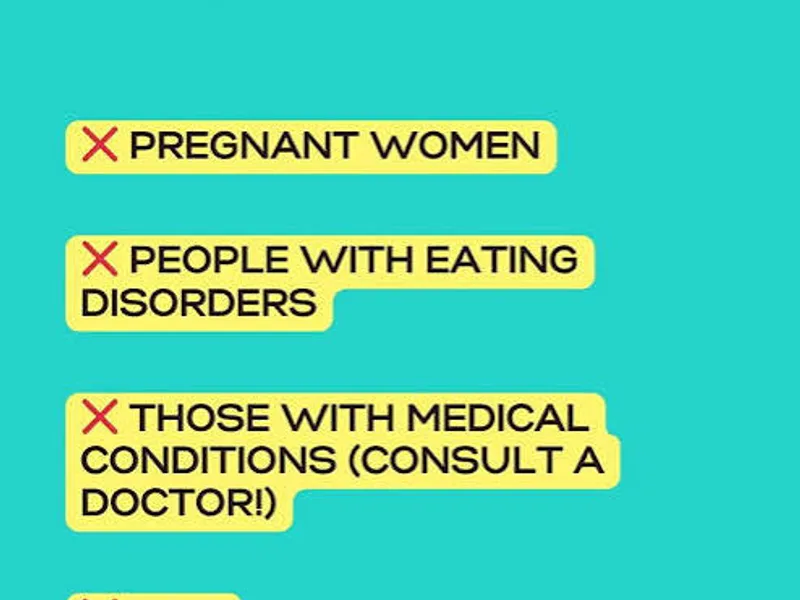
Who Should Avoid Intermittent Fasting Entirely
Who Should Only Fast Under Medical Supervision
How to Minimize Side Effects If You Choose to Fast
When to Stop Fasting and See a Doctor
Frequently Asked Questions
1. Why Honest Risk Information Matters
Much of the popular content around intermittent fasting focuses exclusively on benefits — weight loss, mental clarity, "living longer." This one-sided framing does a disservice to anyone trying to make an informed decision. Even researchers who study fasting extensively are careful to note that not everyone can or should adhere to it, and that initial side effects like hunger and irritability are a normal, expected part of the adjustment process for most people who do try it.
This article aims to fill that gap — giving equal weight to the real risks and downsides so you can decide, ideally alongside your doctor, whether intermittent fasting is actually a good fit for your body and circumstances.
2. Common Short-Term Side Effects
For most healthy adults trying intermittent fasting for the first time, some combination of the following is common in the first one to four weeks:
Hunger pangs, particularly around your usual mealtimes
Irritability or mood changes ("hangry" is a real physiological phenomenon tied to blood sugar fluctuations)
Fatigue or low energy, especially during physical activity
Difficulty concentrating, sometimes described as "brain fog"
Headaches, which can result from dehydration, caffeine withdrawal (if fasting affects your usual coffee timing), or low blood sugar
Digestive changes, including constipation or bloating as eating patterns shift
Sleep disturbances, which can go either way — some people report improved sleep, others report difficulty falling asleep due to hunger
The reassuring news, backed by both research and widespread clinical observation, is that most of these symptoms are transient. Researchers who study fasting extensively note that feeling hungry and irritable initially is common and typically passes after two weeks to a month as the body and brain adjust to the new eating pattern.
3. Hunger, Irritability, and the Adaptation Period
It's worth understanding why this adjustment period happens, because it makes the discomfort easier to push through (for people who are otherwise good candidates for fasting) or recognize as a legitimate reason to stop (for people who aren't).
Your body has been accustomed to regular meal timing, and ghrelin (the "hunger hormone") has essentially been trained to spike at your usual eating times. When you suddenly change your eating schedule, ghrelin continues signaling hunger at the old times for a period before recalibrating to your new pattern. Similarly, if your body has been relying primarily on a steady glucose supply, the shift toward more fat-burning and lower average insulin levels requires a genuine metabolic adaptation period.
The commonly recommended solution — gradually increasing your fasting window over several weeks rather than jumping straight into a demanding schedule — exists specifically to blunt this adaptation period. Going from a standard eating pattern straight into something aggressive like OMAD is one of the most common reasons people experience severe side effects and quit within days.
4. Fasting and Hormonal Effects (Especially in Women)
This is an area where general fasting advice sometimes fails to account for meaningful differences, and it deserves specific attention. Some research and clinical observation suggest that women may be more sensitive to the hormonal effects of aggressive fasting protocols than men, potentially due to differences in how fasting stress signals interact with reproductive hormone regulation.
Reported concerns in some women include:
Menstrual cycle irregularities or missed periods with very aggressive or prolonged fasting protocols
Changes in mood or energy levels that seem more pronounced than typically reported by men on similar protocols
Potential effects on thyroid function with extended or very restrictive fasting, in some individuals
This doesn't mean fasting is inherently unsafe for women — many women fast successfully with gentler protocols like 14:10, 16:8, or crescendo fasting (limiting fasting to a few non-consecutive days per week) without issue. But it does support the general recommendation that women, particularly those with any history of hormonal irregularities, consider starting with gentler protocols and paying close attention to menstrual cycle changes, energy levels, and mood — treating any disruption as a clear signal to scale back and consult a doctor.
5. Fasting and Eating Disorder Risk
This is one of the more serious and under-discussed risks associated with intermittent fasting, particularly given how fasting content is often presented online alongside idealized body image messaging.
For people with a current or past history of anorexia, bulimia, binge eating disorder, or other disordered eating patterns, structured fasting protocols can be genuinely harmful. The rules-based, restrictive structure of fasting schedules can:
Reinforce restrictive eating patterns and rigid food rules
Trigger or worsen binge-eating behaviors during eating windows, in a "restrict then binge" cycle
Provide a superficially "healthy" framework that masks disordered eating behavior, both to the person practicing it and to others around them
Increase preoccupation with food, timing, and control in ways that can be psychologically harmful for vulnerable individuals
If you have any history of disordered eating, intermittent fasting should generally be avoided, or approached only with direct guidance from a doctor or eating-disorder-informed dietitian who can help you evaluate whether it's appropriate at all, and if so, in what modified form.
6. Nutrient Deficiency Risks
Compressing your eating into a shorter window doesn't automatically guarantee that you'll get adequate nutrition — in fact, it can make it harder for some people, particularly with more restrictive protocols like OMAD. Risks include:
Insufficient overall calorie intake, especially in physically active people, leading to fatigue and impaired recovery
Inadequate protein intake, increasing the risk of muscle loss
Missing key micronutrients if the limited eating window doesn't include enough dietary variety
Reduced fiber intake if meals are rushed or simplified due to time constraints
This risk is highest with more extreme protocols (OMAD, extended multi-day fasts) and is a strong argument for beginners to start with gentler, more sustainable time-restricted eating approaches where getting adequate nutrition is more straightforward.
7. Fasting and Sleep
The relationship between fasting and sleep is genuinely mixed in both research and anecdotal reports. Some people find that eating earlier in the day and avoiding late-night meals (a natural outcome of many fasting schedules) improves sleep quality, potentially due to reduced nighttime digestion and more stable overnight blood sugar.
Others report the opposite — difficulty falling asleep due to hunger, particularly in the early adaptation weeks, or disrupted sleep from an evening-focused eating window (as in the Warrior Diet) that involves eating a large meal close to bedtime.
If fasting is disrupting your sleep, adjusting your eating window timing — for example, shifting it earlier in the day rather than late evening — is often an effective fix.
8. Cardiovascular and Blood Pressure Considerations
For most healthy adults, research on intermittent fasting suggests neutral to positive effects on cardiovascular risk markers, including blood pressure and cholesterol in some studies. However, there are specific scenarios where caution is warranted:
People on blood pressure medications may experience symptomatic low blood pressure (dizziness, lightheadedness) if fasting alters their fluid or sodium balance without medication adjustment
Dehydration during fasting periods, particularly in hot climates or with intense physical activity, can strain cardiovascular function
Anyone with existing heart conditions should get explicit medical clearance before beginning any fasting protocol, and monitor for symptoms like chest discomfort, palpitations, or unusual dizziness
9. Who Should Avoid Intermittent Fasting Entirely
Based on current medical guidance, the following groups are generally advised to avoid intermittent fasting:
Children and adolescents — still growing and have different, less flexible nutritional needs
Pregnant or breastfeeding individuals — nutrient and calorie needs are elevated and shouldn't be restricted without specific medical guidance
People with a current or past history of eating disorders — as discussed above, the structure can be actively harmful
People who are underweight or malnourished — further calorie restriction is inappropriate
People with type 1 diabetes on insulin, without close endocrinologist supervision — hypoglycemia and ketoacidosis risks are significant
People with certain adrenal or endocrine disorders — fasting can interact unpredictably with conditions like adrenal insufficiency
10. Who Should Only Fast Under Medical Supervision
People with type 2 diabetes on insulin or sulfonylureas
People with a history of gallstones (fasting can, in some cases, be associated with gallbladder issues)
People on medications that require food for proper absorption or that carry risks if taken on an empty stomach
People with chronic kidney disease or other conditions affecting fluid and electrolyte balance
Older adults with multiple health conditions or who are on several medications
Anyone recovering from illness, surgery, or significant physical stress
11. How to Minimize Side Effects If You Choose to Fast
Progress gradually — 12:12 to 14:10 to 16:8 over several weeks, rather than starting with an aggressive schedule
Stay well hydrated — dehydration worsens nearly every common side effect, from headaches to fatigue
Don't restrict food quality along with timing — nutrient-dense meals during your eating window reduce deficiency risk and support better energy levels
Get adequate electrolytes, particularly sodium, potassium, and magnesium, especially with longer fasting windows
Prioritize sleep — poor sleep amplifies hunger hormones and makes fasting feel considerably harder
Time your fast around your schedule, not against it — fasting during your busiest, most stressful hours tends to feel worse than fasting during naturally quieter periods
Track how you feel, not just adherence — persistent negative symptoms are meaningful data, not something to push through indefinitely
12. When to Stop Fasting and See a Doctor
Stop fasting and seek medical attention if you experience:
Fainting or severe dizziness
Heart palpitations or chest discomfort
Signs of an eating disorder developing or worsening (preoccupation with food, guilt around eating, secretive eating behaviors)
Missed periods or significant menstrual irregularity that persists beyond a couple of cycles
Persistent extreme fatigue that doesn't improve after several weeks of adaptation
Any symptoms of hypoglycemia if you have diabetes
Hair thinning or loss, which can signal inadequate nutrition over time
Mood changes that feel disproportionate or concerning, including increased anxiety or depressive symptoms
None of these symptoms should be dismissed as "normal adjustment" beyond a reasonable initial period — persistent or severe symptoms warrant a conversation with a healthcare provider and likely a pause or modification of your fasting approach.
13. Frequently Asked Questions
Is intermittent fasting safe for everyone? No. While many healthy adults tolerate it well, it's not appropriate for children, pregnant or breastfeeding individuals, people with a history of eating disorders, and those with certain medical conditions, particularly type 1 diabetes without close supervision.
Does intermittent fasting affect periods? It can, particularly with more aggressive or prolonged fasting protocols in some women. Menstrual irregularity is a signal to scale back fasting intensity and consult a doctor.
Why do I feel dizzy while fasting? Dizziness can result from low blood sugar, dehydration, or low blood pressure, especially during the initial adaptation period or if you're on blood pressure medication. Persistent or severe dizziness warrants breaking your fast and seeking medical guidance.
Can intermittent fasting cause hair loss? Significant, prolonged calorie or nutrient restriction — more likely with extreme protocols like OMAD if not carefully planned — can contribute to hair thinning in some people, generally as a sign of inadequate overall nutrition rather than fasting itself.
How long do intermittent fasting side effects last? Most short-term side effects like hunger and irritability resolve within two to four weeks as the body adapts to the new eating pattern, according to both research and widespread clinical observation.
Is it normal to feel tired when starting intermittent fasting? Yes, mild fatigue during the first few weeks is common and usually temporary. Persistent, severe fatigue beyond this adjustment window is not something to push through and should prompt a reassessment or medical consultation.
Final Thoughts
Intermittent fasting can offer real benefits for many healthy adults, but it is not a risk-free, universally appropriate practice — and honest content about it should say so clearly. Understanding the realistic side effects, recognizing genuine warning signs, and knowing definitively who should avoid fasting altogether are just as important as understanding its potential upsides. If you're considering intermittent fasting and have any underlying health condition, a history of disordered eating, or you're pregnant, breastfeeding, or on medication, talk to a doctor before you begin.
This article is for general informational purposes only and does not replace personalized medical advice.