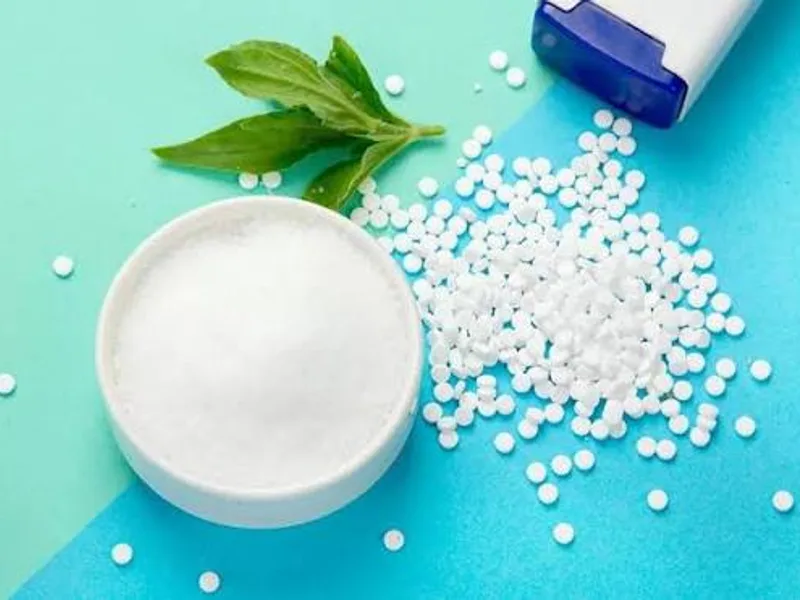
Aspartame and Other Sweeteners: The Complete 2026 Safety Guide
If you've ever glanced at a "sugar-free" or "diet" label and wondered what's really sweetening your food, you're not alone. Names like aspartame, sucralose, stevia, and monk fruit show up on everything from soft drinks to protein bars — yet most people have no idea how these ingredients are actually regulated, tested, or how much of them is genuinely safe to consume.
This guide breaks down everything you need to know about aspartame and other approved sweeteners in the U.S. — what they are, how they're regulated, the ongoing cancer-risk debate, safe daily limits, and how to choose the right sweetener for your health goals. We've based this on the latest regulatory guidance so you can make informed decisions rather than relying on social media scares or outdated myths.
Table of Contents
What Are Sweeteners and Why Do We Use Them?
Is Aspartame Safe? The IARC Controversy Explained
How Sweeteners Get Approved: Food Additives vs. GRAS
The 6 FDA-Approved High-Intensity Sweeteners
Plant and Fruit-Based Sweeteners
Sweetness Intensity Comparison Chart
How Much Sweetener Is Safe? Understanding ADI
Sugar Alcohols and Rare Sugars
Sweeteners Banned in the U.S.
Aspartame vs. Sucralose vs. Stevia: Which Should You Choose?
Sweeteners and Special Health Conditions
Practical Tips for Reducing Added Sugar Safely
Frequently Asked Questions
1. What Are Sweeteners and Why Do We Use Them?
Sweeteners, often called sugar substitutes, are ingredients added to food and drinks to create a sweet taste without relying on regular table sugar. Many of these compounds are hundreds or even thousands of times sweeter than sucrose, which means manufacturers need only tiny amounts to achieve the same sweetness — and that translates into few or zero calories in the final product.
People turn to sweeteners for several reasons:
Calorie control – since less product is needed to sweeten food, calorie contribution is minimal or nonexistent.
Blood sugar management – most high-intensity sweeteners don't spike blood glucose the way sugar does, which matters for people managing diabetes or insulin resistance.
Weight management goals – swapping sugar for low- or no-calorie sweeteners can support a reduced-calorie diet.
Dental health – unlike sugar, most sweeteners don't feed the bacteria that cause tooth decay.
You'll find sweeteners in an enormous range of everyday products: diet sodas and powdered drink mixes, baked goods, candy, chewing gum, puddings, canned foods, jams, jellies, dairy products, and tabletop sweetener packets. If a product is labeled "sugar-free," "diet," or "no added sugar," there's a very good chance one of the ingredients discussed in this guide is doing the sweetening.
Under food labeling rules, manufacturers are required to list every sweetener by name in the ingredient panel, so if you want to know exactly what's sweetening your food, the ingredient list is the place to check.
2. Is Aspartame Safe? The IARC Controversy Explained
No sweetener has generated more headlines — or more confusion — than aspartame. In July 2023, two international bodies issued conflicting-sounding statements that triggered a wave of consumer anxiety.
The International Agency for Research on Cancer (IARC), part of the World Health Organization, classified aspartame as "possibly carcinogenic to humans." At the very same time, the Joint FAO/WHO Expert Committee on Food Additives (JECFA) reviewed the same body of evidence and reached a very different practical conclusion: it did not raise any safety concerns for aspartame at current levels of use, and it left the acceptable daily intake unchanged.
This is where a lot of public confusion comes from — two expert panels appeared to say different things, but they were actually answering different questions. IARC's classification system is a hazard identification exercise; it asks whether a substance could theoretically cause cancer under any circumstances, not whether real-world exposure levels make that a meaningful risk. IARC places aspartame in the same "possibly carcinogenic" category as substances like aloe vera extract and pickled vegetables — a category that says more about the strength of the evidence than the size of the actual risk.
JECFA, by contrast, is a risk assessment body. It looks specifically at how much of a substance people are realistically exposed to and whether that exposure is dangerous. Its answer for aspartame was no — the existing safe daily limit remained protective.
U.S. regulators reviewed the same studies IARC relied on and identified what they described as significant shortcomings in that research. Aspartame is considered one of the most extensively studied ingredients in the entire food supply, with well over 100 individual safety studies examining its effects on reproduction, the nervous system, cancer risk, and metabolism. Based on this body of evidence, U.S. food safety scientists have stated they do not have safety concerns about aspartame when it's used within approved conditions. Other major regulators, including Health Canada and the European Food Safety Authority, have independently reached the same conclusion — aspartame remains safe at current permitted use levels, and it continues to be approved in numerous countries worldwide.
The bottom line: being labeled "possibly carcinogenic" is a statement about the quality and consistency of available evidence, not a confirmed link to cancer in humans. For the vast majority of people, moderate aspartame consumption within the established daily limit is not considered a health risk by mainstream regulatory science.
There is one important exception, which we'll cover in detail later: people with a rare genetic condition called phenylketonuria (PKU) need to avoid or strictly limit aspartame.
3. How Sweeteners Get Approved: Food Additives vs. GRAS
Understanding how sweeteners reach your grocery shelf helps explain why regulators are confident in their safety assessments.
By law, every ingredient added to food in the U.S. — sweeteners included — must be proven safe before it can be marketed. Food and beverage companies bear primary responsibility for ensuring their ingredients are safe and legally compliant, but there are two main regulatory pathways a sweetener can take:
Food Additive Petition: If a company wants to introduce a brand-new sweetener, or use an already-approved one in a new way, it must formally petition regulators for approval. This involves submitting extensive toxicological data before the ingredient can be legally used.
GRAS Notification (Generally Recognized As Safe): Certain ingredients don't require the full pre-market additive approval process if qualified experts agree, based on publicly available scientific evidence, that the ingredient is safe under its intended conditions of use. Companies can voluntarily notify regulators of their GRAS determination, and the agency reviews and responds to that notice.
This is why you'll see some sweeteners described as "approved food additives" (like aspartame and sucralose) while others, like stevia-derived steviol glycosides and monk fruit extract, are described as substances regulators have "no questions" about regarding their GRAS status. Both pathways require robust scientific backing — they're simply different routes to the same safety bar.
Regulators also don't just approve an ingredient once and forget about it. Scientists continuously reassess the safety and estimated exposure levels of sweeteners every time a new petition or notice is filed, and they monitor ongoing published research and international scientific developments on an ongoing basis.
4. The 6 FDA-Approved High-Intensity Sweeteners
There are currently six sweeteners with official food additive approval in the United States. Here's a detailed breakdown of each.
Aspartame
Common brand names: NutraSweet, Equal, Sugar Twin
Sweetness: About 200 times sweeter than table sugar
Approved since: 1974 (tabletop use, gum, cereals); expanded to general-purpose sweetener status in 1996
Aspartame is a dipeptide made from two amino acids — phenylalanine and aspartic acid — both of which occur naturally in protein-rich foods as part of a normal diet. When combined in a specific chemical arrangement, they create an intensely sweet compound. Interestingly, aspartame does contain calories, but because it's so much sweeter than sugar, only a tiny amount is needed, making its overall calorie contribution negligible. One quirk worth knowing: aspartame isn't heat-stable, so it loses its sweetness when baked or cooked at high temperatures, which is why you won't typically find it in baked goods.
Acesulfame Potassium (Ace-K)
Common brand names: Sunett, Sweet One
Sweetness: About 200 times sweeter than sugar
Approved since: 1988 (specific categories); 2003 (general-purpose use)
Ace-K is heat stable, meaning it holds its sweetness during baking, and it's frequently blended with other sweeteners to balance out flavor profiles. It's approved for use in virtually all food categories except meat and poultry.
Sucralose
Common brand name: Splenda
Sweetness: About 600 times sweeter than sugar
Approved since: 1998 (15 food categories); 1999 (general-purpose sweetener)
Sucralose is also heat stable, making it popular in baked goods, beverages, chewing gum, gelatins, and frozen desserts. Its safety evaluation included more than 110 studies plus human clinical trials examining metabolic effects and impacts on people with diabetes.
Neotame
Neotame is heat stable and used as both a sweetener and flavor enhancer, again excluding meat and poultry products. Its safety review drew on more than 110 animal and human studies.
Advantame
Because it's so intensely sweet, only minuscule amounts are ever used. Its approval was backed by 37 dedicated studies plus additional pharmacokinetic and carcinogenicity research.
Saccharin
Common brand names: Sweet'N Low, Sweet Twin, Necta Sweet
Sweetness: 200–700 times sweeter than sugar; zero calories
Regulated since: 1977 (though discovered in 1879)
Saccharin has an interesting history: in the early 1970s, animal studies linked it to bladder cancer in rats, prompting Congress to require warning labels. Decades of follow-up human research showed the rat findings didn't translate to humans, and by 2000 the National Toxicology Program removed saccharin from its list of potential carcinogens — the warning label requirement was dropped as a result.
5. Plant and Fruit-Based Sweeteners
Beyond the six approved food additives, three natural high-intensity sweeteners have cleared the GRAS pathway.
Stevia (Steviol Glycosides)
Extracted from the leaves of the Stevia rebaudiana plant, these compounds are 200–400 times sweeter than sugar. Importantly, only highly purified steviol glycosides (95%+ purity) — such as Rebaudioside A, Stevioside, and Rebaudioside D — have cleared GRAS review. Research shows these compounds pass through the upper digestive tract without being absorbed, and multiple human clinical studies have found no adverse effects.
Note the important distinction here: whole-leaf stevia and crude stevia extracts are not GRAS-approved and cannot legally be imported into the U.S. for use as sweeteners. If you're buying a stevia product, look for "purified steviol glycosides" or "Reb A" on the label.
Monk Fruit (Luo Han Guo)
Derived from Siraitia grosvenorii, a fruit native to Southern China, monk fruit sweetness comes from natural compounds called mogrosides. Depending on mogroside concentration, monk fruit extract is 100–250 times sweeter than sugar. It has been studied through subchronic toxicity, clinical, and genotoxicity research, with no safety concerns identified.
Thaumatin
A less common sweetener derived from the West African katemfe fruit, thaumatin is a naturally occurring sweet protein that's an astonishing 2,000–3,000 times sweeter than sugar. It's used in products like wine, jams, ice cream, and bakery items, and has been evaluated through sub-chronic, mutagenicity, and allergenicity studies.
6. Sweetness Intensity Comparison Chart
Here's how the major sweeteners stack up against ordinary table sugar (sucrose):
Sweetener | Common Brands | Sweetness vs. Sugar |
|---|
Advantame | Advantame® | 20,000x |
Neotame | Newtame® | 7,000–13,000x |
Thaumatin | Talin® | 2,000–3,000x |
Sucralose | Splenda® | 600x |
Saccharin | Sweet'N Low®, Necta Sweet® | 200–700x |
Steviol Glycosides | Truvia®, PureVia®, Enliten® | 200–400x |
Aspartame | NutraSweet®, Equal® | 200x |
Acesulfame Potassium | Sunett®, Sweet One® | 200x |
Monk Fruit (Luo Han Guo) | Nectresse®, PureLo® | 100–250x |
7. How Much Sweetener Is Safe? Understanding ADI
Every approved sweetener has an Acceptable Daily Intake (ADI) — the amount that can safely be consumed every single day over an entire lifetime without health risk. ADIs are deliberately conservative: scientists identify the highest dose that showed no adverse effects in animal studies, then divide that number by a large safety margin to account for differences between species and variability among humans.
Here's what that looks like in practical, everyday terms — the number of sweetener packets a 60 kg (132 lb) adult would need to consume daily to reach their ADI:
Sweetener | ADI (mg/kg body weight/day) | Packets/Day to Reach ADI |
|---|
Aspartame | 50 | 75 |
Acesulfame Potassium | 15 | 23 |
Sucralose | 5 | 23 |
Neotame | 0.3 | 23 |
Advantame | 32.8 | 4,920 |
Saccharin | 15 | 45 |
Rebaudioside A (Stevia) | 12 | 27 |
To put this into perspective: an average adult drinking a can of diet soda a day consumes only a small fraction of the aspartame ADI. You would need to drink roughly 9–12 cans of diet soda in a single day just to approach the aspartame limit — a level of consumption that's far outside typical habits. This is precisely why regulators maintain that everyday consumption patterns fall well within the established safety margins.
Monk fruit and thaumatin don't have official ADIs — this isn't a red flag, but rather reflects that their safety margin is so wide (people would need to consume unrealistically large amounts to approach any theoretical limit) that a formal numeric cap wasn't deemed necessary.
8. Sugar Alcohols and Rare Sugars
Beyond high-intensity sweeteners, there's another entire category worth knowing about: sugar alcohols (also called polyols). Common examples include sorbitol, xylitol, erythritol, mannitol, lactitol, and maltitol. These provide 25–100% of sugar's sweetness, carry somewhat fewer calories than sugar, and — unlike sugar — don't contribute to tooth decay or cause sharp blood glucose spikes. They're commonly found in sugar-free candies, cookies, and chewing gum.
Erythritol specifically made headlines in 2023 after a study raised questions about a possible link to cardiovascular events. Regulators reviewed that research and concluded the observational data didn't establish an actual causal relationship between erythritol consumption and the reported effects — though ongoing monitoring of new erythritol research continues.
There's also a newer class of "rare sugars" — including D-allulose, D-tagatose, and isomaltulose — that are chemically true sugars but are metabolized differently by the body than conventional sugar, resulting in a much smaller impact on blood glucose and calorie intake. These have cleared GRAS review for certain intended uses.
9. Sweeteners Banned in the U.S.
Not every sweetener used elsewhere in the world is permitted in America. Two notable examples:
Cyclamates (and their salts, including sodium and calcium cyclamate) are prohibited from use in U.S. food products entirely.
Whole-leaf and crude stevia extracts are subject to an import alert and cannot legally be used as sweeteners — this is distinct from the highly purified steviol glycosides discussed earlier, which are permitted.
If you're purchasing sweeteners from international sources or specialty retailers, it's worth double-checking that what you're buying complies with domestic regulations.
10. Aspartame vs. Sucralose vs. Stevia: Which Should You Choose?
There's no single "best" sweetener for everyone — the right choice depends on your priorities.
Choose aspartame if: you want a well-studied, budget-friendly tabletop sweetener for cold drinks, and you don't need heat stability (skip it for baking).
Choose sucralose if: you bake often and want a heat-stable sweetener that behaves closely to sugar in recipes.
Choose stevia (purified) or monk fruit if: you prefer a "natural-origin" label on your ingredients, though it's worth knowing that from a safety-review standpoint, both are held to the same rigorous scientific bar as synthetic options — "natural" doesn't inherently mean safer, just differently sourced.
Choose acesulfame-K or a blend if: you want to avoid any aftertaste — many commercial products combine two or more sweeteners specifically because blending often produces a more sugar-like taste than any single sweetener alone.
Avoid aspartame entirely if: you have phenylketonuria (PKU) — more on this below.
For weight management specifically, all of the high-intensity sweeteners discussed here are considered essentially calorie-free at normal usage levels, so the "best" one for weight loss really comes down to taste preference and how you plan to use it (cooking, baking, or straight into drinks).
11. Sweeteners and Special Health Conditions
Phenylketonuria (PKU)
This is the single most important sweetener-related health warning to know. PKU is a rare inherited disorder in which the body cannot properly break down phenylalanine, one of aspartame's two building-block amino acids. People with PKU must avoid or strictly limit aspartame, because a buildup of phenylalanine can be harmful. Newborns are routinely screened for PKU with a simple heel-prick blood test before hospital discharge, so most people with the condition are diagnosed at birth. By law, any product containing aspartame must carry a specific label statement warning people with PKU about its phenylalanine content — always check ingredient labels if PKU is a concern in your household.
Diabetes
Because most high-intensity sweeteners don't raise blood glucose, they're commonly recommended as sugar alternatives for people managing diabetes. Clinical research on sucralose specifically has included trials examining its effects in people with diabetes, without raising safety concerns at approved usage levels.
Pregnancy
While this article isn't a substitute for personalized medical advice, approved sweeteners used within their established ADIs are generally not flagged as a specific concern for pregnant individuals by mainstream regulatory bodies. If you're pregnant and have concerns about sweetener intake, it's worth a quick conversation with your doctor.
12. Practical Tips for Reducing Added Sugar Safely
If your goal is cutting back on added sugar, here are some sensible, science-aligned strategies:
Read ingredient labels, not just front-of-pack claims. "Sugar-free" doesn't tell you which sweetener is used — check the ingredient list for the specific name.
Rotate your sweeteners. Rather than relying heavily on one sweetener, using a variety (stevia one day, monk fruit another) naturally keeps you well under any single ADI.
Check heat stability before baking. Aspartame breaks down under heat, so reach for sucralose, Ace-K, or a stevia blend for baked recipes instead.
Watch total "diet" product consumption, not just one product. If you're drinking multiple diet beverages daily and using tabletop sweetener and eating sugar-free snacks, sweetener intake can add up — though as the ADI tables above show, you'd typically need very high volumes to approach any actual limit.
If you have PKU, always check for phenylalanine warnings on any packaged food, not just beverages.
Don't assume "natural" automatically means "healthier." Stevia and monk fruit undergo the same rigorous scientific safety review as synthetic sweeteners — the "natural" label reflects sourcing, not a different safety standard.
Consider whole-food sweetness sources occasionally — fruit purees, cinnamon, or vanilla extract can reduce your reliance on any sweetener, natural or artificial, as part of a varied diet.
13. Frequently Asked Questions
Does aspartame cause cancer?
Major regulatory science bodies, including U.S. and European food safety authorities, have not established a confirmed causal link between aspartame and cancer in humans at approved usage levels. One international cancer research body classified it as "possibly carcinogenic" based on limited evidence, a hazard classification that reflects evidence quality rather than confirmed real-world risk. A separate risk-assessment body reviewing the same evidence found no reason to change the safe daily intake level.
How much aspartame can I safely consume per day?
The established acceptable daily intake is 50 mg per kg of body weight. For most adults, this means dozens of servings of aspartame-sweetened products would be needed daily to approach the limit — far more than typical consumption patterns.
Is stevia better than aspartame?
Neither is objectively "better" from a safety standpoint — both have cleared rigorous scientific review. Stevia is plant-derived and often marketed as more "natural," while aspartame has a longer track record of large-scale safety studies. Taste preference and cooking application (stevia and aspartame are both not ideal for high-heat baking in their unblended forms, though many stevia blends are formulated to be heat stable) often matter more than safety differences.
What is the best sugar substitute for diabetics?
Most FDA-approved high-intensity sweeteners — including sucralose, stevia, monk fruit, and aspartame — are considered appropriate for people managing diabetes, since they don't meaningfully raise blood glucose. Sugar alcohols like erythritol are also popular choices, though some can cause digestive discomfort in large amounts.
Can artificial sweeteners help with weight loss?
Replacing sugar with a calorie-free or low-calorie sweetener reduces the calorie density of that specific food or drink. Whether this translates into overall weight loss depends on your broader dietary pattern — sweeteners are a tool, not a guarantee.
Are sugar alcohols the same as artificial sweeteners?
No. Sugar alcohols (like xylitol and erythritol) are a distinct chemical category from high-intensity sweeteners like aspartame or sucralose. They provide some calories and are less sweet than sugar, but don't spike blood sugar or cause cavities the way sugar does.
Is monk fruit sweetener safe for children?
Regulatory safety reviews for monk fruit extract didn't identify age-specific restrictions, and it's broadly considered safe within normal dietary use. As with any ingredient, moderation is sensible for children's diets generally.
Final Thoughts
The science around aspartame and other sweeteners is more reassuring — and more nuanced — than viral headlines often suggest. Regulatory bodies worldwide continue to monitor emerging research, but the current weight of evidence supports the safety of all six FDA-approved high-intensity sweeteners, along with stevia, monk fruit, and thaumatin, when used within their established limits. The one clear exception is aspartame and PKU, which is why label-reading matters.
Whether you're managing diabetes, cutting calories, or simply curious about what's in your favorite diet soda, understanding these facts lets you make sweetener choices based on evidence rather than fear.
This article is for general informational purposes and does not replace personalized medical advice. If you have a specific health condition or concern about sweetener consumption, please consult a qualified healthcare provider.