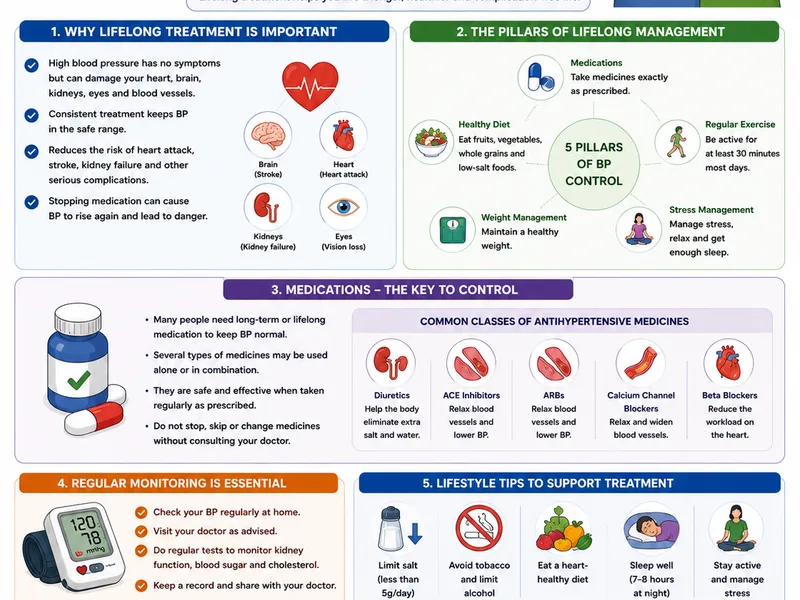
Hypertension is generally not curable — for most people, it's a lifelong condition managed through medication and lifestyle changes rather than one that's cured outright. The exception is a smaller group of cases with an identifiable underlying cause, where treating that cause can sometimes reverse the high blood pressure completely.
That distinction — cured versus controlled — matters more than it might seem, because it changes what a realistic treatment goal looks like.
Why Most Hypertension Isn't "Cured"
The vast majority of hypertension cases are primary (also called essential) hypertension, meaning there's no single identifiable cause. It develops gradually from a combination of genetics, age, and lifestyle factors, and for most adults, no specific trigger can be pinpointed and removed.
Because there's no single cause to eliminate, there's nothing to "cure" in the traditional sense. Health authorities describe hypertension as a treatable condition, not a curable one — treatment lowers blood pressure and keeps it controlled, but stopping treatment typically allows it to climb back up.
[REVIEWER: add clinical insight here — e.g., how you frame the "not curable" reality with newly diagnosed patients so it doesn't feel like a life sentence.]
Secondary hypertension — high blood pressure caused by a specific, identifiable condition — is where a genuine cure is sometimes possible. If the underlying cause can be treated or removed, blood pressure can return to normal and stay there without ongoing medication.
One well-documented example is primary aldosteronism, a hormonal condition in which an adrenal gland produces too much of a hormone that raises blood pressure. Research estimates roughly 1 in 10 people with hypertension may have this treatable condition. When it's caused by a tumor on one adrenal gland, surgical removal of that gland can cure the hypertension entirely. When both adrenal glands are involved, it's typically managed with lifelong medication instead.
Other reversible causes include:
Certain medications or substances — decongestants, some pain relievers, or excess alcohol and caffeine can elevate blood pressure temporarily, with levels often normalizing once the substance is stopped.
Sleep apnea — treating this sleep disorder can sometimes lower blood pressure that it was contributing to.
Kidney artery narrowing (renal artery stenosis) — correcting the narrowed artery can, in some cases, resolve the associated high blood pressure.
The catch is that secondary hypertension often goes undiagnosed, since it's frequently treated the same way as primary hypertension without ever identifying the root cause.
What "Resistant Hypertension" Means (and Doesn't Mean)
Some people are diagnosed with resistant hypertension — blood pressure that stays high despite taking three or more medications, including a diuretic. It's worth being clear about what this term does and doesn't imply: having resistant hypertension doesn't mean blood pressure can never come down, and it's often a signal to check for a secondary cause that hasn't been identified yet. Once a provider pinpoints the cause, a more effective, targeted treatment plan can often be built around it.
What "Managed" Actually Looks Like
For the large majority of people whose hypertension isn't curable, "managed" doesn't mean a losing battle — it means blood pressure can be kept in a healthy range indefinitely with the right combination of treatment.
Evidence-based approaches for controlling primary hypertension include:
Regular aerobic exercise (walking, cycling, swimming, dancing)
Reducing sodium intake
Maintaining a healthy weight
Managing stress
Getting consistent, adequate sleep
Limiting alcohol intake
Taking prescribed medication consistently, even once blood pressure normalizes
[REVIEWER: add clinical insight here — e.g., what typically happens, in your experience, when patients feel "cured" and stop treatment on their own.]
Two or more blood pressure medications often work better together than a single medication alone, and it can take time and adjustment to find the combination that works best for a given person. That trial-and-error process is normal, not a sign that treatment has failed.
How to Know Which Category You're In
Since secondary hypertension is the one category where a true cure is possible, it's worth discussing with a doctor whether testing for an underlying cause makes sense — particularly for people who:
Were diagnosed with high blood pressure at a young age
Have blood pressure that's difficult to control despite multiple medications
Have other symptoms suggesting a hormonal, kidney, or sleep-related condition
Had a sudden onset of high blood pressure after previously having normal readings
Not everyone needs this workup, but it's a reasonable question to raise rather than assume.
Frequently Asked Questions
Can hypertension be permanently cured? For most people, hypertension is a lifelong condition that's controlled rather than cured. A smaller group of cases caused by an identifiable condition — like a hormone-producing adrenal tumor — can sometimes be permanently cured by treating that underlying cause.
What percentage of hypertension is curable? There's no single agreed-upon figure, but research on one treatable cause alone, primary aldosteronism, suggests it may be present in roughly 1 in 10 people with hypertension, some of whom could be cured through targeted treatment or surgery.
Can losing weight cure high blood pressure? Weight loss can significantly lower blood pressure and, for some people with mild elevations, bring it into a normal range without medication. This isn't guaranteed to be permanent, though, since blood pressure can rise again if the weight returns.
Is resistant hypertension a sign it can't be treated? No. Resistant hypertension means blood pressure stays elevated despite multiple medications, but it often signals an undiagnosed underlying cause. Identifying that cause can lead to a more effective, sometimes curative, treatment approach.
If my blood pressure becomes normal, can I stop taking medication? Not without medical guidance. For most people with primary hypertension, normal readings reflect that treatment is working, not that the underlying condition is gone — stopping medication on your own can allow blood pressure to rise again.
The Takeaway
If you're hoping for a cure, it's worth asking your doctor directly whether your hypertension could have an identifiable, treatable cause — for a meaningful minority of people, that question has a real answer. For everyone else, the more accurate and, honestly, more useful goal is consistent control: treatment that's designed to be part of life long-term, not a temporary fix to eventually outgrow.