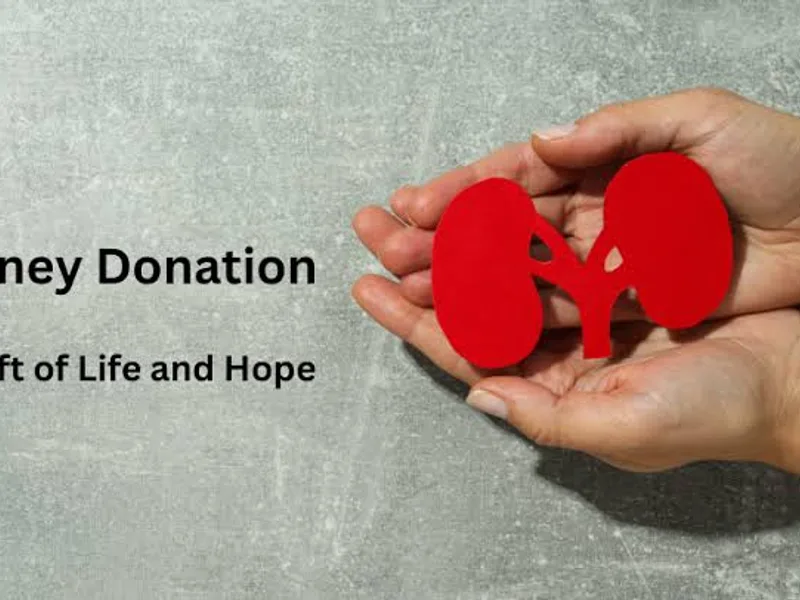
Kidney Donor Awareness Drive: What You Should Know Before Donating
A kidney donor awareness drive sounds like a simple public health message: give a kidney, save a life. In practice, it's a lot more layered than that. Hospitals, NGOs, and government bodies run these drives because most people who could donate never even consider it, usually out of fear or plain lack of information.
Why This Drive Matters Right Now
India's transplant waitlist has grown steadily, and the gap between people who need a kidney and people willing to donate one hasn't closed. As of late 2025, more than 60,000 kidney patients were registered on the national transplant waiting list, and the country still leans heavily on living donors rather than deceased donation, which remains rare here compared to countries like Spain or the US.
The government has taken notice. NOTTO (the National Organ and Tissue Transplant Organisation) recently rolled out a real-time national portal meant to unify waiting lists across states and speed up matching. That's a step forward on the system side. But no portal fixes the deeper problem, which is that too few families even talk about donation until a crisis forces the conversation.
Health officials have pointed out that the shortfall isn't really about unwillingness. It's about myths, hesitation, and simply not knowing where to start. That's the exact gap an awareness drive is built to close.
Who Can Actually Donate a Kidney
You don't need to be a genetic match anymore, thanks to paired exchange programs, but you do need to be healthy. Most transplant centres look for donors roughly between 18 and 65 years old, in good general health, with two working kidneys and no active infections, cancer, or uncontrolled diabetes.
A history of kidney stones, poorly controlled blood pressure, or significant heart and lung disease usually rules a person out. So does obesity beyond a certain point, though the exact cutoff varies by hospital. This is one of those areas where self-assessment isn't reliable — you can feel perfectly fine and still not be a safe candidate, which is exactly why the screening exists.
In clinical practice, this is often the part patients underestimate. People assume "healthy" means no symptoms, but donor screening looks at kidney function tests, imaging, psychological readiness, and long-term risk factors most people have never had checked. A nephrologist or general physician is usually the first stop, not the transplant surgeon.
The Screening Process, Step by Step
Donor evaluation isn't a single appointment. It typically stretches over several weeks and includes blood tests, urine tests, a kidney function assessment, imaging scans, and a consultation to confirm the donor understands the risks and is donating freely, without pressure from family.
This is where a diagnostics centre or a diagnostic lab near you comes in — most of the early bloodwork and scans happen there before a hospital transplant team gets involved. Many donors also see a gastroenterologist or endocrinologist if the initial screening flags something worth a closer look.
Psychological evaluation matters more than people expect. Hospitals want to be sure the donor isn't being coerced, financially or emotionally, and that they understand recovery isn't instant. If you're weighing this decision, it's worth a private conversation with your own doctor before you even mention it to the intended recipient's medical team.
What Recovery Actually Looks Like
This is the part awareness campaigns often gloss over. A kidney donation is major surgery. Hospital stays typically run one to three days, and most donors return to normal daily activity within four to six weeks, though full recovery can take a few months longer.
Living with one kidney is generally safe for life, and long-term studies haven't shown a dramatic drop in life expectancy for donors who were properly screened. But "generally safe" isn't the same as "risk-free," and donors do need regular follow-up kidney function checks for years afterward, not just the first few months. If something feels off in the first days after discharge, sudden fever, severe pain, or unusual swelling, don't wait it out; use emergency care services rather than assuming it will pass on its own.
If you're recovering, or supporting someone through recovery, a physiotherapist can help with mobility in the first weeks, and a home visit doctor or nurse is worth considering if getting to a clinic for check-ups is difficult right after surgery.
Where to Start If You're Considering It
Talk to a urologist or nephrologist before you decide anything. Ask direct questions about what disqualifies a donor, what the surgery actually involves, and what long-term monitoring looks like. A good doctor will not pressure you either way — this has to be your decision, made with full information.
If you're the patient waiting for a kidney rather than the potential donor, your care team can guide you through registering with a hospital's transplant program and, where relevant, NOTTO's national list. It also helps to loop in a general surgeon early, since they're often involved in coordinating pre-transplant workups alongside the nephrology team.
For families managing dialysis in the meantime, keep an eye on related care too — dietician support for kidney-friendly eating, cardiologist input if there's existing heart strain, and reliable pharmacy access for ongoing medication. None of these replace the transplant team, but they keep the patient stable while waiting.
Some patients also travel outside their home city for transplant care at larger centres — doctors in Delhi, Mumbai, Bangalore, Chennai, Kolkata, and Jaipur all have established transplant units, and it's reasonable to get a second opinion if your local hospital's waitlist feels unusually long.
A Quick Reality Check
Awareness drives can't manufacture donors out of nowhere, and they shouldn't try to guilt anyone into it either. What they can do is close the information gap: explain who qualifies, what the process costs in time and recovery, and where to get honest answers instead of half-remembered stories from a neighbour.
If nothing else, treat this as permission to ask questions early, before a family member is on dialysis and the conversation feels rushed. Related reading on organ and tissue donation policy in India is also worth a look — see this recent piece on India's disease surveillance overhaul for context on how national health systems are being modernised, and this one on the Nasha Mukt Yuva Abhiyan campaign for a sense of how India runs large public health awareness efforts generally.