A child finishes school, drops their bag, picks up a phone, and stays on it until dinner. After dinner, homework. Then a little more screen time. Then bed — often later than it should be. That pattern, repeated five days a week, is where the problem lives. And in clinical practice, this is often missed because families and doctors focus on what the child is eating rather than how the child is moving — or not moving — throughout the day.
The World Health Organization and major pediatric bodies define childhood obesity using age- and sex-adjusted BMI (body mass index — a ratio of weight to height). But a number on a chart rarely tells the full story. What drives that number, for most children, is an accumulated deficit of physical movement across their waking hours.
What Has Actually Changed in Children's Daily Routines
Twenty years ago, the average school-age child had more unstructured outdoor time — walking to school, playing cricket in the lane, cycling to a friend's house. None of that required a gym. All of it burned energy.
Today, those activity windows have closed one by one. Urban planning, traffic safety concerns, academic pressure, and affordable smartphones have reshaped the typical school day. Children now spend a significant portion of their non-school hours sitting — watching content, playing video games, or doing homework. This shift is not a moral failing by parents; it is a structural change in how childhood is lived.
The result is what researchers call "sedentary accumulation." Long stretches of sitting — even if the child runs around for an hour in the evening — have independent health effects. Broken up by even short bouts of movement, those effects diminish. But for many children, the sitting is rarely interrupted.
You can read more about how lifestyle and wellness habits shape long-term health on Doctar.
Screen Time Is Not the Villain — But It Is a Proxy
Blaming screens entirely is too easy and probably wrong. Screens don't make children gain weight directly. What they do is displace activity. An hour on a phone is an hour not spent running, cycling, or even just walking. Across weeks and months, that displacement adds up.
There is also the sleep angle. Screens before bed — particularly the blue light from devices — can delay sleep onset and reduce overall sleep duration. Poor sleep in children disrupts the hormones that regulate hunger (ghrelin goes up, leptin goes down), which means a tired child wakes up hungry and is more likely to reach for calorie-dense food. It is a cycle that feeds itself.
Parents wondering about sleep and its connection to weight and metabolism will find that the research in adults applies broadly to children too — inadequate sleep is consistently linked to weight gain and metabolic disruption.
The American Academy of Pediatrics has long advised against excessive screen exposure in younger children, and the reasoning is partly about sleep and partly about the lost opportunity cost of time that could have been spent moving.
How Much Physical Activity Do Children Actually Need?
The standard recommendation for school-age children (roughly 5–17 years) is at least 60 minutes of moderate-to-vigorous physical activity daily. Most children in urban India — and globally — fall well short of this.
School PE (physical education) classes, where they exist, often account for two sessions a week at best. That is nowhere near enough. And many children with conditions like ADHD or autism face additional barriers to conventional sport and exercise, which means the activity gap for those children can be even wider.
The quality of movement matters too, not just the minutes. Structured exercise like full-body workouts has clear benefits, but for children, the most sustainable physical activity tends to be the kind that doesn't feel like exercise — free play, swimming, dance, cycling, or chasing a ball around.
The India-Specific Picture
India's childhood obesity numbers have been climbing steadily, particularly in urban centres. There is a common assumption that obesity is a "rich-country problem," but that framing has been outdated for at least a decade. In Indian cities, both middle-class and upper-middle-class children are increasingly affected — and the drivers mirror global patterns: less physical space for play, academic competition that crowds out leisure, and a food environment rich in ultra-processed snacks and sugary beverages.
Rural India tells a different story — but urban India, where most children now live or are headed, is experiencing a genuine paediatric weight crisis that the healthcare system is only beginning to take seriously.
Access to a paediatrician or child health specialist matters here. Weight discussions in a clinical setting should be non-stigmatising, focused on health behaviours rather than the number on a scale, and should involve the whole family.
What Parents Can Actually Do
The good news is that the activity pattern problem is addressable without expensive equipment or radical lifestyle surgery. Small, consistent changes in daily routine consistently outperform intense short-term interventions in children.
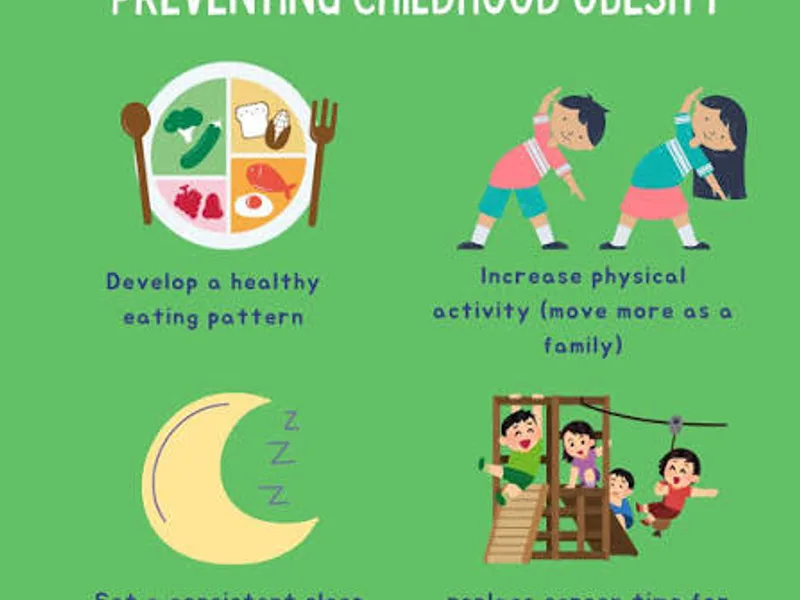
Rethink the after-school hour. If the child comes home and immediately sits down, that time is structurally locked into sedentary behaviour. Building in 20–30 minutes of outdoor or active play before screens are touched changes the default.
Walk wherever possible. Physical activity doesn't have to be structured — even daily walking with a parent accumulates into meaningful movement over time.
Sleep is non-negotiable. Children aged 6–12 need roughly 9–12 hours of sleep. Teenagers need 8–10. These are not suggestions — they are physiological requirements. Sleep directly affects metabolism, appetite, and mood. Getting sleep right may be the single most impactful change a family can make.
Involve the child in choosing the activity. A sport or activity a child chose for themselves is one they will stick with. Imposed exercise tends to create resistance. Ask what they enjoy — swimming, badminton, dance, martial arts — then find a way to enable it.
Don't make food the main focus. Weight conversations centred on food tend to create anxiety around eating. For children, the more sustainable approach is building active habits. Nutrition matters — significantly — but it is most effective when paired with movement, not positioned as a punishment or reward system.
When to See a Doctor
Not every child who is heavier than average has a medical problem. But certain signs warrant a conversation with a paediatrician or endocrinologist:
A child whose BMI has climbed quickly over a short period
A child who is consistently short of breath during mild activity
Any signs of early puberty, joint pain, or fatigue that seems disproportionate to their activity level
A child who shows emotional distress around their weight or body image (this deserves prompt mental health support)
Conditions like hypothyroidism (underactive thyroid — where the thyroid gland doesn't produce enough hormone, slowing metabolism) can sometimes underlie unexplained weight gain in children. These are ruled out with basic blood tests. should always be considered before assuming a child's weight is purely a lifestyle issue.
Parents can search for paediatricians and child health specialists near them on Doctar and book a consultation directly.
What Schools Can Do — and Often Don't
This piece would be incomplete without flagging the institutional gap. Schools in India are broadly not doing enough to support children's physical health. PE periods get sacrificed for exam preparation. Canteens sell packaged snacks and sugary drinks. The idea that a child's academic future depends on sitting still and studying — and that physical activity is a luxury to be earned — is deeply embedded in school culture.
Changing this requires parental pressure on school management, not just individual household choices. Parent-teacher associations can advocate for daily movement breaks, healthy canteen options, and PE that is inclusive rather than competitive.
A Short Note on Stigma
Children who are overweight or obese often know it — and often hear about it from peers, relatives, and sometimes doctors in ways that are unkind and counterproductive.around body image is a real and under-recognised issue. Weight stigma in childhood is associated with emotional eating, social withdrawal, and reduced physical activity — the opposite of what we want.