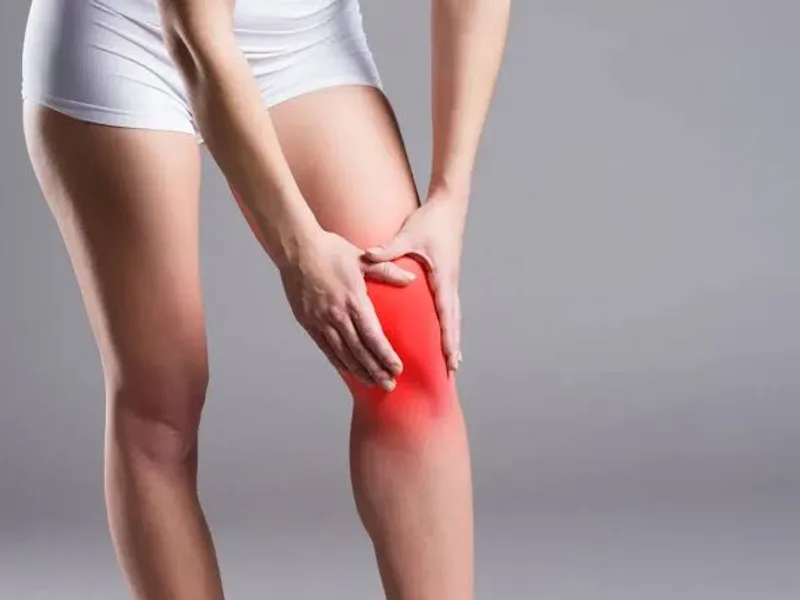
Squat deep enough times and eventually your knees will complain about something. That's not necessarily bad news. Most knee pain from squatting traces back to fixable technical or loading issues, not a structural problem that needs surgery.
That said, "most of the time" isn't "always," and it's worth knowing the difference between a normal adaptation ache and a warning sign worth getting checked. This guide covers both.
The Most Common Causes
Knee valgus, where the knees cave inward during the squat, is one of the more frequent culprits, particularly under heavier loads or toward the end of a fatiguing set. This shifts stress onto the inner knee structures in a way they're not well suited to handle repeatedly.
Weak or underactive hip muscles,
particularly the glutes, often contribute to that inward knee collapse. The hips are supposed to control knee tracking during a squat, and when they're not doing their job properly, the knee ends up compensating.
Foot and ankle mobility limitations
show up more than people expect. If your ankles can't dorsiflex properly, meaning your shin can't tilt forward enough over your foot, your body often compensates by shifting weight forward onto the knees or altering the whole movement pattern to get depth.
Doing too much too soon
is the least glamorous explanation, and probably the most common one. Increasing squat depth, frequency, or load faster than your knee tendons can adapt is a straightforward recipe for irritation, even with technically decent form.
Patellar tendon irritation,
sometimes called jumper's knee even though it's common in squatters too, tends to develop from repetitive loading without adequate recovery, showing up as a dull ache just below the kneecap that's worse with continued loading.
Why This Gets Missed So Often
In clinical practice, this is often missed because people fixate on the knee itself when the actual problem often originates somewhere else in the chain, usually the hip or ankle. Treating knee pain by only addressing the knee, while ignoring a mobility or strength deficit elsewhere, tends to produce short-lived relief at best.
It's a bit like tightening a loose bolt on one side of a wobbly table while ignoring the uneven leg causing the wobble in the first place. The knee is often the symptom, not the source.
Checking Your Form
Foot position matters more than most lifters realise. Feet turned out slightly, roughly matching your natural hip structure, generally allows for better knee tracking than feet pointed straight forward, which can force unnatural knee movement for people with certain hip anatomy.
Watch whether your knees track in line with your toes throughout the movement, particularly on the way up from the bottom of the squat, where valgus tends to show up most. Recording yourself from the front, even briefly, often reveals things you can't feel happening in the moment.
Depth matters too, but not in the way most people assume. Going too deep too fast, before you've built the mobility and control to manage that range safely, causes more knee issues than squatting to a moderate depth with solid control. Depth should be earned gradually, not forced immediately because a program says so.
Fixing the Underlying Issues
Strengthening the glutes with targeted exercises, done consistently over weeks rather than a single session, tends to improve knee tracking noticeably for people whose pain traces back to hip weakness. This isn't an overnight fix, but it's one of the more reliable long-term solutions.
Ankle mobility work, things like calf stretches and ankle dorsiflexion drills, can help people who genuinely lack the range needed to squat comfortably without compensating elsewhere. If ankle stiffness is significant, a slightly elevated heel, using small plates or lifting shoes, can also help in the short term while mobility improves.
Reducing load or depth temporarily, then rebuilding gradually with attention to form, is often the fastest path back to pain-free squatting, even though it feels like a step backward at the time. A physiotherapist can assess exactly where your specific pattern breaks down and build a targeted plan rather than generic advice applied blindly.
When It's More Than a Form Issue
Not every knee ache is a technique problem, and it's worth being honest about that. Certain signs point toward something needing proper medical assessment rather than a form adjustment.
Sharp, sudden pain during a specific rep, especially with a popping or tearing sensation
Visible swelling around the knee that doesn't settle within a day or two
Instability, like the knee giving way or feeling like it might buckle
Pain that persists or worsens despite reducing load and adjusting form over several weeks
Locking, catching, or an inability to fully straighten or bend the knee
If any of these apply, seeing an orthopedist is the right next step, ideally before continuing to squat through it. Imaging through a diagnostic centre near you may be needed to rule out ligament or meniscus involvement, which changes the treatment approach considerably compared to a simple overuse issue.
Getting Back to Squatting Properly
Once pain has settled, ease back into squatting gradually rather than returning straight to your previous weight and depth. A few weeks of reduced load with close attention to the specific issue that caused the pain, whether that's knee tracking, ankle mobility, or pacing, tends to prevent the same problem recurring within a month of getting back to normal training.
A physiotherapist can guide this return-to-training phase properly, which matters more than people expect since rushing back too soon is one of the more common reasons knee issues become a recurring pattern rather than a one-off event.
Getting the Right Support Around Your Recovery
Sorting out knee pain properly usually benefits from a bit of guidance rather than trial and error alone. You can browse verified doctors near you or doctors in Kolkata to find a physiotherapist or orthopedist suited to your specific situation. For imaging or a fuller diagnostic workup, diagnostic centres across Kolkata or hospitals in Kolkata can confirm what's needed before deciding on treatment.
If mobility is limited by the injury, home visit doctor services can bring an initial assessment to you rather than requiring travel on a painful knee. A dietitian can support tissue recovery through proper nutrition, which plays a genuine role in healing timelines that's often overlooked.
Medicines or supports recommended during recovery can be ordered through a pharmacy near you, and ongoing monitoring can be arranged through home nursing services or a compounder between physiotherapy sessions if needed. A general physician near you can help coordinate care if you're unsure where to start, and anyone managing diabetes alongside recovery should keep an endocrinologist informed, since blood sugar control affects healing speed.
For cardiovascular concerns relevant to overall training capacity, a cardiologist is worth consulting separately, and persistent skin irritation from knee sleeves or braces is worth mentioning to a dermatologist if it doesn't resolve. Younger athletes with recurring knee pain should be evaluated by a pediatrician rather than treated with adult training principles applied without adjustment, and women managing training around pregnancy should involve a gynecologist early. If imaging ever points toward a procedure, comparing options through surgery listings is worth doing carefully, and outside Kolkata, similar support networks exist through doctors across India.