The 2026 LDL Guideline Changes the Conversation
The new cholesterol guidance is more than a minor revision. Published in March 2026, the 2026 ACC/AHA multisociety guideline on the management of dyslipidemia replaces the 2018 AHA/ACC cholesterol guideline and broadens its focus beyond LDL cholesterol to other atherogenic lipoproteins, triglyceride-rich particles and lipoprotein(a), or Lp(a).
The reaction has been mixed for a simple reason: the new framework gives doctors more information to work with, but it also makes cholesterol decisions more detailed.
For patients, that can sound complicated. The practical message is easier to understand: LDL still matters, but doctors are being encouraged to look at the whole cardiovascular-risk picture rather than one laboratory number.
For background, DOCTAR's guide to cholesterol levels explains the basic difference between LDL, HDL and triglycerides.
LDL Targets Are Back
One of the biggest changes is the return of LDL-C treatment goals.
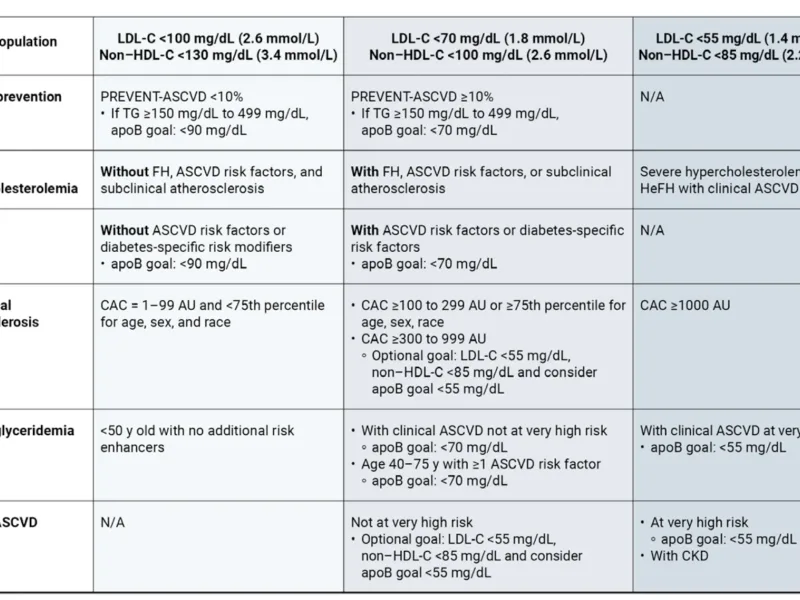
The new guideline recommends an LDL-C goal below 100 mg/dL for people at borderline or intermediate risk in primary prevention, and below 70 mg/dL for people at high risk. For secondary prevention, people with established atherosclerotic cardiovascular disease who are at very high risk have an LDL-C goal below 55 mg/dL.
That is a noticeable change in emphasis.
Earlier guidance placed substantial weight on the percentage reduction in LDL. The new approach keeps percentage reduction important but brings specific LDL and non-HDL cholesterol goals back into the discussion.
Patients who want a simple explanation of their numbers can also read DOCTAR's guide to ideal cholesterol levels.
Why Lower LDL Is Getting More Attention
The underlying thinking is about cumulative exposure.
LDL cholesterol can contribute to plaque buildup in artery walls over many years. The new guideline therefore encourages earlier attention to unhealthy lipid levels rather than waiting until cardiovascular risk becomes obvious.
That does not mean every young person with a mildly elevated LDL should immediately take medication.
It means clinicians are being asked to consider how long someone has been exposed to elevated cholesterol, along with family history and other risk factors.
DOCTAR's cholesterol balance guide provides useful background on how LDL, HDL and triglycerides fit together.
A New Risk Calculator Enters the Picture
Another major change is the move to the PREVENT-ASCVD equations for primary-prevention risk assessment in adults aged 30 to 79.
The new equations replace the older Pooled Cohort Equations and are designed to estimate 10-year and 30-year cardiovascular risk. Clinicians are also encouraged to personalise the calculated risk and, when appropriate, use additional information to reclassify it.
This matters because two people with the same LDL level may not have the same cardiovascular risk.
Age, blood pressure, diabetes, kidney disease, smoking and other factors can shift the overall picture.
DOCTAR's cholesterol management guide similarly explains why cholesterol numbers need to be interpreted alongside broader health factors.
Lp(a) Is Getting More Attention
The guideline gives a much bigger role to lipoprotein(a), or Lp(a).
It recommends that every adult have Lp(a) measured at least once in a lifetime. Lp(a) levels are strongly influenced by genetics, and elevated levels can add cardiovascular risk even when a standard cholesterol panel does not look particularly alarming.
This is one of the most practical changes for patients.
Someone may eat well, exercise regularly and still have inherited cardiovascular risk that is not obvious from routine LDL testing alone.
For a broader look at cardiovascular nutrition, DOCTAR's heart-health nutrition guide discusses diet, cholesterol, blood pressure and other risk factors.
What Is ApoB?
The guideline also gives a role to apolipoprotein B, or ApoB.
ApoB is a protein found on several particles that can contribute to artery disease. The guideline says ApoB measurement can be useful in selected patients, particularly those with diabetes, high triglycerides or other situations where LDL alone may not show the complete picture.
This does not mean everyone needs an ApoB test every time they have a cholesterol check.
It is better viewed as an additional tool when the clinical picture is unclear or residual risk needs further assessment.
DOCTAR's triglyceride testing guide explains why triglycerides are also part of the broader lipid picture.
Coronary Calcium Scoring Has a Bigger Role
The updated guidance also expands the use of coronary artery calcium, or CAC, scoring in selected adults.
CAC is a CT-based measurement that detects calcium in the coronary arteries. The guideline says it can help reclassify risk and inform LDL-C and non-HDL-C goals in appropriate patients.
It is not a test that everyone with high cholesterol needs.
The decision depends on the patient's age, estimated risk and whether the result would actually change the treatment conversation.
That distinction is important because more testing is not automatically better care.
Statins Are Not Being Pushed Aside
The new guideline does not signal the end of statins.
Statins remain a foundation of lipid-lowering treatment, particularly for people who need medication to reduce cardiovascular risk. The updated guidance also provides recommendations for people who cannot tolerate statins or who do not reach appropriate LDL levels with their current treatment.
DOCTAR's statin intolerance article explains why muscle symptoms and other concerns can complicate cholesterol treatment.
Patients should not stop a prescribed statin because of a social-media claim or a single uncomfortable symptom. A doctor can assess whether the medicine is actually responsible and discuss alternatives when appropriate.
Non-Statin Medicines Have a Larger Place
The treatment landscape is also broader than it was years ago.
The guideline discusses newer and established lipid-lowering therapies, including non-statin options for patients who need additional LDL reduction or cannot tolerate adequate statin treatment. The guideline overview specifically notes several newer FDA-approved lipid-lowering therapies among the developments considered in the update.
DOCTAR's Nexletol guide, Nexlizet guide and Nexlizet interaction guide discuss examples of non-statin cholesterol medicines.
PCSK9 therapies are another important part of the conversation. DOCTAR's Repatha guide and Leqvio side-effect guide cover two established approaches in this area.
The Diet Message Has Not Changed
Medication is only one part of cholesterol management.
The new guideline continues to emphasise healthy eating, physical activity, maintaining a healthy weight, avoiding tobacco and managing other cardiovascular risk factors.
The American Heart Association's 2026 dietary guidance also recommends patterns rich in vegetables, fruits, whole grains, healthy protein sources and unsaturated fats while limiting saturated fat, added sugars, sodium and highly processed foods.
DOCTAR's high-cholesterol diet guide offers practical food guidance, while its heart-healthy recipes focus on putting those principles into everyday meals.
For more specific food choices, see DOCTAR's guide to heart-healthy foods, milk choices for cholesterol, heart-healthy fish guide and heart-healthy food plate guide.
What the Update Means for Younger Adults
One of the strongest messages is to avoid waiting too long.
The guideline says lifestyle counselling should begin early, with consideration of medication in young adults with LDL-C of at least 160 mg/dL or a strong family history of premature ASCVD.
That does not mean a young adult with one abnormal cholesterol result automatically needs medication.
Family history, repeated measurements and the overall risk profile matter.
DOCTAR's cholesterol guide by age can help explain why cholesterol interpretation changes across life stages.
Diabetes and Kidney Disease Get Specific Attention
The updated guideline recommends LDL-lowering therapy for adults aged 40 to 75 with diabetes, stage 3 or 4 chronic kidney disease, or HIV, regardless of LDL-C level.
That recommendation reflects the fact that cardiovascular risk is influenced by much more than LDL alone.
For patients with several conditions, the treatment plan may therefore look different from that of someone whose only issue is mildly elevated cholesterol.
DOCTAR's cholesterol and heart-risk information provides another perspective on how cholesterol measurements fit into broader health-risk assessment.
The Smoking Connection Still Matters
Smoking is not a cholesterol problem alone.
It damages blood vessels and can worsen the overall cardiovascular risk profile. DOCTAR's smoking and heart-risk guide explains its relationship with HDL, LDL and cardiovascular disease.
In clinical practice, this is often missed because patients focus heavily on the LDL number while overlooking blood pressure, tobacco exposure, diabetes, weight and family history. The guideline's broader approach makes that mistake harder to justify.
Why Some Patients May Feel Confused
There is a natural temptation to turn the new guideline into one headline: "LDL should be below X."
That is not how the document works.
The guideline uses risk categories, treatment goals, percentage reductions, biomarkers and selective additional testing. It is deliberately more personalised.
Even DOCTAR's sudden cholesterol spike guide shows why an unexpected cholesterol result needs context rather than an immediate conclusion.
A single test can start a conversation. It should not end one.
What Patients Should Ask Their Doctor
A useful appointment does not need to be complicated.
Ask what your LDL level means for your personal cardiovascular risk. Ask whether you need a repeat lipid panel, whether Lp(a) should be checked, whether ApoB would add useful information, and whether medication is appropriate.
If treatment is recommended, ask what LDL goal you are working toward and how progress will be monitored.
A home cholesterol test may be convenient, but it should not replace clinical assessment. DOCTAR's home cholesterol testing guide explains the role and limitations of home testing.
If you are taking a statin, ezetimibe or another lipid-lowering medicine, do not change the treatment without medical advice. DOCTAR's Vytorin guide, rosuvastatin interaction guide and atorvastatin interaction guide provide additional reading about cholesterol medicines.
The Bigger Reaction to the 2026 Update
The strongest part of the new guideline may be its attempt to move cholesterol care away from a one-number mindset.
LDL remains central. But Lp(a), ApoB, triglycerides, diabetes, kidney disease, family history, lifestyle and previous cardiovascular disease can all change the meaning of that LDL result.
For patients, that means more individualised conversations rather than a universal cholesterol target.
And that is probably the right direction. The difficult part will be making a more detailed guideline understandable without turning it into another round of internet-friendly health myths.