What are the symptoms of low testosterone?
Low testosterone, medically called testosterone deficiency or hypogonadism, occurs when testosterone levels are consistently low and are accompanied by relevant symptoms or signs. Symptoms can vary considerably between men.
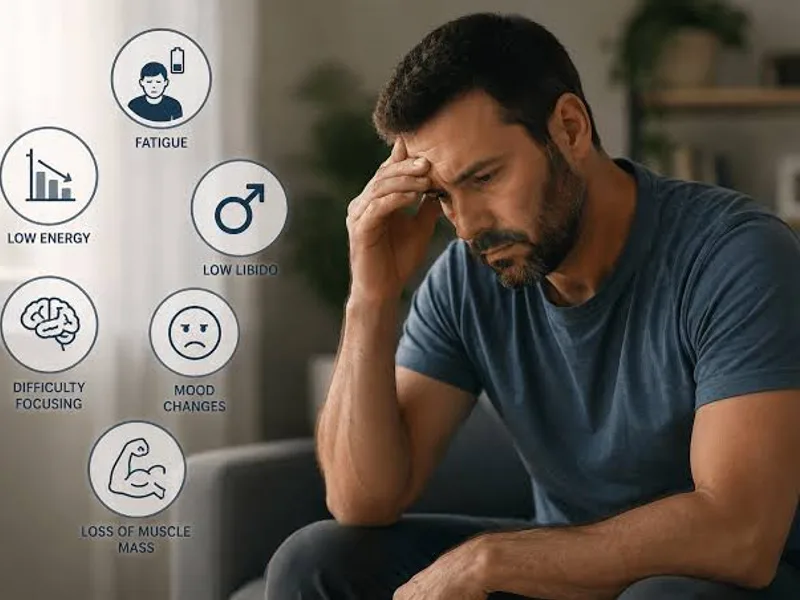
The Endocrine Society lists reduced sex drive, erectile dysfunction, loss of spontaneous erections, reduced energy, decreased muscle mass, infertility, mood changes and difficulty concentrating among possible symptoms.
One symptom alone does not prove that testosterone is low. Fatigue, low mood and reduced sexual desire, for example, can occur with stress, depression, poor sleep, medication effects and several other medical conditions.
1. Reduced sex drive
A noticeable drop in sexual desire is one of the more recognisable symptoms.
A man may find that sexual thoughts occur less often or that he has less interest in initiating sex. The change may be gradual, so it is useful to compare the current pattern with what is normal for that individual.
Low libido can also have psychological, relationship or medication-related causes, so it should not automatically be attributed to testosterone.
2. Erectile problems
Low testosterone can be associated with erectile dysfunction and fewer spontaneous erections.
However, testosterone is only one factor involved in erections. Blood-vessel health, diabetes, medications, anxiety, neurological conditions and relationship factors can also contribute.
If erection problems persist, a medical evaluation is more useful than assuming that testosterone is the cause.
3. Persistent tiredness and low energy
Some men with testosterone deficiency report reduced energy or fatigue. The AUA also lists reduced energy, endurance and physical performance among symptoms that may accompany testosterone deficiency.
But tiredness is one of the least specific symptoms. Poor sleep, stress, anaemia, thyroid disorders, depression, overtraining and chronic illness can all produce similar complaints.
In clinical practice, this is often where confusion starts. A man may see an advertisement promising to “boost testosterone” because he feels tired, when the real cause may have nothing to do with testosterone.
4. Reduced muscle mass or strength
Testosterone helps maintain muscle and bone health. Men with prolonged testosterone deficiency may experience reduced muscle mass and physical strength.
Changes tend to be more meaningful when they occur alongside other symptoms, such as low libido or reduced energy. Losing muscle because of inactivity or poor nutrition does not automatically mean testosterone is low.
5. Mood changes and difficulty concentrating
Some men with testosterone deficiency report irritability, depressed mood, reduced motivation or difficulty concentrating.
These symptoms are particularly nonspecific. Depression, anxiety, chronic stress and inadequate sleep can cause very similar problems.
That is why a low mood should not simply be treated with testosterone without establishing whether testosterone deficiency is actually present.
6. Infertility or lower sperm production
Testosterone has an important role in male reproductive function, but this area is frequently misunderstood.
Low testosterone can be associated with reduced sperm production and infertility. At the same time, taking testosterone from outside the body can suppress the body's own sperm production. The Endocrine Society therefore recommends against testosterone therapy in men planning fertility in the near term.
A man concerned about fertility should discuss the issue with a qualified doctor rather than self-treating with testosterone.
7. Changes in body composition
Long-standing testosterone deficiency can be associated with reduced muscle mass and changes in body composition. Over time, low testosterone may also affect bone health.
These changes are not specific enough to diagnose testosterone deficiency by appearance alone.
8. Breast enlargement or tenderness
Breast enlargement or tenderness can occur in some men with testosterone deficiency.
There are several possible causes of breast enlargement in men, however, including medication effects and hormonal changes. New or unexplained breast changes should therefore be assessed by a clinician.
How is low testosterone diagnosed?
Symptoms alone are not enough.
The Endocrine Society recommends diagnosing testosterone deficiency only when a man has compatible symptoms or signs together with consistently and unequivocally low testosterone levels. It recommends confirming the result with a repeat morning fasting testosterone measurement.
The AUA similarly recommends two separate early-morning testosterone measurements and uses a total testosterone level below 300 ng/dL as a reasonable cut-off supporting the diagnosis, alongside symptoms or signs.
Testosterone levels naturally vary during the day and can also be temporarily affected by factors such as severe illness, poor nutrition and excessive exercise.
What causes low testosterone?
The cause matters because treatment depends on it.
Problems can originate in the testes themselves or in the brain and pituitary system that controls testosterone production. Other contributors can include obesity, type 2 diabetes, chronic illness, some medicines, anabolic steroid use, testicular injury and certain pituitary or genetic conditions.
A doctor may therefore investigate the cause rather than simply treating the testosterone number.
Should men take testosterone for these symptoms?
Not without proper evaluation.
Testosterone therapy can be appropriate for men who have confirmed testosterone deficiency, but it is not a general treatment for tiredness, ageing or normal variations in sex drive. The Endocrine Society's 2026 statement again emphasises accurate diagnosis based on symptoms plus consistently low laboratory measurements.
Men who are planning to have children should be particularly cautious because testosterone therapy can interfere with sperm production.