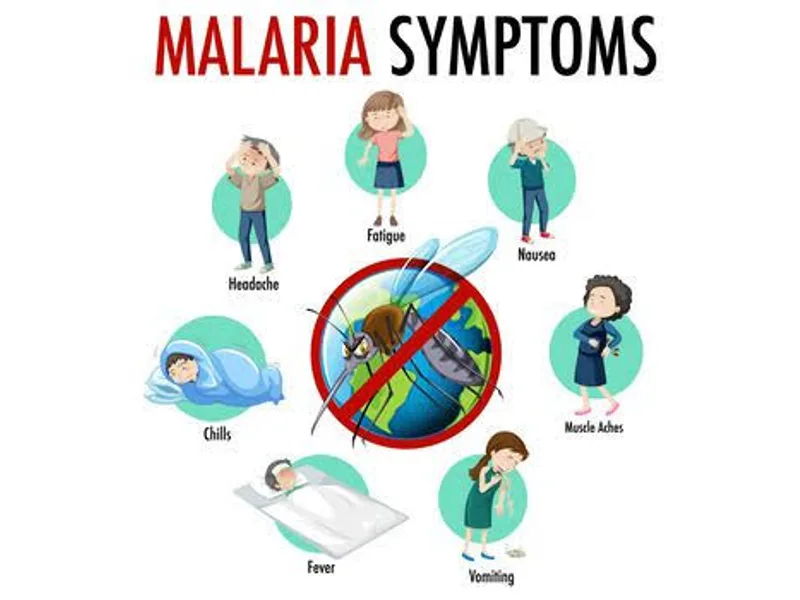
Malaria doesn't announce itself politely. It usually starts with chills that feel like the flu, then a fever that climbs fast, then exhaustion that makes getting out of bed feel like a chore. For a disease that's been around for thousands of years, treating it is still a bit of a race against time.
How Malaria Is Actually Diagnosed First
You can't treat malaria properly without confirming it first. A blood test — usually a rapid diagnostic test or a microscopy smear — tells the doctor which of the malaria parasites is involved. This matters more than people realise, because Plasmodium falciparum and Plasmodium vivax (the two most common types in India) don't always respond to the same treatment.
If you've had a fever for more than two days with no clear cause, a general physician near you is usually the right first stop. In Kolkata, for instance, general physicians see a steady stream of fever cases through the monsoon and early winter months, and most will order a malaria test alongside a basic blood count before deciding anything else.
The Medicines Doctors Actually Use
This is the part I'll keep general on purpose — dosage and drug choice depend entirely on your weight, the parasite type, and whether you're pregnant, so this isn't something to self-manage from an article. Broadly, antimalarial medicines fall into a few families: artemisinin-based combination therapies (often just called ACTs) for falciparum malaria, and chloroquine-based regimens for vivax malaria in areas where resistance isn't a concern.
In clinical practice, this is often missed because patients start feeling better after two or three days and stop the full course. That's a real problem — parasites that survive an incomplete course are part of why drug resistance keeps creeping up in certain regions. Finishing the prescribed course, even after symptoms fade, isn't optional.
For vivax malaria specifically, there's often a second medicine added afterward to clear parasites hiding in the liver. Skip this step and the infection can come back weeks or months later, which surprises a lot of patients who assumed they were done.
Special Cases: Children, Pregnancy, and Severe Malaria
Malaria in children can turn serious faster than in adults, partly because kids dehydrate quicker and can't always describe what's wrong. If a child's fever isn't responding to basic care within a day, it's worth getting them seen by a pediatrician rather than waiting it out.
Pregnant women are another group where malaria needs closer attention — the infection carries higher risks for both mother and baby, and certain antimalarial drugs aren't considered safe during pregnancy. A gynecologist working alongside a physician usually manages this jointly rather than treating it as a routine fever case.
Then there's severe malaria — the kind involving organ stress, very low blood sugar, breathing difficulty, or confusion. This isn't something to manage from home, full stop. It calls for hospital admission, IV medication, and close monitoring. If you're ever unsure whether symptoms have crossed that line, err on the side of urgent care.
From Diagnosis to Recovery — What the Process Looks Like
Here's roughly how it plays out for most people. The fever and blood work happen through a diagnostic center or lab, often the same day symptoms are reported — you can also search diagnostic labs directly if your doctor hasn't already referred you to one. Mild to moderate cases are usually managed on an outpatient basis, with medicines picked up from a nearby pharmacy or ordered as medicine delivery.
Severe cases go the other way — toward a hospital for admission, sometimes reached via an ambulance if the patient can't travel safely. Hospitals equipped for emergency care or staffed with emergency medicine specialists will typically run IV fluids and monitor blood counts closely during the first 48 hours, which tend to be the most unpredictable window.
For families managing recovery at home afterward, a lot of the day-to-day support — checking vitals, giving injections, or drawing follow-up blood samples — can be handled through a home visit doctor, a visiting nurse, or a compounder for routine tasks like injections and sample collection, so the patient isn't dragged back and forth to a clinic while still weak.
Recovery Isn't Instant, and That's Normal
Fatigue after malaria can linger for a couple of weeks even after the parasite count comes back clean. That surprises people who expect to feel "back to normal" the moment the fever breaks. It's worth easing back into physical activity rather than pushing through — a physiotherapist can help if weakness or joint pain hangs around longer than expected, and getting basic nutrition advice from a dietitian isn't a bad idea either, especially for anyone who lost significant weight during the illness.
If you're outside Kolkata, the same care pathway applies — you can look up doctors in Mumbai, Delhi, or Chennai through the same kind of search. Malaria patterns do shift by region and season, so a doctor practicing locally will usually have a better read on what's circulating nearby than a generic guideline would.
Related Resources on Doctar
For further reading and related care options, see the Doctar health blog, about Doctar, the pulmonologist directory for breathing-related complications, and search hospitals nationwide.