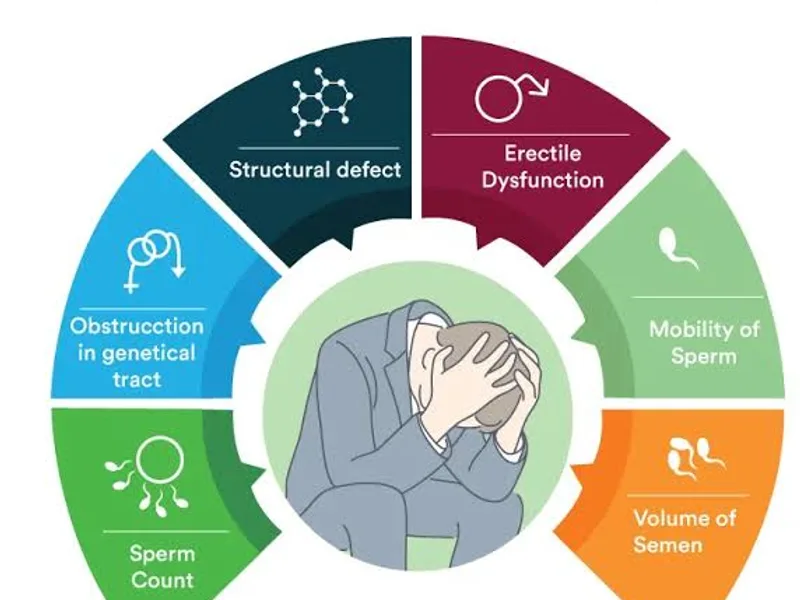
What is male infertility?
Male infertility means a man has difficulty causing a pregnancy with his partner. It does not necessarily mean that he produces no sperm.
The AUA/ASRM guideline notes that male factors contribute to infertility in approximately half of infertile couples, either alone or together with female factors. A male evaluation is therefore an important part of an infertility assessment.
Fertility depends on several steps working properly: the testes must produce healthy sperm, sperm must mature and move effectively, and the reproductive tract must allow them to reach the semen.
Problems anywhere along that pathway can reduce fertility.
1. Low sperm count
One of the most familiar causes is oligospermia, meaning a lower-than-expected concentration of sperm in semen.
Sperm count is only one part of fertility, though. Doctors also consider sperm movement, called motility, and sperm shape, called morphology.
Doctar's guide to semen and sperm explains why semen and sperm are not the same thing and why sperm count, movement and shape all matter.
2. Varicocele
A varicocele is an enlargement of veins around the testicle. It is one of the more common potentially treatable causes of male infertility.
Varicoceles may affect the environment around the testicles and can be associated with reduced sperm production or poorer sperm quality.
Some men have no symptoms. Others may notice heaviness, discomfort or enlarged veins in the scrotum.
A doctor can determine whether a varicocele is clinically significant and whether treatment is appropriate.
3. Hormonal problems
Sperm production depends on a carefully coordinated hormonal system involving the brain, pituitary gland and testicles.
Disorders affecting testosterone, follicle-stimulating hormone (FSH), luteinizing hormone (LH), thyroid hormones or other parts of this system can interfere with sperm production.
Importantly, low testosterone does not automatically mean a man should receive testosterone therapy when he is trying to have a child. Testosterone taken from outside the body can suppress sperm production.
Men concerned about hormones can read Doctar's guide to testosterone levels for background information.
4. Testosterone therapy and anabolic steroids
This is an especially important cause that is sometimes overlooked.
External testosterone and anabolic steroids can suppress the hormonal signals needed for sperm production. A man may gain muscle or improve symptoms while his sperm count falls significantly.
Doctar's testosterone and men's health guide discusses the fertility consequences of testosterone and hormone-related products.
In clinical practice, this is an important conversation because some men begin testosterone for low energy or gym performance without realising that it can work against their immediate fertility goals.
5. Infections
Some infections can damage sperm production or interfere with the reproductive tract.
Certain sexually transmitted infections and infections affecting the testicles or epididymis may cause inflammation or scarring. In some cases, the damage can affect sperm production or transport even after the infection has been treated.
Pain, swelling or a lump around a testicle should not be ignored.
Doctar's information on understanding the scrotum provides additional information about conditions affecting the testicles and scrotum.
6. Blockages in the reproductive tract
A man may produce sperm normally but still have difficulty causing pregnancy if sperm cannot reach the semen.
Blockages can occur because of previous infections, surgery, trauma or certain congenital conditions. Vasectomy is an intentional example of blocking sperm transport.
In some situations, doctors can surgically correct a blockage or retrieve sperm directly for use in assisted reproduction.
7. Problems with ejaculation
Fertility requires sperm to be delivered effectively.
Retrograde ejaculation occurs when semen travels backward into the bladder instead of leaving through the penis. Diabetes, certain medicines and some surgeries can contribute to this problem.
Other ejaculation disorders can also interfere with conception.
Men experiencing delayed ejaculation or other persistent ejaculation problems should discuss them with a qualified clinician rather than assuming fertility is unaffected.
8. Genetic conditions
Some men have genetic conditions that affect testicular development, hormone production or sperm production.
Klinefelter syndrome is one example. Other genetic conditions can affect the development of the reproductive tract or sperm-production process.
Genetic testing may be considered in selected men, particularly when sperm production is severely impaired.
9. Undescended testicles
The testicles normally descend into the scrotum before birth. When one or both remain undescended, fertility can be affected later in life.
The risk depends on factors such as whether one or both testicles were affected and whether the condition was treated.
A history of undescended testicles should therefore be mentioned during a fertility evaluation.
10. Smoking, alcohol and recreational drugs
Lifestyle factors can influence sperm quality.
Smoking is associated with poorer sperm parameters, while heavy or ongoing alcohol use can affect testosterone production and sperm production. Certain recreational drugs may also affect sperm number and quality.
Anabolic steroids deserve particular attention because they can strongly suppress natural sperm production.
Doctar's article on alcohol's impact on testosterone explores how heavy alcohol use can affect male hormones and reproductive health.
11. Obesity and metabolic health
Excess body weight can be associated with hormonal changes and poorer reproductive health.
Obesity may affect sperm directly or contribute to hormonal changes that interfere with fertility.
This does not mean every man with obesity is infertile. Fertility is influenced by several factors, and weight is only one part of the picture.
12. Heat and environmental exposures
Sperm production is sensitive to the environment around the testicles.
Long-term exposure to excessive heat, certain industrial chemicals, pesticides, heavy metals and radiation can affect sperm production or function.
The impact depends on the type, intensity and duration of exposure.
Men working around chemicals, solvents, pesticides or heavy metals should discuss occupational exposures with their doctor when fertility problems arise.
13. Medicines and cancer treatment
Some medicines can affect sperm production or ejaculation.
Cancer treatments deserve particular attention. Chemotherapy and radiation can damage sperm-producing cells, sometimes temporarily and sometimes permanently. Certain surgeries can also interfere with sperm transport.
Men who may want children in the future should discuss fertility preservation before cancer treatment whenever possible.
14. Stress and mental health
Long-term emotional stress may affect sexual function and can also be associated with changes in semen quality.
Stress may also indirectly affect fertility by disrupting sleep, reducing sexual frequency or contributing to alcohol and tobacco use.
Doctar's resources on stress management and anxiety management can provide additional information when psychological factors are part of the picture.
15. Sometimes there is no obvious cause
Not every case of male infertility has a clear explanation.
A man may have abnormal sperm parameters despite a history and examination that do not reveal an obvious cause. This is sometimes described as idiopathic male infertility.
That can be frustrating, but “unexplained” does not mean that treatment or assisted reproduction is impossible.
The AUA/ASRM guideline emphasises that evaluation helps determine whether a treatable male-factor condition exists and can help guide the couple toward appropriate fertility treatment.
Does erectile dysfunction cause infertility?
Not necessarily.
Erectile dysfunction and infertility are different problems. A man can have ED and normal sperm production, while another man can have poor sperm quality despite having normal erections.
However, severe erection problems can make intercourse difficult or impossible, preventing sperm from being delivered during the fertile window.
Doctar's information on erectile dysfunction explains some of the factors that can affect erections.
When should a man have a fertility evaluation?
Consider medical evaluation when a couple has been trying to conceive without success, particularly after 12 months of regular unprotected intercourse. Earlier assessment may be appropriate when there are known risk factors, sexual problems, testicular abnormalities or a history of fertility-affecting treatment.
The evaluation commonly includes a detailed medical and reproductive history, physical examination and semen analysis. Further hormone, genetic or imaging tests may be recommended depending on the findings.
Do not assume the evaluation should focus only on the woman. Male and female factors can coexist.