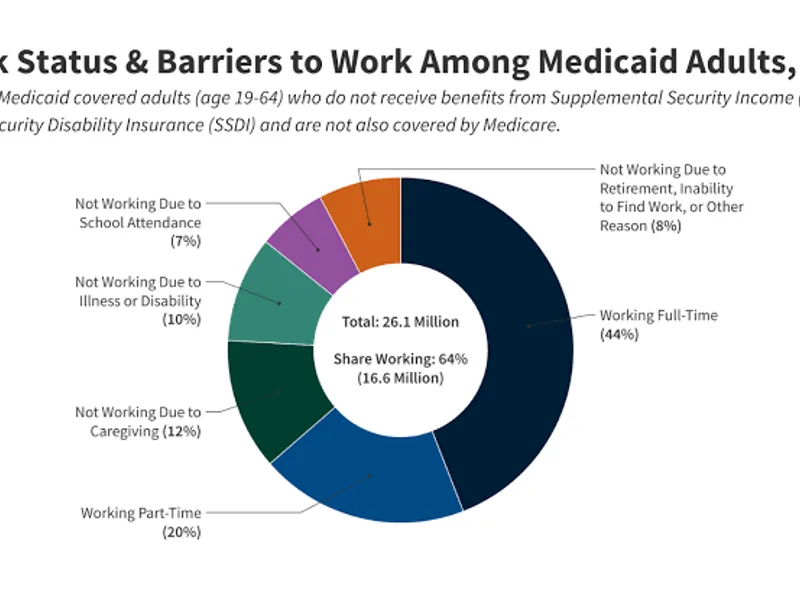
Policymakers promised that new federal Medicaid work rules would contain robust safety nets for vulnerable populations. Those assurances sound reassuring in legislative speeches, but the fine print tells a different story. Homelessness alone does not qualify an individual for an exemption from reporting monthly work hours.
This policy choice overlooks the harsh reality of living without stable shelter. While federal guidelines presume that unhoused adults can easily document medical frailty or work activities, street-level healthcare telling a far grimmer story. In clinical practice and street medicine outreach, this is often missed because administrators evaluate paperwork rather than living conditions.
Assurances Fall Short in the Fine Print
When discussions around Medicaid work requirements re-emerged, advocates repeatedly sought explicit protections for unhoused Americans. Officials indicated that individuals facing severe hardship would not be abandoned. However, federal implementation rules do not list homelessness as an independent exemption category.
Instead, unhoused individuals must rely on general hardship waivers or medical exemptions. To claim a medical exemption, an individual must typically submit clinical documentation from a certified provider verifying a physical or mental impairment. For someone sleeping in a shelter or an encampment, getting that signature is easier said than done.
How is someone supposed to maintain monthly reporting forms when they lack a secure mailbox, electricity to charge a phone, or reliable internet? They simply cannot. As a result, eligible people lose coverage not because they refuse to work, but because administrative red tape cuts them off.
The Gap Between Paper Qualifications and Daily Reality
A significant portion of unhoused adults live with chronic physical illnesses, severe depression, or substance use disorders. On paper, these health conditions ought to qualify them for medical exemptions under existing rules. In reality, securing official proof demands consistent contact with healthcare systems.
When a patient visits a general physician or a family medicine doctor, diagnosing and documenting a disabling condition takes time. Unhoused patients frequently miss follow-up visits due to transportation barriers or shelter curfews. Without continuous care, their medical records remain incomplete, blocking their path to an official exemption.
Mental health challenges complicate this process even further. Consulting a psychiatrist or accessing mental health counseling requires stable appointment scheduling. When someone is focused entirely on finding a safe place to sleep each night, filling out multi-page Medicaid verification forms inevitably drops to the bottom of their priorities.
Administrative Red Tape as a Hidden Barrier
Previous state-level experiments with Medicaid work reporting proved disastrous for low-income residents. Thousands of eligible individuals lost insurance because notices were mailed to old addresses or online portals glitched. For unhoused individuals, these administrative hurdles act as an outright exclusion.
Consider a person managing asthma who needs ongoing care from a pulmonologist. If their Medicaid drops due to a missed reporting deadline, they lose access to preventative inhalers. Soon, an easily manageable condition escalates into an emergency room visit.
The same pattern applies across medical disciplines:
Patients with hypertension or heart conditions lose touch with their cardiologist.
Diabetics who rely on an endocrinologist lose coverage for insulin supplies.
Individuals with joint pain or physical injuries stop seeing an orthopedic specialist.
Patients suffering from severe digestive issues lose access to a gastroenterologist.
Individuals managing nerve damage or seizures cannot reach a neurologist.
Women needing routine reproductive care miss visits with a gynecologist.
Skin infections left untreated without a dermatologist lead to systemic complications.
When coverage lapses, patients rely on emergency rooms for basic care, driving up healthcare costs for everyone.
The Ripple Effect on Community Healthcare
Disenrolling unhoused people from Medicaid destabilizes community health systems. Clinics that serve low-income populations depend on Medicaid reimbursements to keep their doors open. When uncompensated care spikes, clinics face severe budget shortfalls.
Modern digital health tools could bridge some of these gaps if leveraged properly. Services like online doctor consultation and telehealth consultation allow providers to reach patients outside traditional clinic walls. A quick virtual doctor visit can help a provider evaluate symptoms, issue a digital prescription, or record clinical notes needed for a disability exemption.
However, technology alone cannot fix policy design flaw. If the underlying rules demand rigid monthly paperwork from people living in survival mode, loss of coverage remains inevitable.
Connecting patients to a local primary care clinic remains the gold standard for long-term health management. Unhoused parents also need steady pediatric care for their children to maintain developmental checkups and immunizations. When families lose coverage, children miss critical screenings.
Practical Takeaways to Protect Your Coverage
If you or someone you assist is navigating Medicaid reporting while unhoused, taking prompt action can help prevent a coverage disruption:
Establish a Consistent Contact Address: Use a local day shelter, community clinic, or caseworker's office as your mailing address so state notices reach you promptly.
Schedule a Comprehensive Evaluation: Visit a clinic for a preventive health checkup and ask your provider to document any chronic physical or mental health conditions in your official medical record.
Request Medical Exemption Documentation: Ask your doctor to complete the state's medical frailty or work-exemption form during your visit.
Use Digital Options When Available: Utilize online appointment booking to schedule visits with qualified healthcare specialists without waiting in long clinic lines.
Keep Copies of Medical Records: Maintain secure physical or medical records access online to prove ongoing treatment history.
Seek Immediate Medical and Legal Help: If your coverage is mistakenly canceled, contact a legal aid organization immediately and seek urgent care support or a second medical opinion to appeal the decision.