Medicare enrollment isn't sign-up-anytime — here's why that matters
Medicare has defined enrollment windows, and missing the right one can mean permanent penalties added to your premium for as long as you have that coverage, according to Medicare.gov. Unlike most insurance you can join whenever you want, Medicare requires you to act during specific periods tied to your birthday, your work history, or a qualifying life event.
Knowing which window applies to your situation — and what it actually lets you change — is one of the most financially consequential things a Medicare-eligible person can do.
The Initial Enrollment Period is a seven-month window built around your 65th birthday: it starts three months before the month you turn 65, includes your birthday month, and ends three months after. This is when most people first enroll in Medicare Part A (hospital insurance) and Part B (medical insurance).
If you qualify for premium-free Part A — generally because you or your spouse paid Medicare taxes for at least 40 quarters — you typically won't face a late penalty for Part A even if you enroll later. Part B and Part D are different: missing your IEP without a valid Special Enrollment Period reason can trigger a penalty you'll pay for as long as you have that coverage.
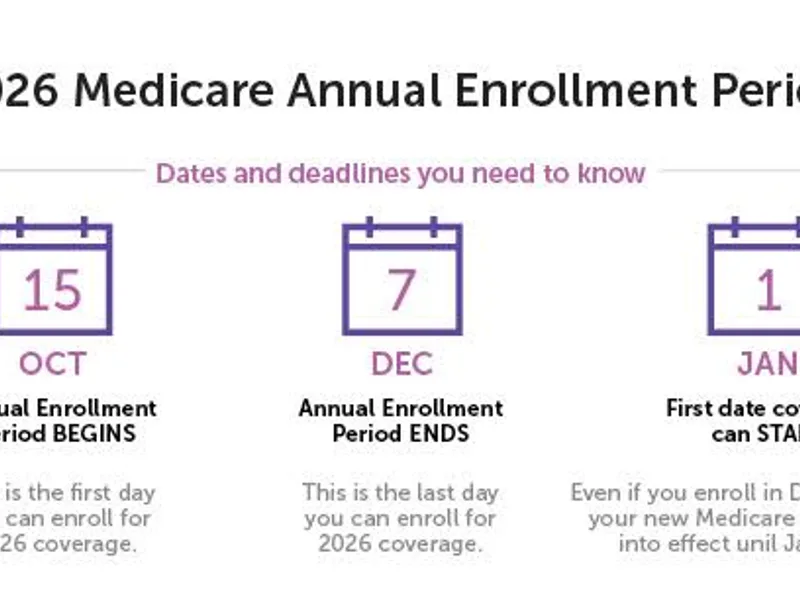
The Annual Enrollment Period — also called the Open Enrollment Period — runs October 15 through December 7 every year. For 2026 coverage, this window ran October 15 to December 7, 2025, with changes taking effect January 1, 2026.
During AEP, current Medicare beneficiaries can switch between Original Medicare and Medicare Advantage, change from one Medicare Advantage plan to another, switch back to Original Medicare, or join, drop, or change a Part D prescription drug plan. This window exists because Medicare plans can change their costs, coverage, and provider networks each year — which is why reviewing the Annual Notice of Change letter your current plan mails each September is worth doing before AEP opens.
Medicare Advantage Open Enrollment Period (MA OEP)
Running January 1 through March 31 each year, the Medicare Advantage Open Enrollment Period gives people already enrolled in a Medicare Advantage plan one additional chance to make a change. During this window, you can switch to a different Medicare Advantage plan or drop Medicare Advantage entirely and return to Original Medicare, adding a standalone Part D plan if needed.
This period is narrower than AEP — you can't switch from Original Medicare into Medicare Advantage during MA OEP, and you can only make one change during this window.
General Enrollment Period (GEP): a second chance if you missed your IEP
If you missed your Initial Enrollment Period and don't qualify for a Special Enrollment Period, the General Enrollment Period — January 1 through March 31 each year — lets you sign up for Part A and/or Part B. Coverage generally begins the month after you enroll, but enrolling through the GEP typically means you'll owe the late enrollment penalty described below.
Special Enrollment Periods let you enroll or make changes outside the standard windows when a qualifying life event occurs — most commonly, losing employer-sponsored health coverage, moving out of your plan's service area, or losing other creditable coverage. If you're still working past 65 and covered by an employer group health plan, you generally get an SEP to sign up for Medicare within 8 months of that employment or coverage ending, without facing a late penalty.
The specific SEP that applies to your situation determines both your enrollment window and what you're allowed to change, so it's worth confirming your exact circumstances with Medicare directly (1-800-MEDICARE) or a State Health Insurance Assistance Program (SHIP) counselor rather than assuming.
How the late enrollment penalties actually work
Part B penalty: For every full 12-month period you were eligible for Part B but didn't enroll, your monthly premium permanently increases by 10%. Medicare.gov gives this example: if you waited two full years (24 months) to sign up and didn't qualify for an SEP, you'd pay a 20% penalty on top of the standard Part B premium — $202.90 per month in 2026.
Part D penalty: The penalty is calculated as 1% of the national base beneficiary premium ($38.99 in 2026) for every full month you went without Part D or other creditable drug coverage, rounded to the nearest 10 cents, and added to your monthly Part D premium indefinitely. Medicare.gov's example: 14 months without coverage results in a 14% penalty added to your monthly plan premium. Generally, you're considered late if you go 63 or more continuous days without creditable coverage after your IEP ends.
Part A penalty: Most people qualify for premium-free Part A and face no penalty. If you have to pay a Part A premium and delay enrollment, a penalty may apply as well.
These penalties compound because they're recalculated each year against the current national base premium — meaning your penalty amount can actually increase over time even though the percentage stays fixed.
FAQ
What is the Medicare Initial Enrollment Period? It's a seven-month window centered on your 65th birthday — three months before, your birthday month, and three months after — during which most people first enroll in Medicare Part A and Part B.
When is Medicare's Annual Enrollment Period in 2026? The Annual Enrollment Period for 2026 coverage ran October 15 to December 7, 2025, with changes taking effect January 1, 2026. The next AEP, for 2027 coverage, runs October 15 to December 7, 2026.
How much is the Medicare Part B late enrollment penalty? Your Part B premium permanently increases by 10% for every full 12-month period you were eligible but didn't enroll and didn't qualify for a Special Enrollment Period. This penalty applies for as long as you have Part B.
Can I switch Medicare Advantage plans after the Annual Enrollment Period ends? Yes, if you're already enrolled in a Medicare Advantage plan. The Medicare Advantage Open Enrollment Period, January 1 through March 31, allows one additional plan change or a switch back to Original Medicare.
Do I get a penalty if I delay Medicare because I still have employer coverage? Generally no, as long as the employer coverage is considered creditable and you enroll within 8 months of that coverage or your employment ending, through a Special Enrollment Period.
Takeaway
The single most reliable way to avoid a permanent Medicare penalty is knowing your Initial Enrollment Period dates well before your 65th birthday arrives — mark your calendar for the seven-month window, and if you're not sure whether your current coverage is "creditable," call 1-800-MEDICARE or a SHIP counselor before that window closes.
5. Sources
Medicare.gov — "Avoid late enrollment penalties" and "When does Medicare coverage start?"
Centers for Medicare & Medicaid Services (CMS) — Medicare enrollment period guidance
Kaiser Permanente — "Medicare late enrollment penalties" (figures cross-referenced against Medicare.gov)