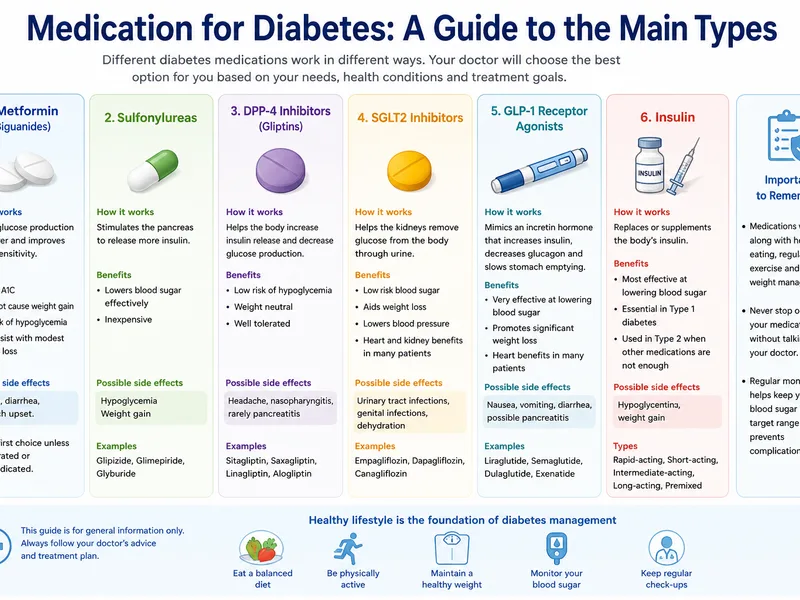
Diabetes medication falls into a few broad categories: insulin, which is required for type 1 diabetes and sometimes used in type 2; oral medications like metformin, sulfonylureas, and SGLT2 inhibitors; and injectable non-insulin medications like GLP-1 receptor agonists. <cite index="94-1">Metformin is typically the first-line oral treatment for type 2 diabetes, with other major drug classes — SGLT2 inhibitors, DPP-4 inhibitors, and sulfonylureas — used depending on individual health factors.</cite>
[REVIEWER: add clinical insight here — e.g., how you talk patients through starting a new medication class, especially if they've heard concerning things about it online]
Metformin remains the standard first choice for most people newly diagnosed with type 2 diabetes. <cite index="91-1">Metformin is classified as a biguanide and is the only medication currently available in that class. It lowers blood glucose primarily by reducing the amount of glucose the liver produces, and it also helps by making muscle tissue more sensitive to insulin so blood glucose can be used for energy. It's usually taken twice a day, and a common side effect is diarrhea, which tends to improve when the medication is taken with food.</cite>
<cite index="94-1">The American Diabetes Association recommends metformin for nearly all newly diagnosed patients, largely because of how effectively it lowers baseline blood sugar.</cite>
Sulfonylureas: An Older, Still-Used Class
Sulfonylureas have a long track record. <cite index="92-1">They've been in use since the 1950s and work by stimulating beta cells in the pancreas to release more insulin.</cite> <cite index="91-1">Three main sulfonylurea drugs are used today — glimepiride, glipizide, and glyburide — generally taken once or twice daily before meals.</cite> <cite index="92-1">While all sulfonylureas have similar effects on blood glucose, they differ in side effects, dosing frequency, and interactions with other medications.</cite> Cost is often a deciding factor here, since sulfonylureas tend to be more affordable than newer drug classes.
SGLT2 Inhibitors: Blood Sugar Through the Kidneys
SGLT2 inhibitors work through a mechanism unrelated to insulin entirely. <cite index="92-1">Glucose in the bloodstream normally passes through the kidneys, where it can be reabsorbed back into the blood. SGLT2 inhibitors block this reabsorption, causing excess glucose to be eliminated through urine instead — which improves blood glucose, supports modest weight loss, and offers other metabolic benefits.</cite>
These medications carry benefits that go beyond blood sugar control. <cite index="91-1">SGLT2 inhibitors are known to improve outcomes in people with heart disease, kidney disease, and heart failure, which is why they're often chosen for people with type 2 diabetes who also have those conditions.</cite> <cite index="91-1">Because they increase glucose in the urine, the most common side effect is genital yeast infections.</cite>
GLP-1 and Dual GIP/GLP-1 Receptor Agonists
This newer class has reshaped how type 2 diabetes is often managed. These medications mimic a natural hormone that helps regulate blood sugar and appetite. <cite index="92-1">Dosing schedules vary from twice daily to once weekly depending on the specific medication, and the most common side effect is nausea and vomiting, which tends to be more noticeable when starting the medication or increasing the dose.</cite> <cite index="92-1">One dual GLP-1/GIP receptor agonist currently on the market is tirzepatide.</cite>
Beyond blood sugar, this class is increasingly chosen with weight and cardiovascular risk in mind, alongside SGLT2 inhibitors — a shift from the older approach of simply adding medications in a fixed sequence.
[REVIEWER: add clinical insight here — e.g., how you decide between an SGLT2 inhibitor and a GLP-1 agonist for a specific patient, or common questions about switching between injectable and oral options]
DPP-4 Inhibitors: A Gentler, More Modest Option
DPP-4 inhibitors are often chosen when a gentler effect on blood sugar is the goal. <cite index="91-1">They help improve A1C — a measure of average blood glucose over two to three months — without causing hypoglycemia (low blood glucose),</cite> making them a reasonable option for people at higher risk of blood sugar dropping too low.
Insulin: Essential for Type 1, Sometimes Needed for Type 2
Insulin sits apart from every medication above because it isn't optional for type 1 diabetes. Anyone with type 1 diabetes requires insulin daily, since the condition means the pancreas produces little to no insulin on its own. In type 2 diabetes, insulin is typically added later, when oral medications and lifestyle changes aren't enough on their own to keep blood sugar in a healthy range. Insulin itself comes in several forms that differ in how quickly they act and how long they last, and a doctor determines the right type or combination based on individual blood sugar patterns.
How Doctors Choose Between These Options
Choosing a medication isn't just about blood sugar numbers anymore. <cite index="90-1">Current standards of care emphasize person-centered decisions that weigh cardiovascular and kidney risk, weight management, and treatment burden alongside glycemic control, with prescribers considering comorbidities, contraindications, side effect profiles, cost, and individual patient preferences.</cite>
In practice, that often means the presence of other conditions shapes the choice as much as blood sugar itself: someone with heart disease may be steered toward an SGLT2 inhibitor, someone focused on weight may be steered toward a GLP-1 agonist, and someone prioritizing affordability may reasonably start with a sulfonylurea instead. There's rarely a single "best" medication — the right fit depends on the whole health picture.
Practical Takeaway
Diabetes medication has expanded well beyond a single pill or a fixed sequence of drugs. Metformin remains the common starting point for type 2 diabetes, but the choice of what comes next increasingly depends on heart health, kidney function, weight goals, and cost — not blood sugar numbers alone. Type 1 diabetes always requires insulin, regardless of which other medications exist. Any change to a diabetes medication regimen should happen with a doctor, since the right choice is highly individual.
Frequently Asked Questions
What is the first medication usually prescribed for type 2 diabetes? Metformin is generally the standard first-line medication for type 2 diabetes, largely because of its effectiveness and long track record. A doctor may add other medications later if metformin and lifestyle changes aren't enough to manage blood sugar.
Do all diabetes medications work the same way? No. Different classes work through very different mechanisms — metformin reduces glucose production in the liver, sulfonylureas stimulate insulin release from the pancreas, SGLT2 inhibitors remove excess glucose through urine, and GLP-1 agonists mimic a hormone involved in blood sugar and appetite regulation.
Why would someone be prescribed an SGLT2 inhibitor instead of metformin alone? SGLT2 inhibitors are often added for people with type 2 diabetes who also have heart disease, kidney disease, or heart failure, since this class has shown benefits for those conditions beyond blood sugar control. The choice depends on a person's broader health profile, not blood sugar alone.
Is insulin only for type 1 diabetes? No. Insulin is always required for type 1 diabetes, but it's also sometimes needed for type 2 diabetes when other medications and lifestyle changes aren't enough to keep blood sugar in a healthy range.
Are newer diabetes medications like GLP-1 agonists better than older ones? "Better" depends on the individual. GLP-1 agonists offer benefits for weight and cardiovascular risk that older medications don't, but they also tend to cost more and can cause nausea, especially early in treatment. A doctor weighs these tradeoffs against a person's specific health needs.