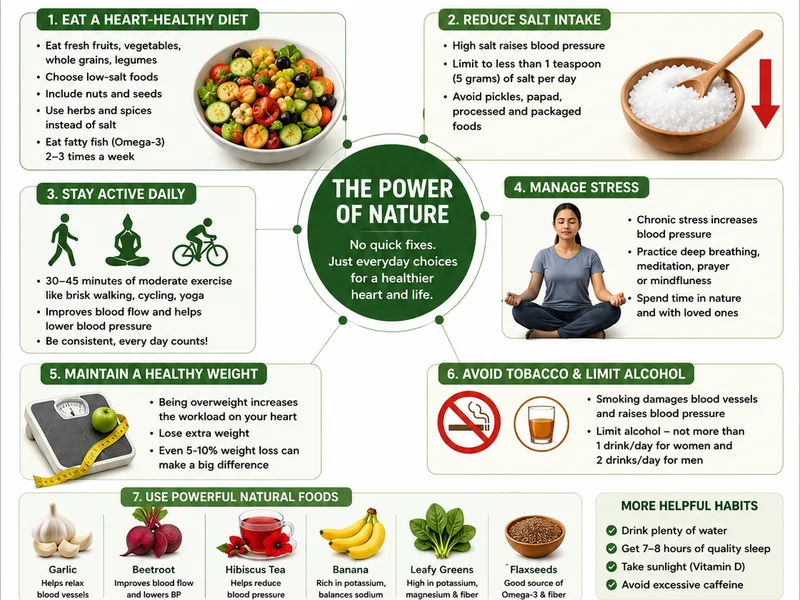
There's no natural cure for hypertension — no single food, herb, or supplement reverses it permanently. But several natural, non-drug approaches are backed by real clinical evidence and can meaningfully lower blood pressure, sometimes by amounts comparable to medication.
That gap between "cure" and "meaningful help" is where most of the confusion about natural blood pressure remedies lives. Here's what the evidence actually supports.
Hypertension, in most people, is a chronic condition without one identifiable cause — so there's nothing single for a natural remedy to fix. Health organizations consistently describe lifestyle approaches as ways to prevent, control, or lower blood pressure, not cure it. Even when lifestyle changes bring blood pressure fully into a normal range, that typically reflects successful management, not a permanent cure — the tendency toward high blood pressure can return if the habits lapse.
[REVIEWER: add clinical insight here — e.g., how you respond when patients ask about "curing" hypertension naturally, and what you steer them toward instead.]
That said, the approaches below aren't a consolation prize. Several are backed by strong evidence and can produce real, measurable drops in blood pressure.
Cutting Sodium
Reducing sodium intake is one of the most consistently supported natural interventions. Limiting sodium to 1,500 mg a day or less — the level considered ideal for most adults — may lower high blood pressure by roughly 5 to 6 mm Hg. One cardiologist has been quoted describing sodium reduction's effect as comparable to that of up to two blood pressure medications.
Practical ways to cut sodium include reading nutrition labels, choosing low-sodium alternatives, cooking more meals at home, and easing off the salt shaker gradually rather than all at once, since taste preferences adjust over time.
Regular Physical Activity
About 150 minutes of moderate exercise a week — roughly 30 minutes most days — can lower blood pressure by about 5 to 8 mm Hg in people who already have hypertension. Walking, cycling, swimming, and dancing are commonly recommended options, and consistency over time matters more than any single intense workout.
Losing Excess Weight
Weight loss is considered one of the most effective natural interventions for people who are overweight. As a general rule, blood pressure may drop by about 1 mm Hg for every kilogram (roughly 2.2 pounds) of weight lost. Carrying excess weight around the waist specifically is also linked to higher hypertension risk, independent of overall weight.
The DASH Diet and Potassium-Rich Foods
The Dietary Approaches to Stop Hypertension (DASH) diet — built around fruits, vegetables, whole grains, poultry, fish, and low-fat dairy, with less saturated and trans fat — is a widely recommended eating pattern for lowering blood pressure. Getting adequate potassium from natural food sources is part of this pattern and is associated with lower blood pressure.
Limiting Alcohol
Drinking alcohol only in moderation — generally up to one drink a day for women and two for men — is associated with a blood pressure reduction of around 4 mm Hg compared with heavier drinking. Excess alcohol, on the other hand, raises blood pressure and can make blood pressure medications less effective.
Stress Management and Sleep
Deep breathing and mindfulness practices are considered alternative techniques that may temporarily reduce blood pressure, and are generally viewed as a helpful complement to other changes rather than a standalone fix. Some research on tai chi and qigong has similarly shown potential blood pressure benefits, though this is an area where evidence is still developing. Poor sleep, including untreated sleep apnea, is also linked to higher blood pressure, making sleep quality a relevant piece of the picture.
Where to Be Skeptical
Not every "natural" claim holds up. Evidence on magnesium supplementation and blood pressure has been mixed, and research on vitamin D's effect on blood pressure remains conflicting, with more study needed. Caffeine causes a short-term spike in blood pressure, but there's limited evidence that regular consumption causes a lasting increase for most people — in fact, regular coffee or tea drinkers tend to have somewhat lower cardiovascular risk on average.
[REVIEWER: add clinical insight here — e.g., specific supplement claims patients frequently ask about, and how you'd want them framed for a general audience.]
As a general rule, it's worth talking to a healthcare provider before adding any supplement to a blood pressure routine, since some can interact with medications in ways that cause harmful, even life-threatening, side effects.
When Natural Approaches Aren't Enough on Their Own
Natural methods can meaningfully lower blood pressure, and for some people with mild elevations, they're enough on their own. But they're not a substitute for medical monitoring, and they don't replace prescribed medication for people who need it. Anyone currently taking blood pressure medication should talk to their provider before making major changes, and should never stop medication because lifestyle changes seem to be working.
Frequently Asked Questions
Can hypertension be cured naturally without medication? No single natural method cures hypertension, since most cases don't have one specific cause to eliminate. Natural approaches like diet, exercise, and weight loss can meaningfully lower blood pressure, and for some people with mild elevations, that may be enough to avoid medication altogether.
What is the fastest natural way to lower blood pressure? There's no instant natural fix, though sodium reduction and regular exercise tend to show measurable effects within a few weeks of consistent effort. Deep breathing and relaxation techniques may offer a temporary, short-term reduction in the moment.
Do supplements like magnesium or potassium cure high blood pressure? Getting adequate potassium from food is linked to lower blood pressure, but evidence for magnesium supplements specifically has been inconsistent. No supplement cures hypertension, and any supplement should be discussed with a doctor first, since some interact with blood pressure medications.
Is the DASH diet effective for lowering blood pressure naturally? Yes — the DASH diet is a widely recommended, evidence-based eating pattern for lowering blood pressure, built around fruits, vegetables, whole grains, and lean proteins while limiting saturated fat and sodium.
Can I stop my blood pressure medication if natural methods are working? Not without talking to your doctor first. Even when blood pressure looks normal, that often reflects successful management rather than a cure, and stopping medication independently can allow blood pressure to rise again.
The Takeaway
Think of these natural approaches less as a cure and more as a set of levers, each backed by evidence and each capable of moving your numbers a measurable amount — sodium reduction and exercise tend to have the strongest evidence behind them, so they're a reasonable place to start. Track progress with regular home monitoring, and loop in a doctor before adding supplements or changing any prescribed medication.