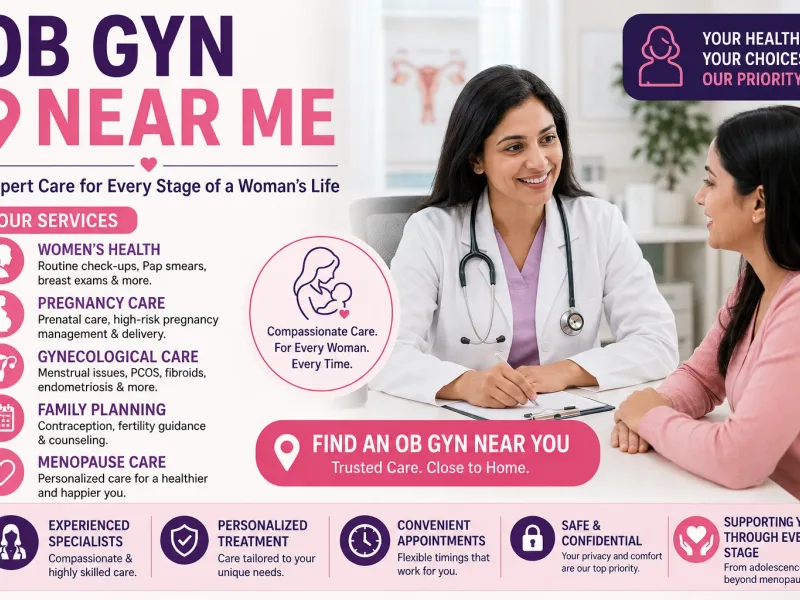
OB GYN Near Me: What to Know Before You Book an Appointment
Searching for an "OB GYN near me" is one of the most common health-related searches women make — and also one of the most under-informed. Most people click the first result, check if it's close to home, and book. That's not always the wrong move. But it's worth pausing to understand what you're actually looking for.
An OB GYN (obstetrician-gynecologist) is a doctor who specializes in two overlapping fields: obstetrics, which covers pregnancy and childbirth, and gynecology, which covers the female reproductive system more broadly. Not every OB GYN does both equally. Some lean heavily toward high-risk pregnancy care. Others focus on laparoscopic surgery for conditions like endometriosis. Knowing which type of care you need changes who you should be searching for.
You can find a gynecologist near you through Doctar, which lists verified specialists with their qualifications, experience, and patient reviews.
What Does an OB GYN Actually Do?
The scope is wider than most patients realize. Routine annual check-ups are just the entry point. An OB GYN also manages:
Irregular or painful periods
PCOS (polycystic ovary syndrome — a hormonal condition affecting the ovaries)
Endometriosis (when tissue similar to the uterine lining grows outside it)
Fertility concerns
Prenatal care across all three trimesters
Menopause and perimenopause
Cervical cancer screening (Pap smears)
Contraception counseling
In clinical practice, this list often surprises patients. Many women spend years seeing a general physician for period problems, hormonal acne, or unexplained weight gain — when an OB GYN would have flagged PCOS within a single visit.
If you're not sure whether your concern falls under gynecology or general medicine, a general physician near you can assess you first and refer accordingly.
When Should You See an OB GYN?
There's no threshold of severity you need to cross before booking. Most guidelines recommend that women start seeing a gynecologist in their late teens or early twenties — or earlier if there are specific concerns. After that, an annual visit is standard.
That said, there are specific situations that warrant a prompt appointment rather than waiting:
Book sooner if you notice:
Periods that are very heavy, very painful, or have become irregular after being regular
Pelvic pain that persists for more than a few days
Unusual vaginal discharge or odor
Difficulty getting pregnant after trying for 6–12 months
Any lump or unusual sensation in the pelvic region
Missed periods that are not explained by pregnancy
Pregnancy, of course, is its own category. Once a pregnancy is confirmed, seeing an OB GYN — or a maternal-fetal medicine specialist for high-risk cases — should happen within the first 8–10 weeks. Early prenatal care significantly reduces complications.
You can search for hospitals near you that offer dedicated maternity and OB GYN departments.
How to Choose the Right OB GYN Near You
Location matters. A doctor who is a 90-minute drive away will feel inconvenient when you're 36 weeks pregnant and need frequent visits. But proximity isn't everything.
Here's what to actually check before booking:
Qualifications and subspecialty: Look at where the doctor trained and whether they hold board certification. If your concern is fertility, look for someone with additional training in reproductive endocrinology. For surgical conditions, confirm whether they perform minimally invasive procedures.
Hospital or clinic affiliation: If you're planning a hospital delivery, the OB GYN should have admitting privileges at a hospital you're comfortable with. Check the hospitals near you to see which facilities are available.
Communication style: This one is harder to verify before the first visit, but it matters enormously. Women who feel rushed or dismissed during consultations often delay follow-up care. Look at reviews, and pay attention to whether reviewers mention feeling heard.
Availability for emergencies: Ask whether the practice has on-call coverage. In obstetrics especially, complications don't wait for office hours.
You can search and book a doctor online through Doctar's platform, which lets you filter by specialty, location, experience, and consultation fee.
What to Expect at Your First OB GYN Visit
First visits can feel intimidating, particularly for younger patients. Understanding the format helps.
Your doctor will typically start with a detailed history — menstrual cycle patterns, any previous pregnancies, family history of reproductive cancers, current medications, and lifestyle factors. Be as candid as possible. What feels embarrassing to say out loud is, to a gynecologist, routine clinical information.
A physical examination usually follows. Depending on your age and reason for the visit, this may include a breast exam, a pelvic exam, or a Pap smear. None of these should be painful if done correctly — mild discomfort is possible, but significant pain should be communicated immediately.
Diagnostic tests may be ordered. Blood work, a pelvic ultrasound, or a hormonal panel are common. If you need diagnostics done promptly, diagnostic centers near you can handle most of these independently.
OB GYN vs. Gynecologist: Is There a Difference?
Technically, yes. A gynecologist focuses only on the reproductive system and is not necessarily trained in obstetrics (pregnancy and delivery). An OB GYN has training in both.
If you're pregnant, or planning to be, you want an OB GYN or an obstetrician specifically. If your concerns are purely non-pregnancy related — PCOS, menstrual disorders, contraception — a gynecologist without obstetric training is perfectly appropriate.
Doctar lists both, so when you search for a gynecologist online, check the specialist's listed focus areas before booking.
Common Conditions an OB GYN Treats
PCOS: One of the most frequently underdiagnosed hormonal conditions in women of reproductive age. Symptoms include irregular periods, excess hair growth, acne, and weight changes. Left unmanaged, it can affect fertility and increase the risk of type 2 diabetes. A gynecologist or endocrinologist may co-manage this condition.
Endometriosis: Affects roughly 1 in 10 women, though the actual figure may be higher because it often takes years to diagnose. Severe period pain is the most reported symptom, but it's commonly attributed to "normal" dysmenorrhea (painful periods) instead.
Uterine fibroids: Noncancerous growths in the uterus that can cause heavy bleeding and pelvic pressure. Treatment options range from medication to surgical removal. For surgeries, you can explore surgery options near you.
Cervical conditions: Abnormal Pap smear results can indicate anything from a minor infection to pre-cancerous changes. Prompt follow-up matters here — a colposcopy (a closer examination of the cervix) is usually the next step.
Menopause: The transition involves hormonal shifts that affect sleep, mood, bone density, and cardiovascular health. It's more complex than a singular event, and many women benefit from structured gynecological care through this period.
What About Pregnancy Care Specifically?
If you're already pregnant, your priority is getting into care early. The first trimester (weeks 1–12) involves confirming the pregnancy, estimating the due date, screening for genetic conditions, and establishing baseline health markers.
From there, prenatal visits follow a set schedule — typically monthly until 28 weeks, then every two weeks, then weekly as you approach the due date. If you're carrying multiples or have existing health conditions, the schedule becomes more intensive.
For women in India, many maternity hospitals now offer package-based prenatal care. It's worth asking upfront what's included. To find maternity-capable hospitals, browse hospitals in your city.
Booking an OB GYN Through Doctar
Doctar lets you search for verified gynecologists and OB GYNs by city and area, view their qualifications and fees, and book instantly. There are no consultation booking fees for patients, and the profiles include experience levels and patient reviews.
To find a gynecologist near you, simply enter your city and filter by specialty. You can also use home visit doctors if mobility is a concern or if you're in early postpartum recovery.
For follow-up care — blood tests, ultrasounds, and other diagnostics — diagnostic centers listed on Doctar can be booked separately.
Don't Wait for a Symptom to Get Serious
Routine gynecological care is one of the most consistently neglected areas of women's health — not for lack of concern, but because it's easy to postpone when there's no acute pain. The annual check-up, the Pap smear, the hormone panel — these are not formalities. They catch things early, when they're still easy to treat.
If you haven't seen an OB GYN in the last year, or if something has been bothering you for months and you've been managing it alone, this is a reasonable nudge to book that appointment.
Find a trusted OB GYN near you on Doctar and book in minutes — no referral needed.