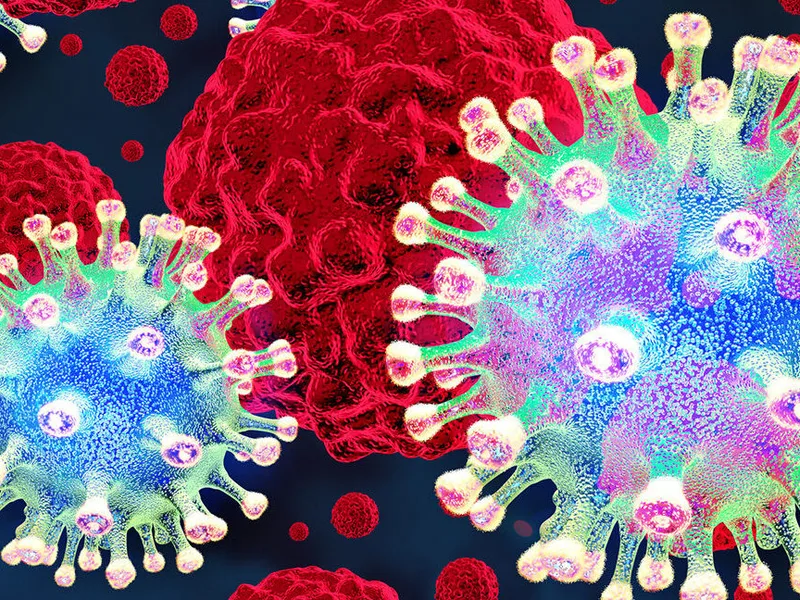
An oncolytic virus is a virus that's been engineered, or naturally selected, to infect cancer cells and destroy them from the inside. The word "oncolytic" literally means "cancer-dissolving."
Here's the clever part. These viruses are built to replicate mainly inside tumor cells, causing them to rupture, while mostly leaving healthy tissue alone. When the cancer cells burst, they release fragments that the immune system recognizes as a threat, which can trigger a broader immune attack on the tumor. So the virus isn't just killing cells directly, it's also waking the immune system up to a cancer it had been ignoring.
This isn't brand new science. IMLYGIC, a modified herpes virus, was approved for advanced melanoma back in 2015 after its Phase III trial showed durable responses in roughly 16% of patients, compared to about 2% on the comparison treatment. That's a real number worth sitting with, because it tells you this approach can work, but it's not a magic bullet for most patients either.
What's New: The 2026 Glioblastoma Trial
The most talked-about result this year came out of Dana-Farber Cancer Institute and Mass General Brigham. Researchers published findings in the journal Cell describing a Phase 1 trial in 41 patients with recurrent glioblastoma, one of the most aggressive and hardest-to-treat brain cancers there is.
A single injection of the oncolytic virus drew immune cells deep into the tumor and kept them active there for an extended period. Survival improved compared to historical data on glioblastoma patients, and the effect was strongest in patients who already had antibodies to the virus before treatment. That last detail matters clinically, since it suggests prior immune exposure might actually help rather than hurt the response, which runs counter to what a lot of oncologists would have assumed a few years ago.
Glioblastoma is considered an immunologically "cold" tumor, meaning it's usually very good at hiding from the immune system. Getting immune cells to actually stick around inside a brain tumor has been a stubborn problem. This trial is small, and Phase 1 data is early by definition, but it's a genuine signal worth watching.
Bladder Cancer and Beyond: The Wider Pipeline
Glioblastoma isn't the only cancer where this approach is being tested. A Phase 3 trial from CG Oncology used a modified adenovirus in patients with early-stage bladder cancer that hadn't yet invaded the bladder wall. For these patients, the alternative is often having the bladder removed entirely, so a treatment that could delay or avoid that is a meaningful thing to test.
Other programs are moving forward too. Candel Therapeutics is running a Phase 3 trial in prostate cancer, Genelux has a Phase 3 study in platinum-resistant ovarian cancer, and a company called ViroMissile presented early data this year on an oncolytic virus given intravenously rather than injected directly into a tumor. That intravenous delivery detail is a bigger deal than it sounds. Most oncolytic viruses have to be injected straight into a tumor because the bloodstream neutralizes them too fast otherwise, which obviously doesn't work for cancer that's already spread.
In clinical practice, this is the part patients often don't grasp at first: most oncolytic virus trials right now are for cancer that's returned or stopped responding to standard treatment, not as a first-line therapy. It's an option that tends to come up later in the treatment journey, once other approaches have been tried.
What This Means If You're Considering a Trial
Is oncolytic virus therapy ready for widespread use? Not yet, honestly, outside of melanoma where IMLYGIC is already approved. Most of what's happening now is trial-stage, and trial-stage means unproven benefit alongside real, monitored risk.
That said, if standard treatment options for a cancer have been exhausted or aren't working well, asking about oncolytic virus trials is a reasonable thing to raise with your treating oncologist. Trial eligibility depends heavily on cancer type, prior treatments, and overall health, so this isn't something to pursue without a proper specialist evaluation first.
A medical oncologist can tell you whether a trial matches your specific diagnosis, and a second opinion from a general surgeon or specialist center is often worth getting before committing to an experimental protocol, especially one involving direct tumor injection.