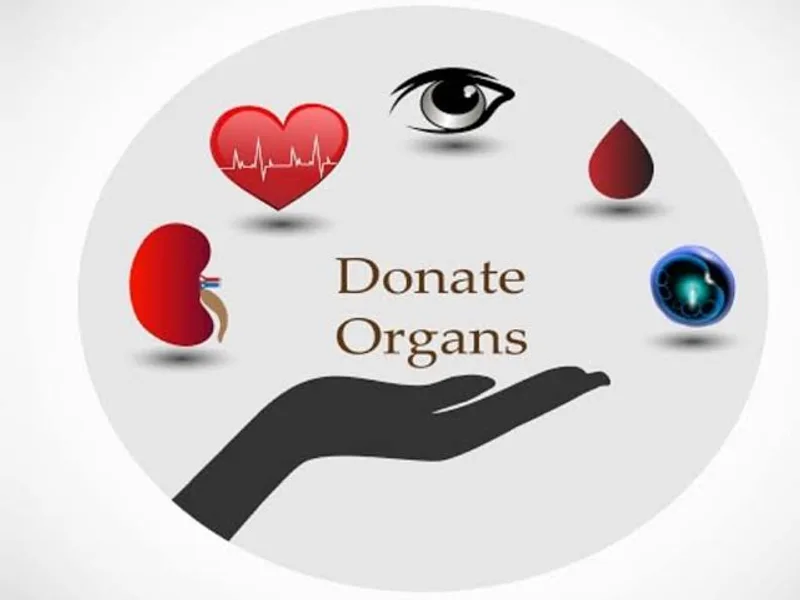
Why organ donation awareness matters
The need for donated organs is not limited to one disease. People with advanced kidney, liver, heart or lung failure may eventually require transplantation when other treatment options are no longer enough.
Yet transplantation depends on more than surgical skill. There must be a medically suitable donor, an appropriate recipient, a functioning donation system and, in deceased donation, a family willing to proceed through an emotionally difficult process.
That is why awareness campaigns matter. They give families information before they are sitting in an intensive-care unit trying to make sense of unfamiliar medical terms.
In clinical practice, this is often missed because families hear about organ donation only at the worst possible moment. A short conversation at home, while everyone is healthy, can make that later decision less confusing.
What does organ donation actually involve?
Organ donation can involve living donation or donation after death. The possibilities are different in each situation and are governed by medical and legal safeguards.
NOTTO says a living donor must be at least 18 and voluntarily authorize donation according to accepted medical practice. Deceased donation may involve organs or tissues from a person after brain-stem death or cardiac death, with medical suitability assessed at the time.
For readers wanting to understand transplantation itself, Doctar's guide to organ transplant coverage in India explains some of the financial and practical issues families may encounter.
Kidney transplantation is one of the best-known examples. Doctar's article on managing kidney failure and kidney transplantation discusses how transplantation fits into care for people with advanced kidney disease.
Similarly, some liver conditions can eventually require transplantation. Readers can see the role of transplantation in Crigler-Najjar syndrome, a rare inherited liver disorder.
A donor pledge is not the same as an actual donation
This distinction causes considerable confusion. Registering as a donor records a person's intention, but only a small proportion of people die in circumstances in which their organs can actually be donated.
NOTTO specifically explains that a pledge does not mean donation will definitely occur. Medical suitability and the circumstances of death determine whether donation can proceed.
The official organ donation awareness booklet also advises people to discuss their decision with family members. It explains that, after death, family or the legally appropriate next of kin still has an important role in the consent process.
That family conversation may be the most useful part of a pledge. Saying, "I want to donate if I can," gives relatives a clear understanding of what the person would have wanted.
What awareness campaigns should explain
Good campaigns should do more than display a slogan. They should explain the process in language that ordinary families can understand.
NOTTO's awareness material covers topics such as brain-stem death, which organs and tissues may be donated, the donation procedure, myths and facts, and practical steps for taking a pledge.
The public can also consult Doctar's blood donation guide to understand how blood donation differs from organ donation. Related reading on blood donation and anemia and blood types can also help readers understand why donation systems require careful screening and matching.
For people with blood disorders, transplantation can have a different meaning. Doctar's articles on bone marrow donation, thalassemia testing, and beta-thalassemia major explain the separate role of blood-forming stem-cell donation and transfusion care.
Common myths can undermine trust
One persistent problem is misinformation. Some people worry that doctors may not try to save a patient's life because the person is a registered donor. Others believe that older age or a medical condition automatically rules someone out.
Neither assumption is a safe basis for making a decision. NOTTO states that people with existing medical conditions may still be potential donors, with healthcare professionals deciding whether particular organs or tissues are suitable at the time.
Other medical articles on Doctar show why individual circumstances matter. For example, blood transfusion safety involves screening and compatibility checks, while leukemia symptoms and acute lymphoblastic leukemia illustrate why some patients may need complex blood and transplant-related care.
Organ donation reaches beyond the major organs
Awareness should not focus only on kidneys and livers. Tissue donation can also be important.
Corneal donation, for example, can help restore sight in appropriate recipients. Doctar's article on macular corneal dystrophy and corneal transplantation explains how donor corneal tissue can be used in transplantation.
Bone and tissue donation also deserve attention. NOTTO's awareness resources specifically include material about organs and tissues that may be donated after brain-stem death.
The system needs informed donors, not just more pledges
India's awareness efforts have expanded beyond posters and public speeches. The government's recent annual report describes the Angdaan Jan Jagrukta Abhiyaan, launched in 2024, with July designated as Organ Donation Month and participation from government bodies, medical colleges, hospitals and non-government organisations. The 2025 campaign also included a national webinar and a public run focused on organ donation awareness.
The wider transplant system also includes regional and state organisations. The Directorate General of Health Services says NOTTO works with ROTTOs, SOTTOs, hospitals, medical institutions, NGOs and other groups to promote awareness and organise organ procurement and distribution.
For families dealing with serious organ disease, understanding the underlying condition remains important. Useful Doctar resources include information on diabetes and kidney disease, early kidney disease, polycystic kidney disease, and kidney disease and alcohol.
The same principle applies to liver disease. Readers can learn more about early liver damage, liver-related complications, and biliary atresia, where transplantation may become part of specialist care.
Some transplants involve highly specialised conditions. Doctar's resources on Krabbe disease and stem-cell transplantation, pre-B acute lymphoblastic leukemia, and leukemia clinical trials show how donor cells and transplantation can be part of very different treatment pathways.
Even financial planning matters. Families considering transplantation can review Doctar's information on insurance and organ transplant costs rather than relying on assumptions about what a health policy will cover.
How to make a donation decision
Anyone considering donation should use official information rather than social-media claims. NOTTO provides donor information, forms and registration resources, including Form 7 for organ or tissue pledging.
Most importantly, tell your family. A donor card or online pledge is useful, but relatives should know the decision and understand why it matters to you.