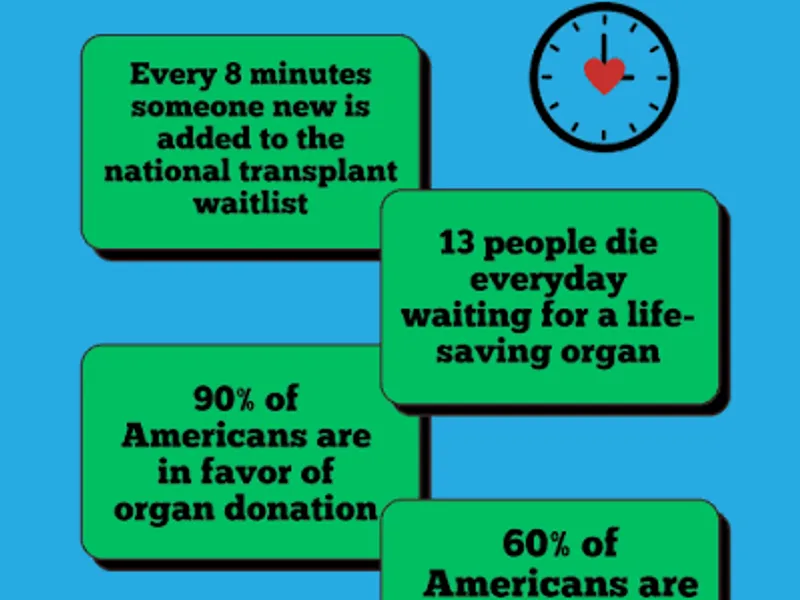
The transplant waiting list is not a simple queue
For a family waiting for an organ transplant, the hardest part can be the uncertainty. You may know that a patient is “on the list”, but that phrase does not tell you when an organ might become available.
A transplant waiting list is better understood as a system for identifying suitable recipients when a donor organ becomes available. Medical urgency, compatibility, organ availability and allocation rules can all matter.
Doctar's organ transplant coverage guide for India explains that transplantation involves much more than the operation itself, including evaluation, donor-related expenses, hospital care and follow-up.
The exact rules also vary according to the organ and the country's transplant system. That is why patients should not assume that a waiting-time estimate from another patient will apply to them.
Why can the waiting time vary so much?
The biggest factor is simple: there may not be enough suitable donor organs for everyone who needs one.
But availability is only part of the story. A donor organ must be medically appropriate for a potential recipient. Blood group, body size, tissue characteristics, medical urgency and other factors may influence whether a particular organ can be offered.
For kidney patients, the situation can be particularly complicated because living donation may be possible for eligible donors, while deceased-donor transplantation depends on organ availability and the applicable allocation system.
Doctar's kidney-failure guide notes that kidney-transplant waiting periods can vary considerably depending on factors such as blood type, compatibility and donor availability.
So, how long will a particular patient wait? There is no responsible one-size-fits-all answer.
Medical urgency can change the picture
Transplant allocation is designed to consider more than time spent waiting. In some systems and for some organs, the severity of a patient's illness can affect priority.
That distinction matters because a person who has been waiting for months is not necessarily ahead of someone whose medical condition has suddenly become much more serious.
The criteria can also be organ-specific. Kidney transplantation, for example, has a different clinical pathway from liver or heart transplantation.
Doctar's heart failure explainer discusses advanced heart failure and notes that heart transplantation may be considered for some patients with end-stage disease.
Patients should therefore ask their transplant team a very direct question: “What factors determine my priority on the current list?”
That answer is more useful than comparing your position with someone else's.
Matching an organ is a medical decision
An organ cannot simply be given to the person who has been waiting the longest. The transplant team needs to establish whether the organ is likely to be suitable and whether transplantation can be performed safely.
For kidney transplantation, matching can involve blood type and tissue compatibility. For other organs, factors such as size, urgency and the condition of both donor and recipient may have particular importance.
Doctar's renal-scan guide explains that imaging may sometimes be used after kidney transplantation when clinicians are evaluating concerns such as possible rejection.
This is one reason transplant evaluation can involve repeated blood tests, imaging and specialist appointments. The work does not stop once a patient is placed on a list.
What happens while a patient is waiting?
Waiting does not mean doing nothing. The patient's health may need close monitoring while they remain eligible for transplantation.
For someone with advanced kidney disease, dialysis may be necessary while waiting. Dialysis is a treatment that performs some of the filtering work normally done by the kidneys.
Doctar's dialysis guide explains how dialysis is used when kidney function has become severely impaired and describes both haemodialysis and peritoneal dialysis.
Doctar's kidney-disease warning-sign guide also highlights the need for ongoing monitoring as chronic kidney disease progresses.
For other transplant candidates, treatment may focus on controlling the underlying disease and preventing complications while the patient remains under specialist care.
A patient's health can change during the wait
Being listed for transplant does not guarantee that surgery will happen immediately when an organ becomes available. A patient's condition is reassessed, and they may temporarily become unsuitable for transplantation because of an infection or another medical problem.
In clinical practice, this is often missed because families think “listed” means “ready for surgery at any moment.” In reality, transplant teams continuously weigh whether transplantation is safe at that particular time.
A patient's medical status can therefore affect the process in either direction. Someone may become more medically urgent, while another person may need treatment before they can safely proceed.
Living donation can be a different pathway
Some organs or parts of organs can be donated by a living person under carefully regulated circumstances. Kidney donation is the most familiar example, while part of a liver may also be donated by an eligible living donor.
Doctar's organ-donation explainer notes that India's transplant framework regulates living donation and deceased donation, and that organ selling is illegal.
A potential living donor still needs extensive medical and psychological assessment. Donation is a major decision and should never be treated as an informal family obligation.
The donor's safety matters too.
Liver transplant waiting can involve different considerations
Liver transplantation is another example of why there is no universal transplant waiting-list formula.
Advanced liver disease can result from several conditions, including cirrhosis. Doctar's cirrhosis guide explains how severe liver scarring can progress to liver failure and why transplantation may be considered for selected patients with end-stage disease.
Doctar's liver-ultrasound guide also describes how imaging can help doctors assess liver disease and complications.
Some liver conditions can also affect other organs. For example, Doctar's hepatopulmonary syndrome guide discusses a serious lung complication associated with liver disease in which liver transplantation can have an important role for appropriate patients.
Why donor awareness matters
Every transplant waiting list depends on the availability of suitable organs. That makes deceased and living organ donation a public-health issue, not just an individual medical decision.
India's transplant framework places strict legal controls around donation and allocation. Doctar's organ-donation article explains that the system is intended to prevent organs from becoming commodities and to regulate donation appropriately.
For families considering donation, conversations should happen through authorised transplant and donation organisations rather than informal arrangements.
The financial side can be substantial
The transplant operation is only one part of the financial picture. Evaluation, hospitalisation, donor assessment, follow-up appointments, investigations and long-term medicines can all create costs.
Doctar's transplant insurance guide points out that insurance policies can differ in transplant coverage, exclusions, waiting periods, sub-limits and network-hospital requirements.
Families should ask their insurer and transplant centre for written information about what is covered. Do not rely on a verbal assurance when the treatment may involve substantial expenses.
Anti-rejection medicines continue after transplant
The waiting list is not the end of the transplant journey. After transplantation, the immune system can recognise the new organ as foreign and attempt to attack it.
Medicines called immunosuppressants reduce this immune response. They require careful medical supervision because suppressing immunity can also increase vulnerability to infections and create other health risks.
Doctar's cyclosporine guide explains the role of cyclosporine in preventing organ rejection and stresses the importance of discussing medication concerns with the treating team.
Doctar's methylprednisolone guide also discusses corticosteroid use in transplant care.
Patients should never change, stop or skip transplant medicines without speaking with their transplant clinician.
Infection prevention becomes particularly important
After transplantation, immunosuppressive treatment can reduce the body's ability to fight certain infections. This makes preventive care and monitoring especially important.
Doctar's TB blood-test guide notes that organ transplantation and medicines that suppress the immune system can increase vulnerability to tuberculosis.
Vaccination decisions can also become more complicated after transplantation. Doctar's Shingrix and immunosuppressant guide explains why vaccine timing and immune response need to be discussed with the specialist managing an immunosuppressed patient.
The right plan depends on the transplant type, medicines and individual health.
What should families ask the transplant team?
Families often leave appointments remembering the big medical terms but not the practical details. A written list of questions can help.
Ask about the patient's current listing status, the factors affecting priority, whether the patient needs repeat testing, what could temporarily suspend transplantation, and what to do if their health changes.
For kidney patients, it is also reasonable to ask how dialysis fits into the transplant plan. Doctar's kidney-failure guide explains that dialysis and transplantation are forms of kidney-replacement therapy for advanced kidney failure.
Families should also ask about expected costs, insurance approvals and financial assistance before an organ becomes available.
What “waiting list news” should be treated carefully?
Transplant news can attract attention because even a small change in donor numbers, allocation policy or waiting-list rules may affect patients. But headlines can make complicated systems sound much simpler than they are.
A report saying that a waiting list has grown does not automatically mean every patient's waiting time has increased by the same amount. Likewise, a rise in donor numbers does not mean every listed patient will receive an organ immediately.
Patients should check important changes with their transplant centre or the appropriate official transplant authority. News reports are useful for context, but they cannot replace an individual's medical and allocation status.