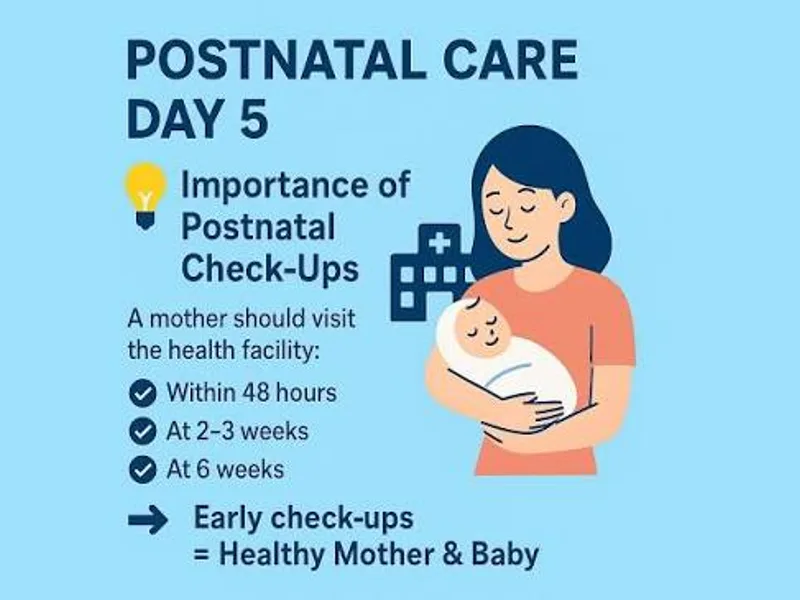
The mother's checkup should not come last
After a baby is born, attention naturally shifts toward feeding, weight gain, vaccinations and sleep. The mother can quietly become the person everyone assumes is fine.
That is a mistake. Pregnancy and childbirth place substantial demands on the body, and recovery does not happen on the same timetable for everyone. Postnatal care is meant to check how that recovery is progressing, while also giving the mother a chance to raise concerns she may have been too busy, tired or embarrassed to mention.
DOCTAR's guide to navigating the postpartum period covers common concerns such as bleeding, infection, breastfeeding difficulties and mood changes. Its postpartum recovery guide also makes a useful point: recovery should not be treated as a fixed six-week deadline.
What happens during a postnatal checkup?
A postnatal visit is more than a quick question about whether the stitches have healed. Depending on the mother's history and delivery, a clinician may review bleeding, pain, blood pressure, wounds, urination, bowel problems, breastfeeding and emotional well-being.
The timing also varies. Some women need contact with a healthcare professional much earlier than the traditional six-week appointment, particularly after a complicated pregnancy, C-section, high blood pressure, heavy bleeding or other medical problems.
The visit is also an opportunity to discuss contraception, future pregnancy plans and any medicines or supplements the mother is taking. If something does not feel right, there is no need to wait for a scheduled appointment.
For more detail on the physical changes after birth, DOCTAR's postpartum cramping guide explains why afterpains can occur and which symptoms deserve medical review.
Blood pressure and other physical checks matter
High blood pressure can continue or appear after childbirth, even in women whose pregnancy seemed straightforward. A severe headache, vision changes, chest pain, difficulty breathing or seizures require urgent medical assessment rather than a routine follow-up.
Bleeding is another area where mothers sometimes struggle to know what is normal. Some vaginal bleeding after delivery is expected, but very heavy bleeding, large clots, foul-smelling discharge, fever or a sudden increase in bleeding should be discussed with a doctor promptly.
The same applies to a C-section wound or a vaginal tear. Increasing redness, swelling, worsening pain, pus or fever can signal infection.
DOCTAR's postpartum complications guide provides a broader overview of these warning signs. Its guide to postpartum fever is particularly relevant if fever or chills develop after delivery.
Postpartum fatigue is common, but don't dismiss it
Few new mothers get enough sleep. That makes fatigue almost unavoidable, but persistent or extreme exhaustion should not automatically be blamed on the baby.
Blood loss during delivery can contribute to iron-deficiency anemia, which can cause tiredness, weakness, dizziness and poor concentration. A clinician may decide that blood tests are appropriate based on symptoms and medical history.
DOCTAR's guide to anemia after childbirth explains why postpartum anemia can be overlooked. Its postnatal vitamin guide also discusses nutrients such as iron, vitamin D, calcium, folate and vitamin B12.
In clinical practice, this is often missed because “I'm exhausted” sounds like the most normal sentence a new mother can say. Sometimes it is normal. Sometimes it is the first clue that something needs checking.
Nutrition is part of recovery
A new mother needs food for her own recovery, not just to support breastfeeding. Meals should provide a mixture of protein, whole grains or other carbohydrate sources, vegetables, fruit and healthy fats, with individual needs considered by a healthcare professional.
There is no special food that guarantees a good milk supply. Claims about particular traditional foods or supplements should be treated cautiously.
DOCTAR's postpartum nutrition guide offers practical information on eating after childbirth. Its Vitamin D guide for pregnancy is also useful background when discussing vitamin D and bone health with a clinician.
Supplements should not be started simply because another new mother is taking them. A doctor can consider diet, blood tests, breastfeeding status and medical history before recommending anything.
Breastfeeding problems deserve attention
Breastfeeding can be rewarding, but it does not always happen easily. Pain, cracked nipples, poor latch, breast fullness or concerns about milk supply can make the first weeks considerably harder.
A mother who is struggling should not be made to feel that asking for help means she has failed. Lactation support, a pediatrician, obstetrician or other trained healthcare professional may be able to identify practical problems and suggest appropriate support.
DOCTAR's postnatal care information for new mothers includes breastfeeding concerns alongside other postpartum complications.
The baby's feeding and weight are part of the picture too. DOCTAR's newborn care guide explains feeding, weight monitoring, newborn screening and the first 28 days of life.
Mental health belongs in every postnatal conversation
A mother can look physically well and still be struggling badly.
The “baby blues” can involve crying, irritability and emotional ups and downs during the early days after birth. Persistent sadness, severe anxiety, hopelessness, loss of interest, difficulty bonding with the baby or thoughts of self-harm can point to a more serious mental health problem and should be discussed with a healthcare professional.
DOCTAR's postpartum depression resource discusses the condition and access to care. Its guide to depression in Indian adults provides wider context on symptoms and treatment.
If there are thoughts of harming the mother or baby, severe confusion, hallucinations or behaviour that seems disconnected from reality, seek emergency medical care immediately.
Recovery does not stop at six weeks
The old idea of a single “six-week check” can give women the wrong impression that every problem should be solved by that date. Recovery from a C-section, pelvic-floor injury, difficult delivery or significant mental health problem may take considerably longer.
Physical activity should also return gradually. A woman who feels ready to walk may not be ready for strenuous exercise, and pelvic-floor or abdominal problems may need assessment.
DOCTAR's postpartum exercise guide discusses gradual return to activity. Its postpartum recovery myths guide also addresses exercise, bleeding and the broader recovery period.
For some women, pelvic-floor physiotherapy can be useful, particularly when there is persistent pelvic pain, urinary leakage or other physical symptoms. The right approach depends on the individual's delivery and medical history.
The baby needs checkups too
Postnatal care is a two-person story. While the mother attends her own appointments, the newborn also needs feeding, weight, development and vaccination monitoring.
DOCTAR's baby sleep schedule guide explains why newborn sleep can be unpredictable. Its newborn sleep tips offer additional practical information for parents.
Parents can also use regular pediatric visits to discuss feeding, crying, weight gain and development. DOCTAR's pediatrician guide explains the role pediatricians play in newborn and infant care.
As the baby grows, appointments change too. DOCTAR's two-month-old baby guide covers milestones, feeding, sleep and reasons to consult a pediatrician.
When should a new mother seek help urgently?
Some symptoms should not wait for the next appointment:
Very heavy vaginal bleeding or rapidly increasing bleeding
Severe headache, vision changes or seizures
Chest pain or difficulty breathing
Fever with worsening pain or foul-smelling discharge
Severe abdominal or pelvic pain
Increasing redness, swelling or discharge from a surgical wound
Fainting or severe weakness
Thoughts of harming yourself or your baby
Severe confusion, hallucinations or loss of contact with reality
These symptoms can have different causes, and only a clinician can determine what is happening. The safe response is to seek prompt medical assessment rather than trying to work it out from an online symptom list.
DOCTAR's guide to postpartum complications provides further context on when medical attention is needed.