REM Sleep Boosting Devices: What the Evidence Says
You've probably seen the ads. A sleek headband or a smart ring that promises to increase your REM sleep, the dream-rich stage linked to memory and mood. It's a tempting pitch. Who wouldn't want more of the "good" sleep stage?
But REM sleep boosting devices are a mixed bag, and the category covers a lot of very different technology under one marketing label. Some use sound. Some use light. A few use mild electrical or vibrational stimulation. Understanding what each one is actually trying to do matters more than the word "boost" on the box.
What REM Sleep Actually Is
REM stands for rapid eye movement, and it's the stage of sleep tied to vivid dreaming, memory processing, and emotional regulation. Your body goes through several 90-minute sleep cycles a night, moving between light sleep, deep sleep, and REM, with REM periods getting longer as the night goes on.
That's actually one reason a lot of REM-boosting products focus on the second half of the night. If you cut your sleep short, you're disproportionately losing REM, not deep sleep, since REM piles up toward morning. That's worth knowing before you blame a device for "fixing" something that a later alarm might fix just as well.
How These Devices Claim to Work
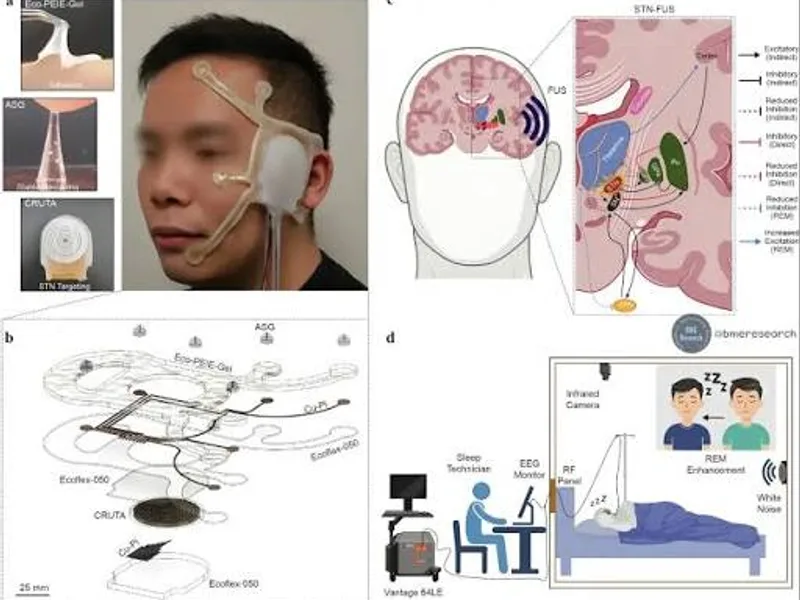
Audio-based devices play specific tones or pink noise timed to your sleep cycle, based on the idea that gentle acoustic stimulation during certain sleep stages can nudge brain activity. Light-based wearables use eye masks with subtle light cues, sometimes tied to lucid dreaming techniques rather than REM quantity itself. A smaller number of devices use transcranial stimulation, sending very low electrical currents through the scalp.
Here's the honest part: the research backing most of these claims is early, small-sample, and often funded by the companies selling the product. A few academic studies on closed-loop audio stimulation during sleep look genuinely promising for boosting slow-wave (deep) sleep. Evidence for reliably increasing REM specifically is much thinner. If a company can't point to independent, peer-reviewed data, treat the claim as unproven rather than false — there's a difference, but neither means "buy it and trust the number."
Why the Marketing Gets Ahead of the Science
Sleep tech moves fast, and app dashboards love giving you a tidy REM percentage each morning. That precision feels reassuring, but consumer devices estimate sleep stages indirectly, usually from heart rate variability and movement, not brain waves. A hospital sleep study measures actual brain activity. Your ring is guessing.
In clinical practice, this is often where confusion starts — a patient shows me their app's REM score and treats it like a lab result, when it's really a statistical estimate with a real margin of error. That's not the device lying to you. It's just not built to be diagnostic, and no manufacturer claims otherwise if you read the fine print.
When Low REM Sleep Is Actually a Symptom
Chronically low REM sleep isn't always a wearable-fixable problem. It can show up alongside sleep apnea, certain medications, or conditions like Parkinson's disease, where REM sleep behavior disorder — acting out dreams physically — is a recognized early warning sign, sometimes appearing years before other symptoms. That's not something a headband is designed to catch.
Anxiety and chronic stress also suppress REM sleep, and dream recall often drops along with it — something worth discussing with a doctor if it's a sudden change rather than a lifelong pattern. The same goes for parasomnias that specifically affect REM. A device can log a change; it can't explain one.
Is There Anything Simpler That Actually Helps?
Probably, and it's less exciting than a gadget. Consistent sleep timing, cutting alcohol close to bedtime, and simply not cutting your sleep short protect REM sleep more reliably than most consumer tech does, since alcohol and caffeine both interfere with normal sleep architecture. If you're curious about supplements, melatonin's relationship with vivid dreaming is genuinely interesting research, though it's about dream intensity, not necessarily REM duration, and it can also worsen dreams for some people rather than improve them.
Certain medications complicate this too — some prescriptions affect REM sleep as a side effect without anyone realizing that's the reason mornings feel foggy or dreamless.