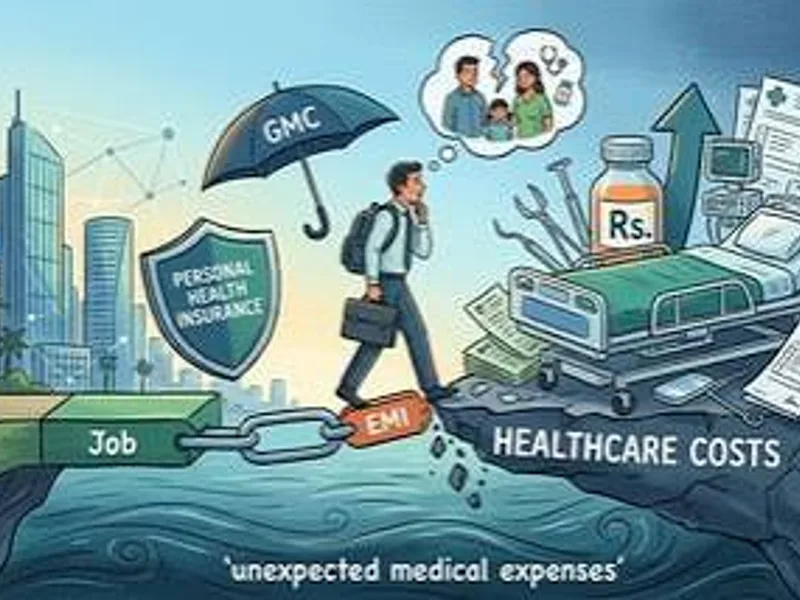
Why employers are feeling the squeeze
Healthcare is becoming a larger line item in company budgets, and employers have fewer easy ways to absorb the increase.
The pressure is visible in both India and other major healthcare markets. In the United States, KFF's 2025 Employer Health Benefits Survey found that average annual premiums reached $9,325 for single coverage and $26,993 for family coverage. Family premiums rose 6% in one year. Workers themselves contributed an average of $6,850 toward family coverage.
India is facing its own cost pressures. Reuters reported in August 2026 that medical inflation in India was estimated at roughly 12% to 14% annually, with insurers, hospitals and policymakers looking at ways to control rising healthcare expenses.
For employers, the issue is not simply the price of an insurance policy. Healthcare spending can include hospitalisation, outpatient consultations, diagnostic tests, medicines, preventive programmes and employee assistance benefits.
Employers also have to consider the human cost. A benefit that looks affordable on paper may still leave workers struggling with deductibles, exclusions or uncovered outpatient care.
What is driving rising healthcare costs?
Hospital care is one of the biggest pressure points. Advanced imaging, intensive care, specialist services, surgery and newer medical technologies can all increase the final bill.
Medicine costs matter too, particularly when employees or dependants require long-term treatment. Employer plans may also face higher claims from chronic illnesses that require regular consultations, testing and medication.
A related issue is healthcare utilisation. When people delay care because they are worried about money, a manageable problem can sometimes become more complicated and expensive to treat.
Doctar's resources on doctor consultation fees in India and health insurance options in India show why healthcare costs cannot be reduced to hospital bills alone.
From a healthcare-editorial perspective, one detail is often missed: the cheapest benefit is not necessarily the least expensive benefit over time. If a company removes easy access to primary care, employees may postpone treatment until they need more costly services.
Employers are caught between two competing goals
Companies want to control healthcare spending, but they also use health benefits to attract and retain employees.
That creates a difficult balancing act. Reduce coverage too aggressively and employees may see the benefit as inadequate. Increase coverage without controlling underlying costs and the employer's insurance budget can become difficult to sustain.
The problem is especially complicated for companies with older workforces or employees with families. Chronic conditions can require continuing care, while maternity services, paediatric care and specialist consultations add different types of expenditure.
For employees trying to understand their protection, Doctar's guide to hospital insurance and coverage explains common concepts such as deductibles, co-payments and coinsurance.
The hidden cost of shifting expenses to workers
One response to higher employer healthcare costs is to move a larger share of the expense to employees.
That can mean higher premiums, deductibles, co-payments or limits on certain services. It may reduce the company's immediate spending, but it does not necessarily make healthcare more affordable.
A worker who cannot comfortably pay for a consultation or diagnostic test may delay care. That can affect productivity, absenteeism and, in some cases, the eventual cost of treatment.
Understanding out-of-pocket healthcare expenses is therefore important when employers review benefit plans. The headline premium tells only part of the story.
Prescription coverage is another area employers need to examine carefully. Doctar's explainer on prescription costs and deductibles shows how medication expenses can interact with different insurance structures.
Prevention can be part of the cost-control strategy
Preventive care is not a magic solution to healthcare inflation, but it can help employers support earlier detection and better disease management.
Routine health checks may identify risk factors before they become more serious. For example, blood pressure, blood sugar and cholesterol screening can help people recognise health problems that warrant professional attention.
Doctar's resources on preventive healthcare services and health check-ups and wellness visits provide useful background on preventive care.
Employers can also make it easier for workers to access appropriate primary care, mental health support, vaccinations and chronic disease management. The exact benefits should depend on workforce needs rather than simply following the latest corporate wellness trend.
Chronic disease deserves more attention
Chronic conditions can create recurring healthcare expenses because treatment may continue for years.
Diabetes is one example. Employees may need regular consultations, laboratory testing, medicines and monitoring. Doctar's guide to health insurance for Type 2 diabetes explains why coverage needs can extend well beyond hospitalisation.
High blood pressure creates a similar issue. Regular monitoring and appropriate medical care may be needed even when there is no hospital admission. See Doctar's guide to health insurance and high blood pressure management.
Employers should therefore look beyond the number of hospital claims when evaluating healthcare programmes. The cost of managing chronic disease between hospital visits can be significant too.
What can employers realistically do?
There is no single fix for rising healthcare costs. A sensible strategy usually combines better plan design with easier access to appropriate care.
Employers can start by reviewing claims data and identifying where spending is concentrated. They can then examine whether employees have access to primary care, reasonable outpatient benefits, appropriate hospital networks and clear insurance information.
Cashless treatment and network access can also reduce financial friction for employees. Doctar explains the role of network hospitals and cashless hospitalisation in healthcare coverage.
Companies may also consider supplemental benefits where appropriate. Doctar's explanation of supplemental health insurance discusses how additional coverage can help address expenses left outside a primary policy.
The key is transparency. Employees should understand what their plan covers, where they can seek care, what they may have to pay and when prior approval is required.
Technology can help, but it is not the whole answer
Digital health services, telemedicine and better claims data can make healthcare easier to navigate. But technology should support clinical care rather than become a substitute for it.
Employers can use digital platforms to improve access to consultations, benefits information and preventive programmes. Workers still need qualified doctors when symptoms require assessment or treatment.
For people comparing consultation costs, Doctar's guide to doctor consultation fees in India offers useful context.
The same principle applies to diagnostic testing. Doctar explains health insurance coverage for blood tests, including why coverage can depend on medical necessity and the terms of an individual policy.
Employers need to watch the cost of medicines
Prescription medicines can become a significant expense when employees or dependants require long-term or specialised treatment.
Coverage can differ widely between plans. Some policies may have restrictions, co-payments, prior-authorisation requirements or exclusions.
Doctar's resources on prescription drug coverage and self-administered medicines and insurance coverage illustrate why employers should review pharmaceutical benefits separately rather than treating them as a small part of hospital insurance.
Specialty medicines can be particularly expensive. Information on biologic treatment costs and insurance shows how drug price, administration and insurance coverage can interact.
Better benefits may be cheaper than delayed care
The goal should not simply be to make the employer's healthcare bill smaller.
A better question is: where can the same healthcare budget produce better access and fewer avoidable costs?
That could mean strengthening primary care, negotiating clearer hospital packages, improving preventive services or helping employees understand their insurance before they need it.
Current policy discussions in India are also moving toward greater price transparency and more standardisation in health insurance. Reuters reported that proposed reforms include standardised treatment rates and a national health claims exchange.
Employers will still face rising costs, but better information can make those costs easier to manage.