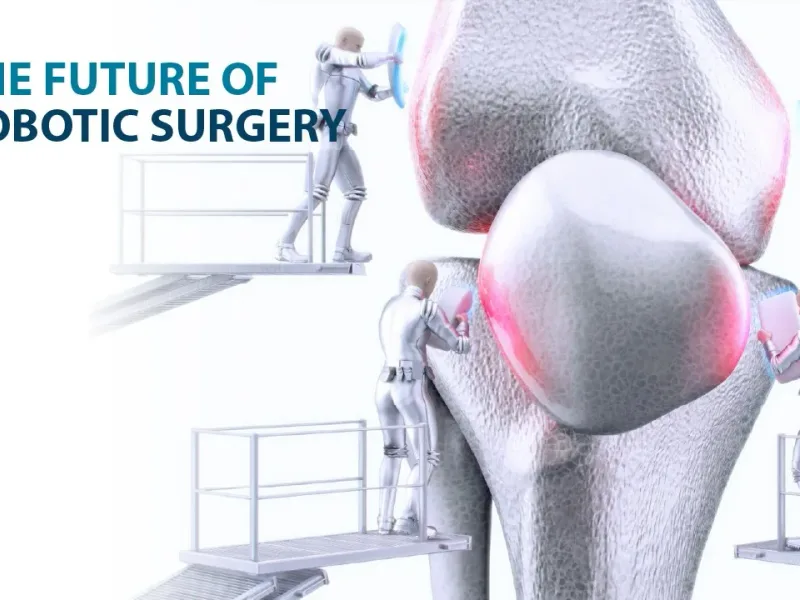
Robotic surgery is becoming more sophisticated
Robotic surgery has changed considerably since the first generations of surgical robots entered operating rooms. The biggest advances are not about replacing surgeons; they are about giving surgeons better tools for difficult, minimally invasive procedures.
The U.S. Food and Drug Administration describes robotically assisted surgical systems as computer-assisted devices that allow a trained surgeon to control instruments through small incisions. The FDA is explicit about one point that often gets lost in headlines: these systems do not perform surgery independently without human control.
That distinction matters. A patient is not handing over a procedure to a robot. The surgeon is using a robotic platform to see, move and work with greater control in areas where conventional instruments can be difficult to manipulate.
Doctar's directory already reflects how robotic surgery is spreading across Indian healthcare. For example, its listing for Dr. Mihir Chitale describes expertise in laparoscopic and robotic surgical oncology, while its profile for Dr. Sukrit Bose lists robotic head and neck surgery among his areas of practice.
What has actually improved?
The operating surgeon's view has become one of the major strengths of modern robotic systems. Many platforms provide a magnified three-dimensional view of the surgical field, while articulated instruments can move in ways that are difficult to reproduce with straight laparoscopic tools.
That can be particularly useful when surgeons are working in narrow or anatomically complex spaces. The technology may make delicate dissection and suturing easier, although the clinical benefit depends heavily on the operation being performed.
Robotic surgery also sits within the wider movement toward minimally invasive surgery, where doctors aim to complete an operation through smaller incisions rather than a large open incision. Doctar's recent laparoscopic surgery guide explains the basic idea of keyhole surgery and its role in modern surgical care.
Another Doctar resource on laparoscopic salpingectomy shows how small-incision techniques are already used for procedures involving the reproductive organs.
AI is entering the operating room
The next phase is less about mechanical movement and more about software.
Researchers are exploring artificial intelligence for surgical skill assessment, anatomy recognition, intraoperative guidance, error detection and decision support. A 2026 review in Nature Reviews Urology describes these assistive applications as among the more credible near-term uses of AI, while fully autonomous surgery remains a much bigger technical and safety challenge.
Why the caution? Surgery is not a fixed sequence of button presses. Human anatomy varies, tissues move and unexpected bleeding or other complications can change the plan within seconds.
Researchers are therefore looking at systems that help surgeons recognise structures, anticipate risks or standardise certain parts of a procedure rather than simply allowing a machine to operate without supervision. That may sound less dramatic than a robot surgeon acting alone, but clinically it may be the more useful direction.
Smaller and more flexible robots are coming
Robotic surgery is also becoming more diverse. New platforms are being designed around different specialties, smaller footprints and more flexible instruments.
In July 2026, the FDA granted De Novo authorization to Johnson & Johnson's OTTAVA robotic surgical system for multiple general-surgery procedures involving the upper abdomen. The system integrates robotic arms with the operating table, a design intended to change how the equipment fits into the operating room.
Other research is pushing toward flexible and miniature robotic systems. The broader goal is straightforward: reach places that conventional instruments struggle to reach while keeping tissue disruption as limited as possible. A 2025 review in Nature Reviews Bioengineering identifies miniaturisation, improved interfaces and greater levels of human-machine cooperation as important directions for the field.
Robotic surgery is not automatically better
This is where patients should be careful with marketing language.
A robot can provide technical advantages without guaranteeing a better medical outcome. Recent comparative evidence suggests that robotic surgery can have advantages in selected complex procedures, including some measures of blood loss or conversion to open surgery, but results vary by operation. Operative time may also be longer, while complications and hospital stay can be broadly comparable with laparoscopic approaches in some settings.
The same pattern appears in gallbladder surgery. A recent systematic review found potential technical advantages for robotic cholecystectomy, including improved visualization and instrument articulation, but concluded that stronger comparative evidence is still needed around outcomes and cost.
So, is robotic surgery worth it? Sometimes. Not automatically.
The answer depends on the procedure, the patient's condition, the surgeon's experience, the available equipment and whether the robotic approach offers a meaningful advantage over conventional laparoscopy or open surgery.
Where patients may encounter robotic surgery
Robotic technology is now used across several specialties. The FDA lists applications in general, cardiac, colorectal, gynecological, head and neck, thoracic and urologic surgery. Examples include gallbladder removal, hysterectomy and prostatectomy.
Doctar's hysterectomy surgeon listings show robotic and laparoscopic hysterectomy among available approaches. Its robotic knee replacement listings in Kolkata also show how robotic assistance has expanded into orthopaedic procedures.
For patients considering joint replacement, Doctar also has a robotic knee replacement guide, while its orthopaedic robotic-surgery profile at Zydus Hospital describes robotic-assisted joint procedures.
Other Doctar listings show robotic surgery among hospital facilities, including V.I.P. Apex Medical Centre, Chandra Hospital & Research Centre and Anandalok Hospital.
The surgeon still matters most
Patients sometimes focus on the machine name and overlook the person operating it. That is backwards.
Robotic platforms require training, judgment and familiarity with the specific procedure. A sophisticated machine does not compensate for poor patient selection or inadequate surgical experience.
In clinical practice, this is often missed because patients ask, “Which robot does the hospital have?” before asking, “How often does this surgeon perform this operation, and what are my alternatives?”
That second question is usually more useful.
Doctar can also help patients compare specialists. Its profile for Dr. Sandeep Dixit notes expertise in robotic orthopaedic procedures, while Dr. Khilchand Bhangale lists minimal-access surgery and robotic-surgery training. Dr. Prateek Patil and Dr. Chandrakant R. Kesari are examples of surgeons whose profiles include laparoscopic expertise.
Doctar also lists Dr. Ramesh T.S., whose practice includes advanced laparoscopic procedures, illustrating why robotic surgery should be viewed as part of a broader minimally invasive skill set rather than a completely separate discipline.
What should patients ask before surgery?
A good consultation should go beyond “Is robotic surgery available?”
Ask what the robot adds in your particular operation. Ask whether laparoscopic or open surgery would provide similar results, what the surgeon's experience is with the procedure, and what complications are possible.
It is also reasonable to ask whether the hospital has the necessary support team, what recovery is expected to involve, and whether the quoted cost includes the robotic technology.
Doctar's gallstone surgery listings in Kolkata provide another example of how patients can compare surgical options and specialists. Its hernia surgery guide explains the difference between open and laparoscopic approaches, a useful comparison when discussing whether robotic assistance adds value.
For other minimally invasive examples, Doctar's guides to ovarian cyst surgery, laparoscopic colostomy and arthroscopic shoulder surgery offer context on how technology has already changed surgical practice.