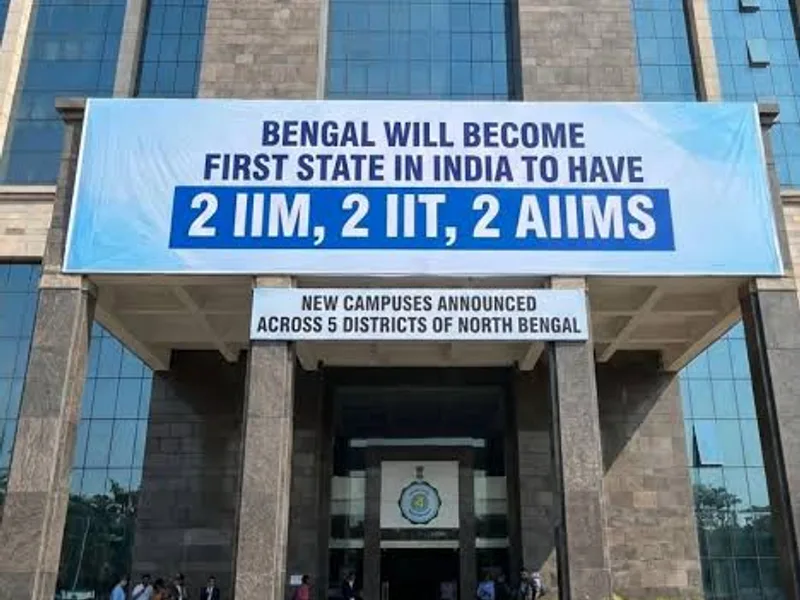
West Bengal's 2026-27 budget carried an unusually specific promise for North Bengal: a second AIIMS and a dedicated cancer treatment hospital, both planned for the region. Alongside them came new super-speciality hospitals for Darjeeling, Purulia and the Sundarbans, areas that have long sat at the edge of the state's tertiary care map, geographically and, judging by how long this took, administratively too.
What made this announcement land differently wasn't just the scale. A state government official was quoted plainly saying the plan exists to bring advanced tertiary care to north Bengal, a region that has, in their own words, been neglected over the years. That's not the usual soft language you get in a budget presentation. Someone in government was willing to say the quiet part out loud.
Why North Bengal Specifically
West Bengal already has one AIIMS, in Kalyani, Nadia district. On a map, that looks reasonably central. In practice, for a family in Alipurduar, Cooch Behar or Kalimpong needing tertiary-level care, Kalyani might as well be in another state. The travel time, the cost of staying near the hospital for extended treatment, and the sheer logistics of it all work against anyone without significant resources.
Cancer care makes this gap particularly brutal. Chemotherapy isn't a single visit, it's a schedule, often stretching over months, with regular monitoring in between cycles. A family that can manage one long trip to Kolkata for a diagnosis often can't manage the repeated trips that ongoing treatment demands. In clinical practice, this is exactly where things quietly fall apart: not because the medicine doesn't work, but because the travel burden makes consistent treatment practically impossible for a lot of families, and that gap rarely shows up cleanly in any statistic.
What Else Came Alongside It
The North Bengal push wasn't announced in isolation. It sat within a broader healthcare package in the same budget, close to ₹24,750 crore allocated for health in the coming financial year. That included four new medical colleges elsewhere in the state, an upgrade of the existing Suri Super-speciality Hospital in Birbhum into a full medical college, and roughly 650 new MBBS seats spread across the state's colleges, alongside more than 450 additional postgraduate seats.
A few smaller but genuinely useful details were tucked into the same announcement. Janaushadhi Kendras, the government-run outlets that sell generic medicines at lower prices, are being expanded to all government healthcare facilities in the state. And the daily patient diet allowance in government hospitals is being roughly doubled, from about ₹56.6 to ₹110 per patient. It's a small line item next to an AIIMS announcement, but if you've ever seen what passes for hospital food on the old budget, it's not a trivial change either.
A Reasonable Question: How Long Will This Actually Take
Here's where some healthy scepticism is warranted, and it's worth being upfront about it rather than treating a budget announcement as a finished hospital. AIIMS Kalyani is a useful reference point. Union approval for its location came in March 2015, on a 150-acre site near Kalyani. Getting from that approval to a functioning, fully staffed AIIMS took years, and by most accounts the institution is still building out capacity well after admissions began.
If a second AIIMS for North Bengal follows anything close to that timeline, patients in the region shouldn't expect a functioning facility for several years at minimum, and that's assuming land acquisition, funding transfers between the state and central government, and staff recruitment all move without major delay, which is optimistic for any large public infrastructure project in India.
What This Means If You're in North Bengal Now
None of this changes what's available to you today, and that's the part worth being honest about. If you or a family member needs oncology care right now, you're still working within the current system, whether that means North Bengal Medical College in Darjeeling district, referral to Kolkata, or a private facility if that's within reach.
Start by identifying what's genuinely available close to you. Check hospitals near you for current oncology and tertiary care options, and if a referral to Kolkata or Siliguri is likely, plan the logistics of that early rather than scrambling once treatment has already started. A general physician near you can help coordinate that referral process and flag warning signs early enough that you're not making that decision under emergency pressure.