What Short Term Health Insurance Actually Covers
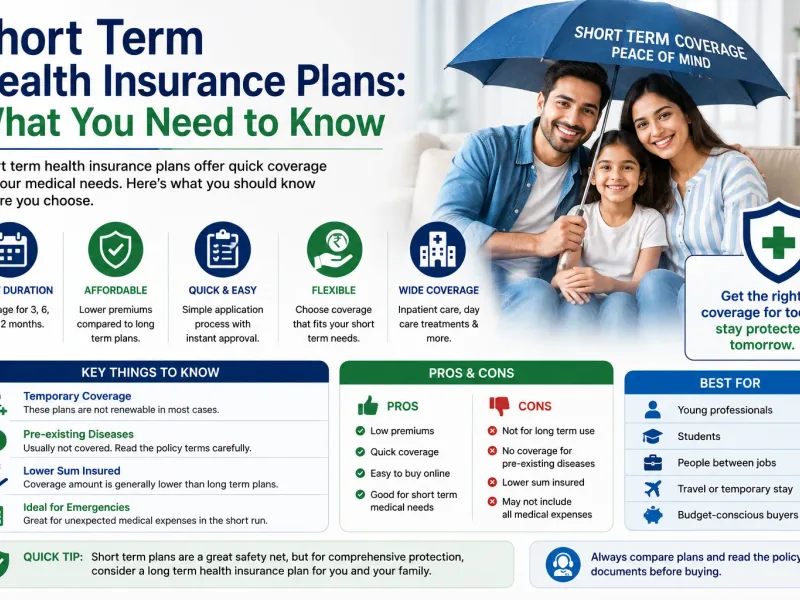
The core of most short term plans is emergency and hospital care. You're broadly covered if you're in a serious accident, need emergency surgery, or get admitted to a hospital. That's meaningful protection. An uninsured hospital stay — even for something that seems routine — can result in bills that take years to clear.
Most plans also include some outpatient doctor visits, basic diagnostics, and urgent care. If you need to find a general physician for a sudden illness during your coverage gap, a short term plan can help offset that cost.
But coverage varies widely between insurers. Two plans with similar monthly premiums can behave very differently when you actually make a claim. This is where people get caught out.
What These Plans Typically Don't Cover
Here is the part most people skip reading until it's too late.
Short term plans almost universally exclude pre-existing conditions — meaning any health issue you had before the policy start date. This isn't a technicality buried in a footnote. It's a foundational feature of the product. Someone managing diabetes who buys a short term plan and then needs a diabetic specialist or a related hospital stay may find the insurer denies the claim outright.
Preventive care, maternity services, mental health treatment, and prescription drug coverage are frequently excluded too. If you see a gynecologist for a pregnancy-related visit, don't assume your short term plan will pay for it. In most cases, it won't.
Dental and eye care are almost always out of scope. If you were counting on getting a dentist near you covered, that's a separate plan entirely.
Who Short Term Plans Actually Make Sense For
Short term coverage is genuinely useful for a specific kind of situation. If you're between jobs and healthy, in your 20s or 30s with no significant medical history, and you need something to protect against catastrophic costs for a few months — a short term plan can be a reasonable, affordable option.
They're also worth considering if you're waiting for open enrollment in a standard plan, or if you've just moved to a new city and haven't yet sorted your long-term coverage. Searching for hospitals near you or a diagnostic center becomes far less frightening when you know you have at least some coverage backing you.
What short term plans are not suitable for: people with chronic conditions, those who regularly see specialists, anyone who needs ongoing prescriptions, and families with children who have regular pediatric care needs. The gap in what these plans cover can hurt those groups badly.
The Cost Reality
Short term plans are cheaper than comprehensive health insurance — sometimes significantly so. That price difference is real, but it reflects the narrower protection you're getting.
The risk is what actuaries call "catastrophic exposure" — you pay low monthly premiums but face the possibility of large out-of-pocket costs if something serious happens that the plan decides is related to a pre-existing condition or falls outside its coverage scope. If you need emergency care, coverage usually kicks in. If you need long-term management of a chronic illness, you may be paying every rupee yourself.
A useful way to think about it: short term plans protect against the sudden and unexpected. They don't protect against the ongoing or foreseeable. That's a reasonable value proposition for the right person, and a genuine financial risk for the wrong one.
How to Compare Short Term Plans Without Getting Burned
Read the exclusions list before the benefits summary. Most people do it backwards.
Check whether the plan covers the hospitals in your area in its network. An out-of-network hospital visit can dramatically increase what you actually pay, even with insurance. Before buying, search for which facilities accept the plan and whether your preferred surgical centre or specialist is included.
Look at the lifetime and per-occurrence benefit caps. Some short term plans have surprisingly low ceilings — caps that sound large until you're looking at a week in a hospital or a procedure like knee replacement or bypass surgery.
Ask specifically whether mental health visits are covered. Many people don't think to ask, and then face mental health costs entirely out of pocket. The same applies to physiotherapy after an injury — it's often excluded or heavily limited.
What Happens at the End of Your Short Term Plan
This is where people often get blindsided. Short term plans don't automatically renew in the same way traditional plans do. When the plan ends, you're uninsured again unless you actively re-enroll or transition to another policy.
If you developed a health condition during your short term coverage period, that condition may now be flagged as pre-existing on your next policy — including any subsequent short term plan. This is a real risk that health coverage advisors flag regularly but that rarely appears in marketing materials.
Plan your exit before you start. If you're using a short term plan as a bridge, know exactly when your next coverage begins and make sure there's no gap. Even a few days uncovered can matter. Booking an appointment with a general physician before your coverage lapses — to get prescriptions or referrals in order — is practical planning, not paranoia.
Short Term Plans and Serious Procedures
If you're considering any planned surgery during your coverage gap, the calculus changes significantly. Short term plans may cover emergency surgery but often won't cover elective or planned procedures.
Procedures like cataract surgery, gallstone removal, angioplasty, or LASIK typically require pre-authorization in full health plans — and short term policies may simply exclude them entirely or classify them as non-emergency. If you have a known condition that might require orthopedic intervention or cardiology follow-up, factor that in before choosing a short term option.
One Thing Advisors Often Miss
In practice, what catches people out isn't the big exclusions — it's the grey zones. A condition you didn't know you had. A test result from six months ago that the insurer uses to classify something as "pre-existing." A claim denied because a symptom you reported on a routine visit gets connected to a later diagnosis.
Keep detailed records of what your plan covers before you need to use it. If you're unsure whether a visit — say, to an ENT specialist or a dermatologist — will be covered, call and ask specifically. Get the answer in writing.