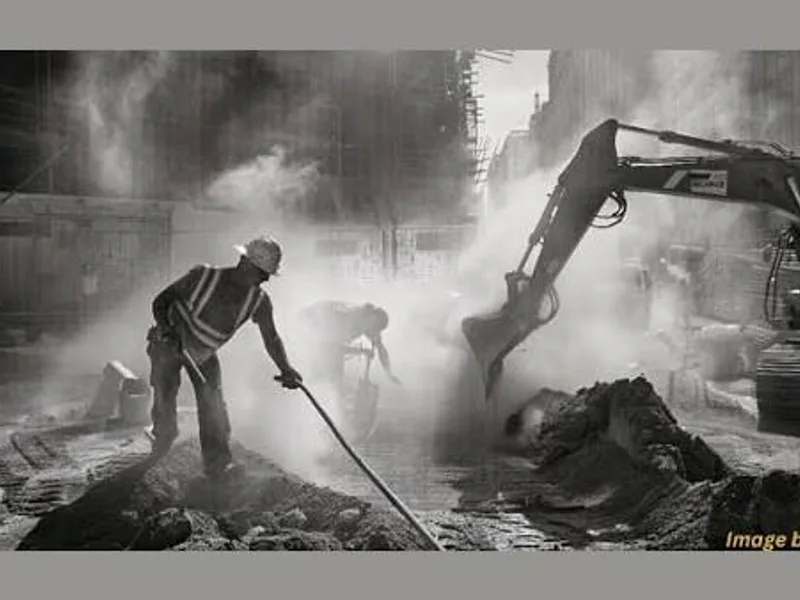
Jharkhand sits on one of India's richest mineral belts — mica, coal, iron ore, and stone run through its ground. For the communities that dig it out, that wealth comes at a cost most people outside the region never see. Silicosis, a permanent and progressive lung disease caused by breathing fine silica dust, has quietly affected thousands of workers here over decades.
This is not a new problem. Yet it keeps being discovered late, treated as ordinary cough, or written off as "old age weakness" in workers who are sometimes barely forty.
What Is Silicosis and Why Does Silica Dust Matter
Silica is a mineral found in sand, rock, and soil. When stone is cut, drilled, or blasted in a mine or quarry, the dust released contains microscopic silica particles. Breathe those particles in regularly, and your lungs react by forming scar tissue around them — a process called fibrosis (hardening of lung tissue).
The scarring never heals. Unlike a chest infection that clears with antibiotics, silicosis is permanent. The longer and heavier the exposure, the faster it progresses.
There are three recognised forms. Chronic silicosis develops slowly after ten or more years of moderate dust exposure. Accelerated silicosis appears within five to ten years after higher exposure. Acute silicosis — the most severe — can develop within weeks or months of extremely heavy dust exposure and can be fatal within a year or two of onset.
Jharkhand's mica mining districts, particularly areas around Koderma, Giridih, and parts of Hazaribagh, have historically seen acute and accelerated forms because many workers — including children in earlier decades — worked in poorly ventilated mines without masks.
If you or someone in your family works in a mine or quarry and has developed persistent breathing difficulty, speak with a pulmonologist near you rather than waiting for symptoms to worsen.
Who Is Most at Risk in Jharkhand
The risk is highest in workers who:
Drill or blast rock in stone quarries
Work in mica splitting or crushing units
Mine coal, sandstone, or iron ore in confined spaces
Grind or polish stone without dust suppression
Mica mining in Jharkhand is closely associated with silicosis because mica-bearing rock contains quartz (a form of crystalline silica). Workers who split mica sheets in poorly ventilated sheds — and historically, children who did this work — inhaled dust for years with no protection.
The risk does not end when a person leaves the mine. Silica dust already embedded in lung tissue continues to cause damage after exposure stops. This is a point that gets missed in clinical settings too — a worker who "quit the mine five years ago" is not in the clear.
To find a chest or respiratory specialist, you can search for doctors in Jharkhand or find a pulmonologist near your area through Doctar.
Symptoms: What Silicosis Actually Feels Like
The problem with silicosis is that it does not hurt in the early stages. Workers often assume they are simply getting tired, or that a persistent cough is from smoking or seasonal dust. By the time breathlessness becomes noticeable, significant lung damage has usually already occurred.
In clinical practice, this is often missed because early silicosis on a chest X-ray can look mild — a few small spots called nodules — even when the person is already limited in their daily activity. Doctors not familiar with occupational lung disease may not connect a mine worker's cough to silica exposure, especially if the worker downplays their work history.
Early symptoms may include:
Persistent dry cough that does not improve with cough syrup
Shortness of breath during physical work (climbing, lifting)
A sense of tightness in the chest
Tiredness that seems disproportionate to the activity
Later-stage symptoms:
Breathlessness even at rest
Rapid breathing
Significant weight loss
Bluish tinge around the lips (a sign of poor oxygen in the blood, called cyanosis)
Cor pulmonale — strain on the right side of the heart caused by damaged lungs
Anyone with these symptoms who has worked in a mine, quarry, or stone-processing unit should see a doctor and be specific about their work history. A general physician can do an initial assessment and refer onwards if needed. For breathing-related concerns, a pulmonologist or a chest specialist is the right person to see.
The Link Between Silicosis and Tuberculosis
Silicosis and tuberculosis (TB) have a particularly dangerous relationship. Scarred lung tissue is more vulnerable to TB infection, and people with silicosis are significantly more likely to develop TB than the general population. The exact increased risk is a subject of ongoing research, but the connection is well-established in occupational medicine literature.
Jharkhand already carries a significant TB burden — and its mining communities are among the most exposed. A mine worker with a persistent cough and weight loss needs to be evaluated for both conditions simultaneously.
Doctar has recently published a detailed piece on Jharkhand's TB elimination efforts, and the TB Nikshay helpline information for Jharkhand is also worth reading if you or a family member has been diagnosed. If you need to find a specialist, hospitals in Ranchi include facilities equipped for respiratory care.
How Is Silicosis Diagnosed
There is no blood test that confirms silicosis. Diagnosis depends on three things: a clear work history with documented dust exposure, a chest X-ray or CT scan showing characteristic patterns (nodules in the upper lobes of the lungs), and ruling out other conditions that look similar — particularly TB and other lung infections.
A spirometry test (a breathing test that measures how much air your lungs can move) helps assess how much lung function has been lost. It does not diagnose silicosis but gives a picture of current lung capacity.
Doctar allows you to search for diagnostic centres near you for chest X-rays and breathing tests. Hospitals in Jharkhand that have pulmonology departments or occupational medicine units are the most appropriate places for a formal evaluation.
If you are in Ranchi, Sadar Hospital Ranchi and Paras HEC Hospital are among the facilities listed on Doctar. For specialist consultations, Medanta Abdur Razzaque Ansari Memorial Weavers Hospital in Ranchi also serves the region.
Is There a Cure for Silicosis
Bluntly: no. There is no treatment that reverses silica scarring in the lungs. Management focuses on slowing progression, treating complications, preventing TB, and improving quality of life.
This is hard news for workers and families, but it makes early detection significantly more important. A person caught at an early stage with relatively preserved lung function has far more options — including stopping exposure, monitoring regularly, and managing symptoms — than someone diagnosed in the late stages.
Supportive treatment may include:
Bronchodilators (medicines that help open airways) for breathlessness
Treatment for any concurrent TB or chest infection
Oxygen therapy in advanced cases
Pulmonary rehabilitation — structured breathing exercises and physical conditioning
Workers who smoke are strongly advised to stop, as smoking accelerates lung damage on top of silicosis. A general physician or pulmonologist can guide appropriate management based on the individual's stage and overall health.
Legal Rights and Compensation: What Mine Workers Should Know
Silicosis is a notifiable occupational disease in India under the Mines Act and the Employees' Compensation Act. In principle, workers who develop silicosis as a result of employment are entitled to compensation. In practice, getting this recognised requires a formal medical certificate from a designated occupational disease centre.
The process is rarely straightforward for unorganised sector workers in Jharkhand's informal mica and stone mining operations, where employment records may be absent, employers unregistered, and workers unaware of their rights.
Organisations like Jan Swasthya Abhiyan and various mining worker unions in Jharkhand have worked to help affected families navigate compensation processes. If you or a family member needs medical documentation, hospitals in Jharkhand that have occupational health or chest medicine departments are the right starting point.
Prevention: What Can Actually Be Done
Silicosis is entirely preventable — which makes it one of the more frustrating occupational diseases to write about, because the tools are known and affordable.
Dust suppression at source is the most effective measure. Wet drilling (using water while cutting or drilling rock) dramatically reduces airborne silica. Enclosed or ventilated workspaces reduce dust concentrations.
Respiratory protection — properly fitted N95 or P100 respirators — blocks silica particles when environmental controls are not enough. Cloth masks do not provide adequate filtration for fine silica dust.
Health surveillance — regular chest X-rays for mine workers every two years — can catch early disease before it becomes severe. This is mandated for organised sector mines in India but poorly enforced in informal operations.
Workers in mining areas can also speak with a home visit doctor for initial screening if visiting a hospital is difficult. Doctar's ambulance services can help in emergencies when transportation is a barrier.
What Families of Mine Workers Should Watch For
If someone in your family works or has worked in a stone quarry, mica mine, or coal field, do not wait for them to complain loudly. Many workers normalise breathlessness and fatigue. Ask directly: Can you climb the stairs the same as two years ago? Is the cough worse? Are you losing weight?
If the answers suggest decline, push for a medical assessment. A general physician can order a chest X-ray and spirometry as a first step. If TB is suspected alongside, the TB Nikshay helpline provides guidance on testing and treatment.
For families managing chronic illness in the household, nurse home visit services and physiotherapy at home may ease the burden of care for a member with advanced lung disease.