SLC6A20 Brain Signaling: What This Gene Actually Does
A gene called SLC6A20 has been quietly showing up in neuroscience papers for years, mostly in connection with kidney and gut function. Then in 2026, a study linked it to something far more attention-grabbing: reversing autism-like behaviors in mice. That's the kind of headline that spreads fast and gets misunderstood just as fast.
Here's the more grounded version of the story. SLC6A20 makes a protein that moves specific molecules in and out of brain cells, and that movement turns out to matter for a receptor system tied to learning, memory, and social behavior. It's genuinely interesting biology. It is not, at this point, a human treatment.
What SLC6A20 Actually Does
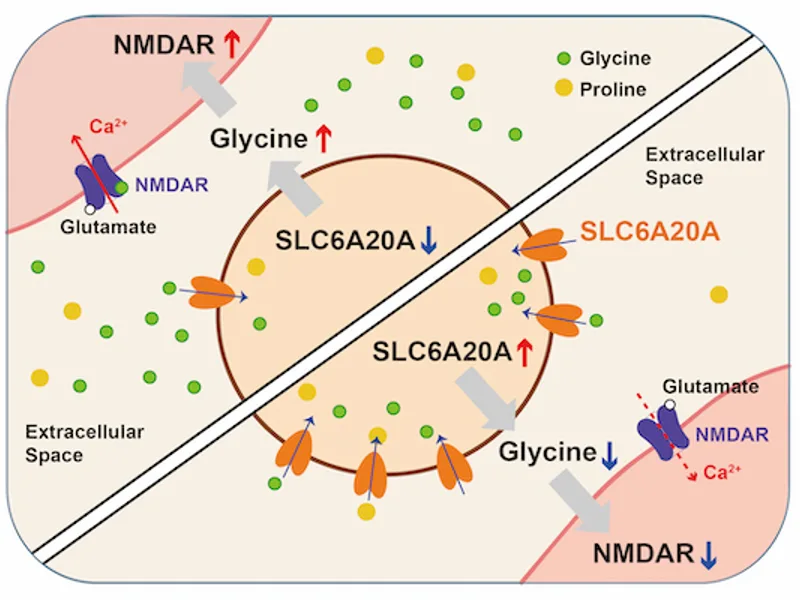
SLC6A20 codes for a transporter protein, essentially a tiny gate embedded in a cell's outer membrane that lets specific molecules pass through. This particular transporter was first known for moving an amino acid called proline, mostly studied in the kidney and gut. More recent brain research found it also transports glycine, a molecule that acts as a chemical messenger between neurons.
Glycine has a dual role in the brain. In some regions it calms neural activity down. In others, it works alongside a receptor called NMDA, which is central to how brain cells strengthen their connections during learning. When researchers looked closely, they found that SLC6A20 helps control how much glycine sits in the space around neurons, which in turn affects how well NMDA receptors function.
Why NMDA Receptor Function Matters Here
Underactive NMDA receptor signaling has been linked, in research settings, to a range of brain conditions including autism spectrum disorder, schizophrenia, and certain intellectual disabilities. That's not the same as saying NMDA dysfunction causes these conditions outright. It's one contributing thread among many, and different people with the same diagnosis can have very different underlying biology.
This is actually the same general research direction behind glycine transporter research being explored for autism more broadly, since SLC6A20 sits in the same functional family as the glycine transporters, GlyT1 and GlyT2, that researchers have studied for over a decade. What's new here is finding that this particular, previously overlooked transporter plays a bigger role in brain glycine levels than expected.
What the 2026 Mouse Study Actually Found
A South Korean research team found that reducing SLC6A20 activity in the brains of mice bred to show autism-like traits led to improvements in some social and behavioral measures. They used a technique called antisense oligonucleotide therapy, which works by partially silencing a specific gene's activity rather than removing it entirely. The results were described as reversing certain deficits, which is a meaningful finding in a mouse model.
Mouse studies are an important, necessary step in early research. They are not a preview of an approved human treatment. Mouse brains and human brains differ substantially, autism in humans involves far more genetic and environmental complexity than any single mouse model can capture, and antisense therapies that work safely in animals still need years of safety and efficacy testing before reaching people, if they get there at all.
In clinical practice, this is where families researching autism treatments often get tripped up. A striking animal study result gets summarized online as "gene therapy reverses autism," and that framing skips past just how much distance separates a mouse finding from a treatment sitting in a doctor's office. I'd encourage genuine curiosity about this research while holding onto that distinction firmly.
Where This Research Might Realistically Lead
If SLC6A20-targeted therapies do eventually reach human trials, they would likely start with small, carefully monitored studies focused on safety before anyone examines whether they meaningfully help with core autism features or associated symptoms like irritability. That timeline, if it happens at all, would reasonably run years, not months. Similar theories around NMDA receptor targeting were explored for schizophrenia over a decade ago and produced mostly disappointing clinical results, a reminder that promising brain chemistry doesn't automatically become an effective drug.
What This Means for Families Right Now
For anyone parenting or supporting someone with autism today, this research doesn't change anything about current care. Established supports, including behavioral therapy, speech and occupational therapy, and treatment for co-occurring symptoms tied to sensory processing and body awareness, remain the evidence-based path forward. It's reasonable to stay curious about where gene-targeted research like this goes, while keeping expectations realistic about the timeline.