What counts as insomnia?
Insomnia is not just one restless night. It generally refers to ongoing difficulty falling asleep, staying asleep or getting restorative sleep, despite having a reasonable opportunity to sleep.
Some people lie awake for hours. Others fall asleep quickly but wake repeatedly or much earlier than planned. The result can be daytime tiredness, irritability, poor concentration or a feeling that the brain is running on low battery.
DOCTAR's guide to insomnia and sleep troubles explores several common patterns, including difficulty falling asleep, night-time awakenings and restless legs syndrome.
There is also a less familiar condition called paradoxical insomnia. A person may feel certain they were awake most of the night even when objective testing suggests they slept considerably more than they realised. Paradoxical insomnia explained by DOCTAR
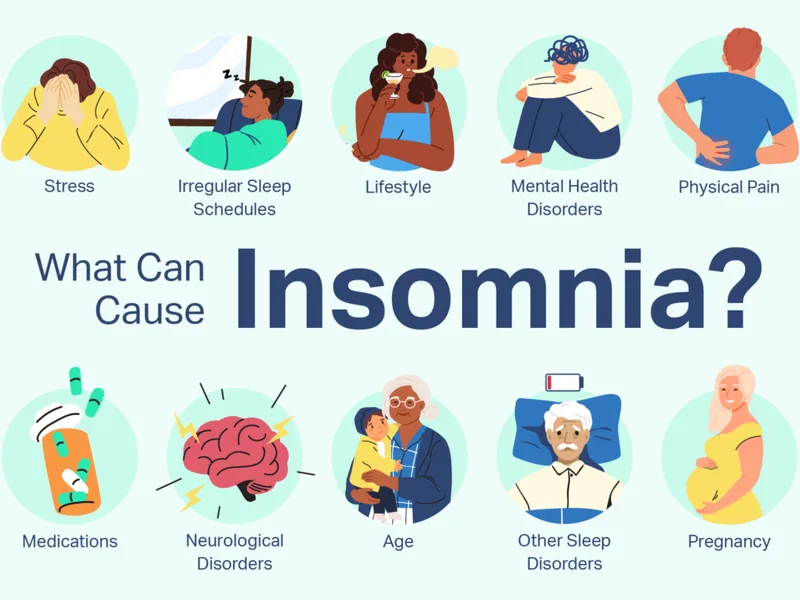
Why does sleep go wrong?
Stress is one of the most obvious triggers, but it is rarely the whole story. Anxiety, depression, pain, hormonal changes, irregular work schedules, caffeine, alcohol, medication side effects and an uncomfortable sleep environment can all interfere with normal sleep.
The body's internal clock matters too. Known as the circadian rhythm, it helps coordinate when we feel alert and when we feel sleepy. Late-night light exposure, changing sleep times and shift work can push that rhythm out of alignment.
DOCTAR's explanation of the sleep cycle and circadian rhythm offers a useful introduction to how this internal clock works.
Even hydration and physical health can enter the picture. Dehydration is not usually a direct cause of insomnia, but it may contribute to discomfort and poorer sleep in some people. DOCTAR's article on dehydration and insomnia looks at that connection.
Insomnia may be a symptom, not the whole problem
Persistent sleeplessness deserves a wider look. A person may think they have simple insomnia when another sleep disorder or medical condition is disrupting their nights.
Sleep apnea is a major example. Breathing repeatedly stops and starts during sleep, often accompanied by loud snoring, gasping or choking sounds. People may wake feeling unrefreshed even though they spent enough time in bed.
DOCTAR's guide to sleep apnea explains the symptoms, types and common approaches to evaluation and treatment.
Restless legs syndrome is another possibility. It creates an uncomfortable urge to move the legs, often becoming worse in the evening and making it difficult to settle down.
Daytime sleepiness can also be a clue. If someone repeatedly struggles to stay awake during meetings, while reading or even during routine activities, the issue may be more than simply going to bed late. DOCTAR's guide to excessive daytime sleepiness examines some of the conditions that can cause it.
DOCTAR's article on falling asleep while sitting down also discusses why unusual daytime sleepiness should not automatically be dismissed as laziness or a busy schedule.
The mind and sleep can get stuck in a loop
Worrying about sleep can sometimes make sleep harder. After several difficult nights, people may begin watching the clock, calculating how many hours remain and becoming anxious about how badly they will function tomorrow.
That anxiety increases alertness, which makes sleep harder, which then creates more anxiety. This cycle is particularly relevant in psychophysiological insomnia, where learned patterns of worry and arousal can become associated with bedtime itself. DOCTAR's explanation of psychophysiological insomnia
Mental health conditions can also affect sleep. Depression may cause either insomnia or excessive sleepiness, while anxiety can leave the mind racing when the body is exhausted. DOCTAR's guide to depression discusses sleep disturbance among the symptoms that can accompany depression.
People with obsessive-compulsive disorder may experience a similar two-way relationship, with intrusive thoughts interfering with sleep and poor sleep making emotional symptoms harder to manage. DOCTAR's article on OCD and insomnia
In clinical practice, this is often missed because people focus on the number of hours they slept rather than asking why the sleep is being disrupted in the first place.
What about screens, caffeine and daily habits?
Late-night phone use gets plenty of blame, and there is a reason for it. Bright light and stimulating content close to bedtime can make it harder for the brain to transition into sleep.
Caffeine can also linger longer than people expect. Coffee, tea, energy drinks and some other products may interfere with sleep depending on the amount, timing and individual sensitivity.
DOCTAR's practical guide to deeper sleep discusses sleep schedules, caffeine, screen exposure, alcohol and the bedroom environment.
A consistent wake-up time, a calmer evening routine, regular daytime activity and a bedroom that is dark and comfortable can help. These measures are not magic cures, but they remove some common obstacles.
DOCTAR's guide to evening sleep rituals covers practical ways to build a more predictable wind-down routine.
When lifestyle changes are not enough
If sleep problems keep returning, simply buying another sleep aid may not address the underlying issue.
Cognitive behavioral therapy for insomnia, commonly called CBT-I, is a structured treatment that works on sleep-related thoughts and behaviours. It can include techniques such as stimulus control, relaxation training and carefully planned changes to time spent in bed.
DOCTAR's guide to CBT-I explains how this approach is used for persistent insomnia.
Sleep restriction therapy is another component that may be used within CBT-I. Despite its name, it is not about depriving someone of sleep indefinitely; it is a structured method intended to improve the relationship between time in bed and actual sleep. It should be used appropriately, particularly in people with other medical conditions. DOCTAR's guide to sleep restriction therapy
Medication can have a role for some people, but the choice depends on the cause, other medicines, medical history and the type of sleep problem. It should not be treated as a universal solution.
DOCTAR's overview of sleep medications explains why doctors consider the underlying sleep disorder before choosing medication.
Newer medicines that target the brain's wakefulness system are also being used for selected adults with insomnia. DOCTAR's article on daridorexant and insomnia provides an example, while DOCTAR's information on suvorexant interactions highlights why prescription sleep medicines need individual medical review.
Other factors can matter, too. Steroid medicines, for example, may disturb sleep in some people. DOCTAR's article on steroids and insomnia looks at that relationship.
Iron deficiency and anemia can also overlap with restless legs, fatigue and sleep complaints. DOCTAR's article on anemia and insomnia explains why the underlying cause deserves attention.
Don't ignore persistent daytime consequences
Sleep problems become more concerning when they start affecting ordinary life. Difficulty concentrating, mood changes, persistent fatigue, accidental dozing or unsafe sleepiness while driving are reasons to seek professional advice.
A detailed medical history can be surprisingly useful. Doctors may ask about sleep timing, medications, caffeine, mental health, snoring, breathing pauses, leg sensations, work schedules and other health conditions before deciding whether further testing is needed.
DOCTAR's guide to medical history in sleep disorders explains why these questions matter.
Some people also experiment with unusual sleep schedules, such as polyphasic sleep. Evidence for these approaches is limited, and intentionally cutting sleep into multiple short periods can make adequate rest difficult. DOCTAR's guide to polyphasic sleep
Similarly, deliberately staying awake all night to “reset” the body clock is not a reliable cure for an irregular sleep schedule. DOCTAR's article on all-nighters and sleep cycles
A practical approach to better sleep
Start with the basics, but give them time. Keep sleep and wake times reasonably consistent, reduce stimulating activity before bed, review caffeine and alcohol habits, and make the bedroom suitable for sleep.
Do not assume every sleepless night means you have a disorder. But if the problem persists, worsens or affects daytime safety and functioning, talk to a qualified healthcare professional rather than repeatedly self-treating.
For people who feel exhausted but cannot sleep, DOCTAR's guide to feeling tired but unable to sleep offers additional context. Those waking repeatedly during the night may also find DOCTAR's guide to falling back asleep useful.
Sleep quality also has a relationship with cognitive performance. DOCTAR's discussion of sleep loss and cognitive function explores why persistent sleep deprivation can affect attention and thinking.
Other symptoms may provide clues. For example, DOCTAR's guide to sleep problems and rest discusses when fatigue, mood changes and sleep disruption warrant medical assessment.
For some people, even apparently small environmental details matter. DOCTAR's discussion of sleeping direction and bedroom practices notes that while claims about sleeping direction lack strong scientific support, comfort and a peaceful sleep environment remain sensible priorities.
If you are dealing with a sleep problem after an illness or while taking a medicine, don't automatically assume the connection is certain. DOCTAR's article on Paxlovid and insomnia is one example of why possible medication-related sleep changes need careful interpretation.
For families, sleep can be difficult for parents as well. DOCTAR's guide to sleep for exhausted Indian parents discusses the practical pressures that can make regular rest difficult.
Finally, some people explore supplements such as melatonin. Because supplements are not risk-free or appropriate for everyone, discuss their use with a healthcare professional rather than assuming “natural” means suitable. DOCTAR's article on melatonin and vivid dreams explores one possible effect.