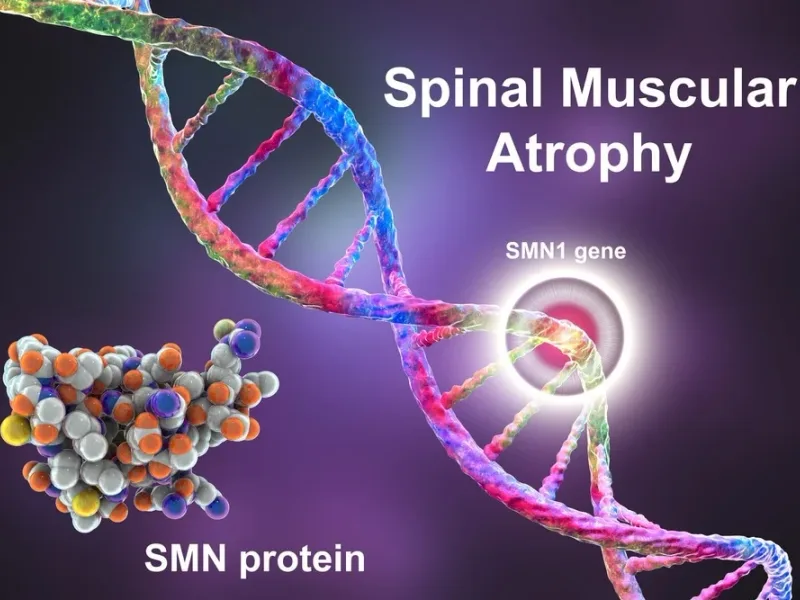
Spinal muscular atrophy, or SMA, is a genetic disease that attacks motor neurons, the nerve cells that tell muscles to move. Without a working copy of a gene called SMN1, the body can't make enough of a protein these neurons need to survive.
The result is progressive muscle weakness. In its most severe form, SMA Type 1, babies struggle to lift their heads, swallow, or eventually breathe on their own. Left untreated, it's historically been the leading genetic cause of infant death, which is a brutal fact but an honest one.
Here's what a lot of people don't realize: SMA isn't rare in the way some genetic diseases are rare. Roughly 1 in 10,000 babies is born with it worldwide. The reason it isn't a household name is partly because, until fairly recently, there wasn't much doctors could offer beyond supportive care.
How Gene Therapy Changed the Picture
Zolgensma, approved by the FDA back in 2019, was the first real turning point. It's a one-time intravenous infusion that delivers a working copy of the SMN1 gene using a modified, harmless virus as the delivery vehicle. The new gene tells motor neurons to start producing the protein they were missing all along.
It's approved for children under two, and the earlier it's given, the better it tends to work. A child treated before symptoms even appear, say through newborn screening, has a fundamentally different outlook than one treated after significant muscle loss has already occurred. That gap between "before symptoms" and "after symptoms" is, honestly, the whole ballgame with this disease.
In clinical practice, this is the part that gets missed most often: gene therapy replaces the missing gene, but it doesn't undo damage that's already happened to motor neurons. Families sometimes hear "one-time cure" and assume it reverses existing weakness. It's more accurate to say it stops the disease from progressing further and, in early cases, allows fairly normal development from that point on.
What's New: Options Beyond Age Two
For years, the tough question was what to do for children diagnosed after age two, since Zolgensma's approval didn't cover them. That's shifted recently with a newer version called Itvisma, delivered by spinal injection rather than IV, approved for people two years and older.
Itvisma has shown more modest improvements than Zolgensma does in younger infants, which makes sense given the biology. Motor neurons that have already been lost don't come back. Still, having any gene-replacement option for older children and even some adults is a meaningful shift from where the field stood just a few years ago.
It's worth noting SMA treatment isn't limited to gene therapy alone. Two other drugs, nusinersen (Spinraza) and risdiplam (Evrysdi), work differently, by helping a backup gene called SMN2 produce more functional protein, and are used either instead of or sometimes alongside gene therapy depending on the case. Which approach fits a given child is a conversation for a pediatric neurologist, not something to decide from a blog post.
Why Newborn Screening Matters So Much
Given how much timing affects outcomes, newborn screening for SMA has become a genuine priority in many countries. Several US states and parts of Europe now screen for it routinely at birth, catching cases before any visible symptoms appear.
India doesn't yet have universal newborn SMA screening, and that's a real gap. Diagnosis here often still happens after a parent notices a baby isn't hitting motor milestones, by which point some window for the best possible outcome may have already narrowed. I'll say plainly that this is one area where policy is lagging behind what the science can actually deliver.
If there's a family history of SMA, or if a baby seems unusually floppy or slow to reach milestones like head control or sitting, that's worth raising with a pediatrician promptly rather than waiting to see if it resolves on its own.
What Families Should Actually Do
Should every parent panic about this? No, SMA is still uncommon enough that routine worry isn't warranted. But should you know the early warning signs and act quickly if something seems off? Absolutely.
Genetic carrier screening before or during pregnancy can flag risk before a child is even born, which is worth discussing with an obstetrician if SMA runs in either parent's family. After birth, any signs of muscle weakness, poor head control, or feeding difficulty deserve prompt evaluation by a pediatrician, who can refer on to a neurologist if needed.