Why Muscle Strength Matters as You Age
Muscle naturally becomes harder to maintain with age, particularly when physical activity drops. Losing muscle and strength can affect walking, balance, posture and the ability to recover after illness or injury.
A point often seen in clinical practice is that people tend to focus on weight or appearance while overlooking functional strength. Being able to get up from a chair, lift a suitcase or climb several flights of stairs may tell you more about healthy aging than the number on a weighing scale.
Regular physical activity also supports cardiovascular health, metabolic health and mental well-being. The CDC recommends that adults include muscle-strengthening activity on at least two days each week, alongside aerobic activity.
For older adults, the recommendation also includes balance activities because maintaining stability becomes increasingly important for preventing falls.
For readers interested in staying active later in life, Doctar's fitness guide for people in their 50s, 60s and beyond offers ideas that go beyond traditional gym workouts.
How Strength Training May Support Longevity
1. It helps preserve muscle
Muscle is living tissue that responds to physical demand. When you regularly challenge your muscles, the body adapts by becoming better able to handle that workload.
You can use bodyweight movements, bands, free weights or machines. Doctar's comparison of calisthenics and weightlifting explains why both approaches can build strength.
A separate guide to muscle building and strength also highlights the importance of progressive resistance and recovery.
2. It supports stronger bones
Bones respond to mechanical loading. Weight-bearing and resistance exercises can therefore form part of a broader strategy for maintaining bone strength.
This becomes particularly relevant with aging because bone loss can increase the risk of fractures. Doctar's guide to weight-bearing exercises for osteoporosis discusses movements such as stair climbing, lunges and loaded carries.
Its osteoporosis prevention guide also covers the role of exercise and lifestyle in maintaining bone health.
People with osteoporosis, previous fractures or other medical conditions should get individualized advice before starting a demanding resistance program.
3. It can improve everyday function
Longevity is not simply about adding years to life. It is also about maintaining the ability to use those years well.
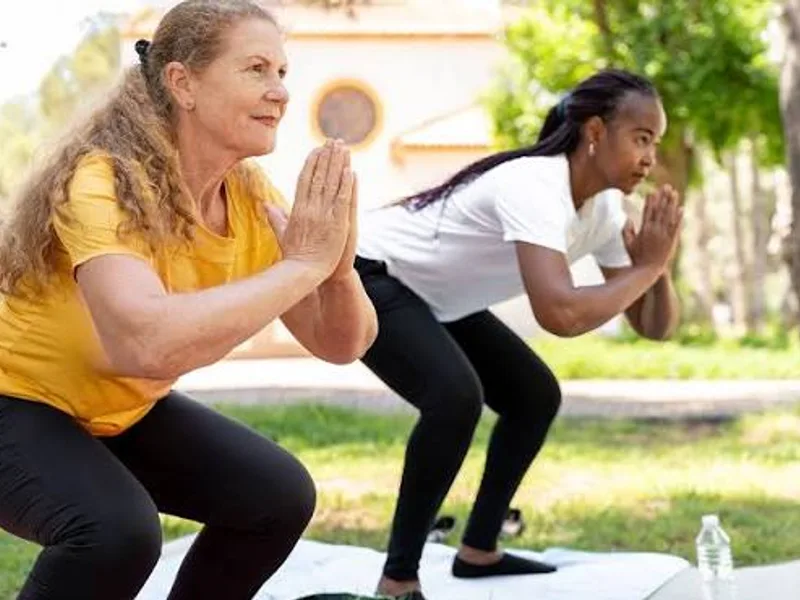
Squats can train the muscles needed to rise from a chair. Rows and pulling exercises can support upper-body strength. Carrying exercises can challenge grip and trunk stability.
That is why a longevity-focused program should train movements rather than just individual muscles.
If mobility is limiting your training, Doctar's thoracic mobility exercise guide may provide useful background. Its knee mobility and stretching guide is another relevant resource for people dealing with movement limitations.
What Should a Longevity-Focused Workout Include?
A useful program does not need dozens of exercises. It should cover the major muscle groups and include movements that have some connection to real-life activity.
Common choices include:
Squats or supported sit-to-stand movements
Hip-hinge exercises
Rows or other pulling movements
Push-ups or pressing movements
Carrying exercises
Core-strengthening movements
Balance exercises
Doctar's free weights versus machines guide explains that both forms of resistance can be useful. The better option is often the one that allows you to train consistently with safe technique.
You also do not need to test your maximum strength. Doctar's 1-rep max guide explains maximum-strength testing, but most people training for healthy aging do not need to regularly lift their absolute maximum.
Instead, gradually increasing resistance, repetitions or exercise difficulty can provide a safer way to progress. This principle is known as progressive overload.
Strength Training Is Only One Piece of Longevity
Resistance exercise should not replace walking or aerobic activity. A long-term fitness plan works better when different forms of movement complement each other.
For example, proper walking technique can help people make everyday walking more purposeful. A short walk after eating can also be an easy way to add movement during the day.
Cardiovascular fitness matters too. Doctar's guides to heart-rate zones and target heart rate during exercise explain ways people can understand exercise intensity.
For older adults, the CDC recommends combining aerobic activity, muscle strengthening and balance work rather than relying on just one type of exercise.
Yoga, Pilates and other controlled movements can complement resistance work. Doctar's articles on yoga and strength training and Pilates for seniors explore these approaches.
Recovery and Nutrition Still Matter
Training is only one part of adaptation. Muscles also need time to recover.
Sleep, adequate food intake and sensible training volume all matter. Protein is particularly relevant because it provides the amino acids the body uses to maintain and repair muscle tissue. Doctar's protein guide discusses protein requirements, while its protein guide for workouts looks at nutrition around exercise.
A balanced diet based largely on whole foods is preferable to treating supplements as a shortcut. Doctar also provides a guide to protein-rich foods that may be useful for people planning meals around an active lifestyle.
Sleep deserves attention too. Its relationship with exercise and recovery is explored in Doctar's guide to exercising before bed.
When Should You Get Professional Advice?
Strength training is generally adaptable, but not every exercise is suitable for every person.
Anyone with significant heart disease, uncontrolled symptoms, recent surgery, serious joint problems, osteoporosis with fracture risk, or another medical condition should discuss exercise plans with an appropriate healthcare professional.
Pain that is severe, persistent or worsening should not simply be treated as a normal part of training. Likewise, dizziness, chest pain or unusual breathlessness during exercise warrants medical attention rather than pushing through the session.
People who already have balance or mobility problems may benefit from professional guidance. Doctar's guide to balance problems in older adults explains why persistent unsteadiness deserves attention.
For people who need assistance with movement, its mobility-aid guide discusses ways to support safer mobility.