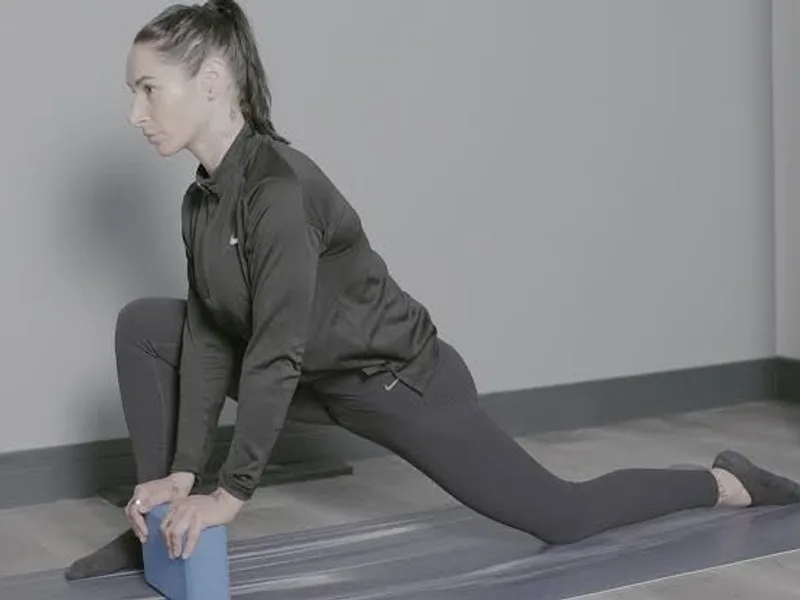
Ask ten people at the gym to define "mobility work" and you'll probably get ten different answers, half of which are just describing stretching. It's a mix-up worth sorting out, because the two aren't interchangeable, and treating them like they are can genuinely slow down recovery from an injury or stall progress in training.
Stretching is about lengthening a muscle. Mobility work is about how well a joint moves through its full range, actively, under your own control. That distinction sounds small. In practice, it changes what you should actually be doing before a workout, after an injury, or just to move more comfortably day to day.
What Stretching Actually Does
Stretching, in the simplest sense, applies tension to a muscle to increase its length or reduce its resistance to being lengthened. Hold a hamstring stretch for 30 seconds and you're asking that muscle to tolerate a longer position.
There are two broad types worth knowing. Static stretching is the hold-and-wait kind most people picture, useful after exercise or on its own as a flexibility practice. Dynamic stretching involves moving through a range repeatedly, like leg swings, and tends to suit warm-ups better than static holds do.
Here's the part that surprises people: research over the last couple of decades has been fairly consistent that static stretching before a workout doesn't reduce injury risk the way it was once assumed to, and can even slightly reduce power output if done right before heavy lifting. That doesn't mean stretching is useless. It just means the old habit of holding a quad stretch for a minute before squats probably isn't doing what most people think it's doing.
What Mobility Work Actually Does
Mobility work targets the joint, not just the muscle around it. It asks a question stretching doesn't: can you actively control that range of motion, or can you only reach it passively when something else is pulling or pushing you there?
A deep squat is a good example. Someone might be able to sit in a passive deep squat with support, yet be unable to control that same depth actively under load. That gap between passive flexibility and active control is exactly what mobility training tries to close, usually through loaded stretches, controlled articular rotations, or strength work at end ranges.
In clinical practice, this is often missed because people assume tight muscles mean the answer is more stretching, when the actual issue is that the surrounding stabilizing muscles are weak and can't control the range that's already there. Stretching a joint that's unstable can occasionally make things feel looser without making them more functional, which isn't really progress.
Which One Do You Actually Need?
Honestly, it depends on what's limiting you, and that's not always obvious without some digging.
If a muscle genuinely feels short and restricts a movement consistently, targeted stretching can help over weeks of consistent practice. If a joint feels "tight" but the tightness shifts around, or if you can touch your toes on a good day but not a bad one, that inconsistency often points toward a stability or control issue rather than a true flexibility limit. That's a mobility problem, not a stretching one.
People recovering from an injury sometimes get this backwards, stretching around pain rather than rebuilding strength through range. A physiotherapist near you can actually test which one is limiting you, rather than guessing based on how a stretch feels that day.
Where the Confusion Causes Real Problems
The stakes are lowest when you're just trying to touch your toes for the first time. They're higher after surgery, an old injury, or with joint conditions like arthritis, where the wrong approach can aggravate things rather than help.
Aggressive stretching around an unstable joint, for instance, isn't a great idea without professional guidance, especially post-surgery or after a ligament injury. If you've had a joint injury and you're not sure whether to stretch it or build control around it, that's exactly the kind of question worth asking an orthopedist near you before guessing based on a YouTube video.
Chronic joint pain that isn't improving with either stretching or mobility work over several weeks deserves a proper look too. It's reasonable to start with a general physician near you, who can refer you onward if the issue turns out to be structural rather than something exercise alone will fix.
A Practical Way to Combine Both
Neither approach needs to be the enemy of the other. Dynamic mobility work tends to suit warm-ups, priming joints and muscles for the specific movement pattern coming up in a workout.
Static stretching still has a place after training or on rest days, when the goal is genuine flexibility gains over time rather than pre-workout preparation. If you're recovering from a strain or dealing with something like DOMS after a hard session, gentle movement generally beats aggressive static holds anyway.
For anyone rebuilding after an injury, a structured plan from a physiotherapist near you tends to get better, faster results than piecing together advice from different corners of the internet. If imaging is needed to rule out a structural cause first, a diagnostic center near you can arrange that.