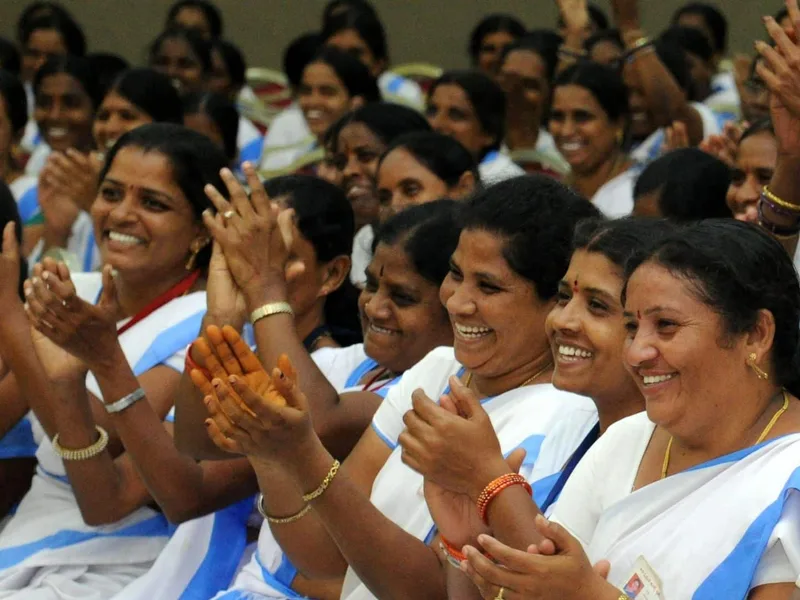
Award categories tend to follow the same script, year after year. The senior surgeon gets recognised. The well-known specialist gets a trophy. Meanwhile the nurse who managed a ward through a dengue surge, or the ASHA worker who walked three kilometres to check on a pregnant woman who missed her antenatal visit, rarely gets mentioned at all.
The Swasthya Bondhu Samman, introduced this year as part of the News18 Bangla Healthcare Summit, was built to close exactly that gap. It honoured nurses, paramedics, technicians, support staff and ASHA workers, grouping together the people who keep a hospital ward or a rural health centre actually functioning, day after day, mostly without anyone watching.
It's worth sitting with why this took four editions of the summit to happen. Recognition tends to follow visibility, and frontline health workers are, almost by design, the least visible part of the system. They don't do rounds with cameras following them. Nobody profiles the ASHA worker who caught a malnourished child early, unless something goes badly wrong first.
What an ASHA Worker Actually Does, Day to Day
If you've never lived in a village or a semi-urban ward in West Bengal, you may not fully grasp what an ASHA worker's job looks like. ASHA stands for Accredited Social Health Activist, a role created under the National Rural Health Mission back in 2005, and every single ASHA worker in India is a woman, usually selected from within the community she serves.
Her job isn't glamorous. She tracks pregnant women through their antenatal visits and pushes for institutional deliveries rather than home births. She follows up on childhood immunisation schedules, flags early signs of malnutrition, and during outbreak seasons, she's often the one going door to door checking for fever, doing exactly the kind of source-reduction work that keeps mosquito-borne diseases like dengue from spreading further in a locality.
In clinical practice, this detail often gets missed: for a huge number of families in rural Bengal, the ASHA worker isn't a supplement to their access to healthcare. She's the entry point. Before a family ever sees a doctor, an ASHA worker has usually already assessed the situation, decided whether it needs escalation, and pushed the person toward the nearest primary healthcare or hospital if it does.
Nurses Carry a Similar Weight, Differently
Nurses don't face quite the same invisibility problem as ASHA workers, but they're underrecognised in a related way. Doctors get named on discharge summaries and prescriptions. Nurses are the ones actually present at the bedside for the hours in between, monitoring vitals, adjusting care based on what they observe first, and often catching a deterioration before it becomes a documented emergency.
Ask anyone who's had a family member hospitalised for more than a couple of days, and they'll usually remember the nurse's name before they remember which resident was on duty that shift. That's not a criticism of doctors. It reflects how hospital care actually works day to day, and it's exactly the kind of contribution an award category like Swasthya Bondhu Samman is trying to put a name and a face to.
Why This Kind of Recognition Matters Beyond the Ceremony
An award trophy doesn't change a nurse's salary or an ASHA worker's honorarium the next morning. That's worth being honest about. National reports have repeatedly flagged that ASHA workers, despite being called the backbone of India's primary healthcare system by global health bodies, still work on modest, task-based incentives rather than stable formal salaries in most states.
So what does a category like this actually do? At minimum, it puts frontline workers into a public narrative that has historically excluded them, and it signals to hospitals and health administrations that grassroots contribution is worth naming publicly, not just internally. Whether that translates into better pay or working conditions down the line is a separate, harder question, one a single award ceremony can't answer on its own.
What This Means If You're a Patient
For most readers, this isn't really about the award itself. It's a reminder of who's actually involved in your care, beyond the doctor whose name is on the prescription. If you or a family member need ongoing monitoring at home, a nurse for home care or a compounder for injections and checkups often does as much of the actual day-to-day work as the specialist who set the treatment plan.
Similarly, if you live somewhere with an active ASHA presence, that worker is a legitimate first point of contact for maternal health concerns, child immunisation questions, or early symptom checks, not just a formality to get through before seeing a doctor. Use that resource rather than skipping past it.