Symptoms of Insomnia: How to Recognize the Signs
Insomnia is a sleep disorder marked by trouble falling asleep, staying asleep, or waking up too early and being unable to fall back asleep — even when you have enough opportunity to sleep. It affects both nighttime rest and daytime functioning, and the two are connected: poor sleep at night tends to show up as fatigue, irritability, or trouble concentrating during the day.
Most adults need seven to nine hours of sleep a night. When insomnia disrupts that consistently, the effects go beyond feeling groggy — they can touch mood, memory, and physical safety.
[REVIEWER: add clinical insight here — e.g., which insomnia symptoms most often bring patients into your office first, versus which ones they tend to dismiss]
Nighttime Symptoms
The symptoms most people associate with insomnia happen at night, in bed, trying to sleep:
Difficulty falling asleep, sometimes called sleep-onset insomnia — lying awake for a long stretch after going to bed.
Waking up during the night and having trouble falling back asleep.
Waking up too early, often before an alarm, without being able to return to sleep.
Ongoing worry about sleep itself — anxiety about whether tonight will be another bad night, which can itself make falling asleep harder.
Daytime Symptoms
Insomnia's effects don't stay in bed. According to the Mayo Clinic, daytime symptoms are just as central to the diagnosis as nighttime ones:
Fatigue or sleepiness during the day, even after spending enough time in bed.
Feeling cranky, depressed, or anxious — mood changes tied directly to poor sleep quality.
Trouble paying attention, focusing, or remembering things.
More errors or accidents, including slower reaction time, which the Mayo Clinic notes raises the risk of accidents while driving.
Ongoing worries about sleep, which can bleed into daytime anxiety about performance or functioning.
MedlinePlus, a National Institutes of Health resource, adds that insomnia can leave you not feeling refreshed even after what should be a full night's sleep, and can interfere with focus, learning, and memory during the day.
Short-Term vs. Chronic Insomnia
Not all insomnia looks the same, and the distinction matters for figuring out next steps.
Short-term (acute) insomnia usually lasts days to a few weeks and is often tied to a specific stressor — a work deadline, a family conflict, a distressing event, or travel across time zones. It tends to resolve once the stressor passes or sleep habits stabilize.
Chronic insomnia is different: symptoms occur at least three nights a week and persist for three months or longer. The Mayo Clinic notes chronic insomnia may be the primary problem, or it may be tied to another medical condition, mental health condition, or medication. Chronic insomnia is less likely to resolve on its own and more often needs a structured approach, such as cognitive behavioral therapy for insomnia (CBT-I).
What Commonly Triggers or Worsens Symptoms
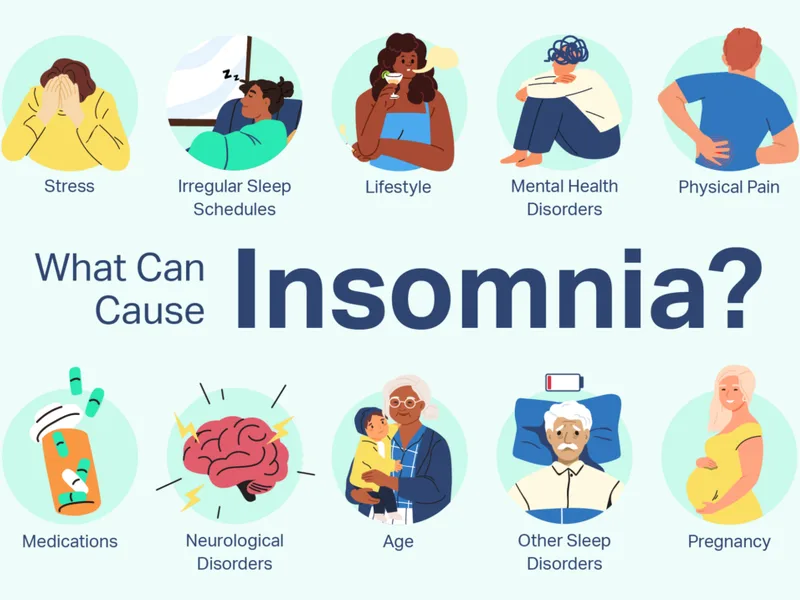
Symptoms of insomnia often have identifiable contributors, even when the insomnia itself feels like it "comes from nowhere." The Mayo Clinic lists several common ones: ongoing stress, irregular sleep schedules, using screens or working in bed, eating heavily late in the evening, and stimulants such as caffeine, nicotine, and alcohol close to bedtime. Certain medical and mental health conditions — including anxiety, depression, chronic pain, and sleep-related breathing problems like sleep apnea — are also frequently linked to insomnia symptoms, per StatPearls, a peer-reviewed clinical reference published through the National Center for Biotechnology Information.
[REVIEWER: add clinical insight here — e.g., how you distinguish primary insomnia from insomnia secondary to an underlying condition during an initial evaluation]
When Insomnia Symptoms Warrant a Doctor's Visit
Occasional sleepless nights are normal and don't require medical attention on their own. But according to the Mayo Clinic, if insomnia symptoms make it hard to manage daily activities — work, school, relationships, safety — it's time to see a doctor or another primary care professional. A doctor can help identify an underlying cause and may recommend a sleep study if a sleep disorder like sleep apnea is suspected.
Complications linked to unmanaged insomnia include lower performance at work or school, slower reaction times and higher accident risk, and a higher likelihood of mental health conditions such as depression or anxiety, along with an increased risk of conditions like high blood pressure. These aren't reasons for alarm over a single rough night — but they're reasons not to ignore a pattern that's lasted weeks or months.
A Practical Takeaway
Insomnia isn't just about how long it takes to fall asleep — it's the combination of nighttime disruption and daytime impact: fatigue, mood changes, and trouble focusing that follow a bad night. If that pattern shows up several nights a week and sticks around for a few weeks or longer, it's worth mentioning to a doctor rather than waiting it out. Identifying the underlying cause — stress, habits, a medical condition, or something else — is usually the fastest path to actually fixing it.
FAQ
How many nights of bad sleep count as insomnia?
Occasional poor sleep isn't insomnia. Chronic insomnia is generally defined as symptoms occurring at least three nights a week for three months or longer, though short-term insomnia lasting days to weeks is also common and usually tied to a specific stressor.
Can insomnia cause symptoms during the day, not just at night?
Yes. Daytime fatigue, irritability, low mood, and trouble concentrating or remembering are core symptoms of insomnia, not separate issues — they result directly from disrupted nighttime sleep.
Is insomnia the same as just not sleeping enough? Not exactly. Insomnia specifically involves difficulty falling asleep, staying asleep, or waking too early despite having the opportunity for enough sleep — plus daytime effects. Simply choosing to stay up late isn't insomnia.
What conditions are commonly linked to insomnia symptoms? Anxiety, depression, chronic pain, and sleep-related breathing disorders like sleep apnea are frequently associated with insomnia. Certain medications and stimulants such as caffeine, nicotine, and alcohol can also trigger or worsen symptoms.
When should I see a doctor about insomnia? See a doctor if insomnia symptoms are making it hard to manage daily activities, work, or safety, or if the pattern has lasted weeks without improvement. A doctor can look for an underlying cause and recommend appropriate treatment.