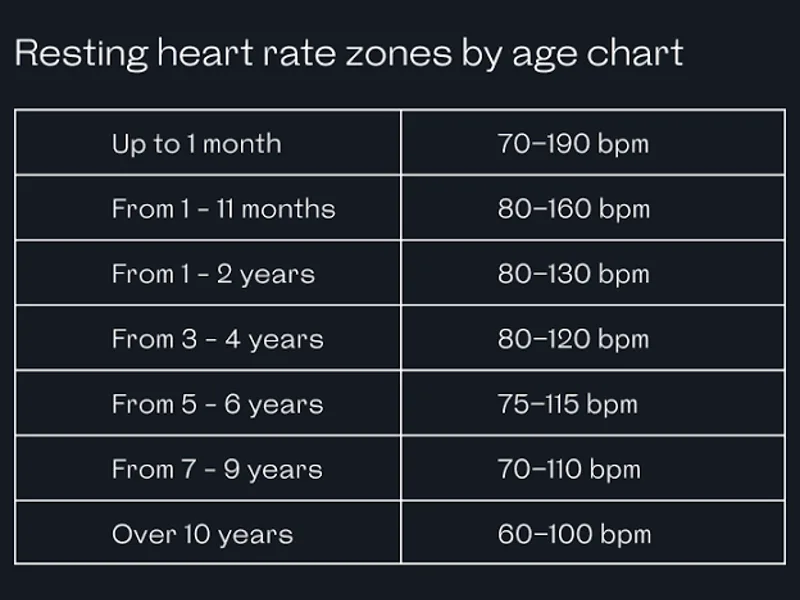
Most fitness trackers now flash a little heart rate zone at you mid-workout, sorting your effort into bands with names like "fat burn" or "peak." It looks precise. It looks scientific. And to be fair, there's real physiology behind it.
But here's the part that rarely gets explained: these zones are built on estimates, not exact measurements of your individual heart. Age plays into the formula heavily, which is why the same effort level looks completely different on paper for a 25 year old versus someone in their sixties.
What Is a Target Heart Rate Zone, Really?
Your heart rate zone is a range, expressed as a percentage of your estimated maximum heart rate, that corresponds to a particular intensity of effort. Lower zones mean lighter exertion, higher zones mean you're pushing harder.
The most common starting point is the formula 220 minus your age, which gives a rough estimate of your maximum heart rate. So a 40 year old would estimate roughly 180 beats per minute as their theoretical max. From there, specific zones are calculated as percentages of that number.
It's worth saying plainly: this formula is a population average, not a lab measurement of your actual heart. Individual variation is real, and some people's true max heart rate sits meaningfully above or below what the formula predicts.
The Zones, Broken Down Simply
Zone 1 (50–60% of max) is very light activity, like a relaxed walk. Good for warm-ups and recovery days, not much else.
Zone 2 (60–70% of max) is often called the fat-burning zone, though that name oversells it a bit. At this intensity, a higher percentage of the calories you burn come from fat, but the total calorie burn is lower than harder efforts, so the actual fat lost isn't necessarily more.
Zone 3 (70–80% of max) is moderate cardio, the kind that builds general fitness over time. This is roughly where brisk walking or light jogging typically lands for most people.
Zone 4 (80–90% of max) is hard effort, used in interval training to push cardiovascular capacity. Not something to sit in for long stretches, especially without a base fitness level already built.
Zone 5 (90–100% of max) is near-maximum effort, sustainable only briefly. Athletes use this deliberately in short bursts; most people rarely need to go here at all.
Rough Zones by Age Group
Using the standard 220-minus-age formula, here's roughly where moderate intensity (around 70% of max) tends to land for different age groups. These are estimates only, not individual targets.
These numbers will shift depending on fitness level, medication, and individual heart health, so treat them as a starting reference, not a rulebook. Someone on beta blockers, for instance, will see a noticeably lower heart rate response regardless of how hard they're actually working.
Why This Formula Doesn't Fit Everyone
In clinical practice, this is often missed because patients assume the standard formula applies uniformly, when it really doesn't account for medication, underlying heart conditions, or genuine variation in resting and maximum heart rate between individuals. Two people the same age can have meaningfully different true maximums.
If you're on heart medication, particularly beta blockers, your heart rate response to exercise will be blunted, and using the standard zones could either underestimate your actual effort or make you think you're not working hard enough when you actually are. This is exactly the kind of thing worth clarifying with a cardiologist rather than guessing from an app.
Anyone with a diagnosed heart condition should get personalised guidance rather than relying on generic percentages. A stress test, done through a diagnostic centre near you, can give a much more accurate picture of your actual safe exercise range than any formula pulled off the internet.
How to Use This Practically
For most healthy adults without heart conditions, staying mostly in zones 2 and 3 during regular workouts builds solid cardiovascular fitness without excessive strain. Occasional pushes into zone 4 are fine for those with a reasonable fitness base already.
If you're just starting out, don't chase a specific number on a screen. A simple talk test works well enough for most people: if you can hold a conversation with some effort but not sing comfortably, you're roughly in a moderate zone already, no calculator required.
A general physician near you can do a basic fitness and heart check if it's been years since your last one, which is a reasonable step before relying heavily on heart rate zones for training decisions.
When to Get Checked Before Relying on These Numbers
Certain groups genuinely shouldn't just start chasing zone targets without a check-up first.
Anyone with a history of heart disease or a past cardiac event
People on heart or blood pressure medication
Those experiencing chest discomfort, dizziness, or unusual breathlessness during exercise
Anyone over 40 returning to exercise after years of inactivity
People managing diabetes alongside cardiovascular risk
For that last group, an endocrinologist working alongside a cardiologist often makes sense, since heart rate response and blood sugar control genuinely interact. Women navigating cardio changes during pregnancy should check with a gynecologist before pushing into higher zones. Parents monitoring exercise intensity in children with any heart concern should consult a pediatrician rather than applying adult formulas to a child.
Building the Right Support Around Your Routine
Getting heart rate training right usually works better with a few people in your corner rather than trial and error alone. You can browse verified doctors near you or doctors in Kolkata to find someone to guide the process. For a fuller cardiac workup, hospitals near you or hospitals in Kolkata often offer dedicated heart screening packages.
Routine tests, including resting ECGs or lipid panels, can be booked through diagnostic centres across Kolkata, and if mobility makes clinic visits difficult, home visit doctor services can bring the initial consultation to you instead. A dietitian can help align nutrition with your training goals, and a physiotherapist is worth involving if joint issues limit which zones are safely reachable.
Medicines prescribed after any check-up can be ordered through a pharmacy near you, follow-up monitoring can be arranged through home nursing services, and a compounder can assist with routine vitals checks between appointments. Anyone with breathing limitations affecting their achievable zones should consider a pulmonologist, and skin changes noticed during heavy exertion are worth mentioning to a dermatologist if they persist. If a cardiac evaluation ever points toward a procedure, comparing options through surgery listings is a sensible next step, and outside Kolkata, similar guidance applies through doctors across India.