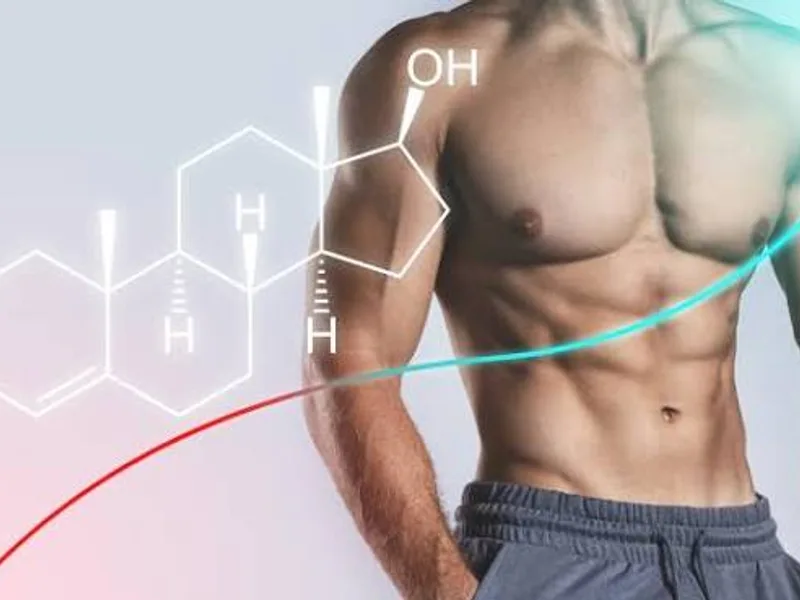
How does testosterone affect muscle mass?
Testosterone helps the body build and maintain muscle. It supports processes involved in muscle protein synthesis, contributes to muscle strength and influences how the body stores fat.
That does not mean testosterone works alone. Training, protein intake, sleep, age, genetics, overall health and energy intake all influence muscle development.
Doctar's guide to understanding testosterone levels explains why testosterone needs to be considered as part of a wider picture of men's health.
A man with healthy testosterone who follows a well-designed resistance-training programme can build muscle without taking hormones.
What happens when testosterone is low?
The relationship becomes more obvious when testosterone is genuinely deficient.
Men with testosterone deficiency may experience reduced muscle mass and strength along with symptoms such as low libido, fatigue and changes in body composition. A 2026 review of testosterone therapy in adult men with hypogonadism lists reduced muscle and bone mass among possible features of testosterone deficiency.
Research also suggests that testosterone treatment can increase lean mass in appropriately selected men with low testosterone. A systematic review of randomized trials found that six months of testosterone therapy increased total lean mass in older men, although effects on strength and other outcomes were less consistent.
That distinction is crucial: increasing lean mass is not the same as automatically becoming stronger or fitter.
Does more testosterone always mean more muscle?
No.
There is a major difference between correcting testosterone deficiency and taking testosterone at unusually high levels.
A man with medically confirmed hypogonadism may gain lean mass when testosterone is restored toward a healthy range. But using testosterone or anabolic steroids at supraphysiological levels is a different situation and carries additional health risks.
Doctar's article on testosterone and men's health discusses the difference between legitimate hormone treatment and products marketed to men looking for an easy testosterone boost.
The body is not a simple “more testosterone equals more muscle” machine.
Can resistance training increase testosterone?
Exercise and testosterone have a complicated relationship.
Resistance training can produce a temporary rise in testosterone, particularly after demanding workouts. Doctar's guide to boosting testosterone through exercise discusses how weightlifting and high-intensity exercise can affect testosterone and muscle adaptation.
But the short-term testosterone increase after a workout should not be mistaken for the main reason muscles grow.
The bigger benefit of resistance training is repeated mechanical stress on muscle, followed by recovery and adaptation. Over time, this process can increase muscle size and strength.
What type of exercise helps build muscle?
Resistance training is the foundation.
Exercises such as squats, presses, rows, deadlifts and other resistance movements can progressively challenge major muscle groups. Bodyweight exercises and resistance bands can also be useful.
Doctar's men's fitness workout guide covers strength training alongside cardio, flexibility and sustainable fitness habits.
For men who want to understand the relationship between training and sexual health as well, Doctar's male sexual stamina guide provides related information.
Protein matters too
Testosterone cannot compensate for inadequate nutrition.
Muscle tissue needs sufficient protein and energy to repair and adapt after training. Doctar's nutrition guide on how much protein you actually need discusses protein requirements in the context of muscle health, activity and ageing.
A balanced diet also provides micronutrients needed for normal body function. But that does not mean taking large amounts of vitamins or minerals will automatically raise testosterone or build muscle.
This is especially relevant to men buying so-called testosterone boosters. Doctar's testosterone powder guide explains why claims made by supplement manufacturers should be treated cautiously.
Can low testosterone cause muscle loss?
It can contribute to it, particularly when deficiency is significant and persistent.
Testosterone has anabolic effects, meaning it supports the development and maintenance of tissues such as muscle. Studies in men with chronic illnesses have found that testosterone supplementation can increase muscle mass and, in some studies, strength, although improvements in actual physical function are less consistent.
Muscle loss, however, has many causes.
Ageing, inactivity, inadequate protein intake, chronic illness, weight loss and prolonged periods without resistance training can all reduce muscle mass.
Doctar's age-related testosterone decline guide provides further context on how testosterone changes with age.
What are the signs of low testosterone?
Muscle loss rarely appears by itself.
A man with testosterone deficiency may also notice reduced sexual desire, erectile difficulties, lower energy, depressed mood or reduced physical performance.
Doctar's resources on low libido, erectile dysfunction and premature ejaculation cover other aspects of male sexual health that can sometimes overlap with concerns about testosterone.
In clinical practice, muscle loss is often blamed on ageing before anyone asks about sleep, diet, medications, exercise habits or hormonal health. Testosterone is one possible piece of the puzzle, not automatically the answer.
Can lifestyle affect testosterone and muscle?
Absolutely.
Poor sleep, obesity, excessive alcohol use and inactivity can all affect overall metabolic and hormonal health.
For example, Doctar's article on alcohol's impact on testosterone discusses how heavy alcohol consumption can interfere with testosterone production and other aspects of men's health.
Sleep deserves attention too. Recovery is when the body adapts to training, so repeatedly training hard without adequate recovery can work against muscle-building goals.
Stress can also affect sexual and general wellbeing. Doctar's resources on stress management, anxiety management and anxiety and exhaustion may be useful when fatigue or performance concerns are also present.
What about testosterone replacement therapy?
TRT can increase lean mass in men with confirmed testosterone deficiency, but it should not be treated as a general muscle-building treatment.
The evidence is strongest for men who actually have hypogonadism. A systematic review found that testosterone therapy increased lean mass after six months in older men, but longer-term effects on several musculoskeletal outcomes remained uncertain.
TRT also has potential risks, including reduced sperm production and increased red blood cell counts. It therefore requires a proper diagnosis and medical monitoring.
Men considering hormone treatment should understand their testosterone results rather than relying on symptoms alone. Doctar's provide a broader starting point.
What about testosterone supplements?
Over-the-counter testosterone boosters are not equivalent to TRT.
Some products contain ingredients such as zinc, vitamin D, fenugreek or ashwagandha. Evidence for meaningful testosterone increases varies considerably, and a supplement containing an ingredient studied in a laboratory is not proof that the finished product will increase muscle mass.
Doctar's Ashwagandha and testosterone guide discusses the evidence and safety considerations around that particular ingredient.
Men should also be cautious about products marketed for extreme muscle gain. A product promising rapid muscle growth and dramatic testosterone increases deserves scrutiny rather than blind trust.
Does testosterone improve strength?
It can, particularly in men with low testosterone, but the effect varies.
A 2023 meta-analysis of older men with low-to-low-normal testosterone found that TRT improved muscle strength compared with placebo, with larger effects in men who started with lower testosterone levels.
Still, strength is influenced by neural adaptation, training experience, muscle size, technique and recovery. Testosterone treatment does not replace progressive resistance training.
What should men do if they are losing muscle?
Start with the basics, but do not stop there if the change is significant.
Review your resistance-training routine, protein intake, sleep, weight changes, alcohol use and medications. If muscle loss is unexplained, rapid or accompanied by low libido, erectile problems or persistent fatigue, discuss it with a doctor.
A clinician may decide whether testosterone testing or other investigations are appropriate.
If sexual symptoms are part of the problem, a sexologist consultation may also be appropriate. Men can additionally explore for related topics.
The bottom line
Testosterone is important for maintaining muscle mass, but muscle growth is not simply a testosterone problem.
Men with genuine testosterone deficiency may gain lean mass and sometimes strength when the deficiency is appropriately treated. For men with normal testosterone, however, resistance training, adequate nutrition, recovery and overall health remain the foundation of building muscle.
If unexplained muscle loss occurs alongside sexual or hormonal symptoms, getting evaluated is more useful than buying a testosterone booster or starting testosterone on your own.
Medical review recommendation: Before publication, have this article reviewed and attributed to a qualified endocrinologist, urologist or sports-medicine physician to strengthen E-E-A-T and verify the hormone and exercise claims.
Medical disclaimer: This article is for general education and does not diagnose testosterone deficiency or recommend TRT, supplements or a specific exercise programme. Consult a qualified healthcare professional for personalised advice.