The Autism-Vaccine Policy Debate: A 2026 Breakdown
The autism-vaccine policy debate in the U.S. has shifted from a scientific question, long considered settled, into an active fight over how federal health agencies operate. Since mid-2025, HHS Secretary Robert F. Kennedy Jr. has overhauled the CDC's vaccine advisory committee, directed changes to CDC website language on vaccines and autism, and pursued access to state medical records to reexamine a link that decades of research have not found. The result is a policy landscape now diverging sharply between federal guidance and what states, professional medical societies, and independent researchers are recommending.
In June 2025, HHS removed all 17 sitting members of the Advisory Committee on Immunization Practices (ACIP), the CDC panel that has historically reviewed evidence and issued the vaccine recommendations tied to insurance coverage requirements under the Affordable Care Act. Kennedy framed the move as necessary to "restore public trust in vaccines," arguing the prior panel represented entrenched public health ideology.
Since then, independent reviews of ACIP's subsequent meetings have raised concerns about the committee's scientific rigor. A published review of the September 2025 proceedings found gaps in transparency and relevant clinical expertise, and concluded the committee's shift toward emphasizing theoretical vaccine harms — based on weak evidence — was likely to produce policy recommendations harmful to public health.
[REVIEWER: add clinical insight here — for example, how ACIP recommendations typically translate into insurance coverage and what changes when that process is disrupted]
In November 2025, the CDC updated its "Autism and Vaccines" webpage. Language that previously stated studies have shown no link between vaccines and autism — a conclusion backed by dozens of studies examining hundreds of thousands of children worldwide — was replaced with wording suggesting that studies "cannot rule out" a link. Kennedy later told reporters he personally directed the change.
This shift represents a departure from the CDC's own prior published position and from the broader body of peer-reviewed research on the question, rather than a response to any new scientific finding.
States Are Splitting From Federal Guidance
As federal vaccine guidance has shifted, a number of states have moved to decouple their own policies from ACIP's recommendations. Legislation in several states now grants state health commissioners authority to issue vaccine guidance independent of federal ACIP decisions, allowing them to align instead with recommendations from professional bodies like the American Academy of Pediatrics.
This has produced its own political fight. Anti-vaccine advocacy groups have opposed these state bills, arguing that vaccines outside ACIP's approval could lose manufacturer liability protections and federal Vaccines for Children funding — turning what began as a scientific dispute into a funding and legal-liability argument.
Separately, in January 2026, the CDC's acting director approved a new childhood immunization schedule developed by federal officials without the usual ACIP review process, following a December 2025 presidential memorandum directing HHS to reassess childhood vaccine recommendations.
[REVIEWER: add clinical insight here — for example, what a "risk-based" or shared clinical decision-making vaccine recommendation means in practice for a family compared with a universal recommendation]
What Independent Scientists Are Doing
In March 2026, a group calling itself the Independent Autism Coordinating Committee formed in direct response to changes at the federal Interagency Autism Coordinating Committee. Its members include former IACC chairs, former NIH directors, and autism researchers, with a stated goal of ensuring "science, not misinformation" guides autism research going forward — a notable step, since it reflects senior researchers organizing outside official channels rather than through it.
What the Public Actually Thinks
Public trust in federal health guidance has measurably declined. A poll from the de Beaumont Foundation and Harvard T.H. Chan School of Public Health found only half of adults said they could rely on the CDC for health recommendations in 2026, down from 77% the year before.
Despite that drop in institutional trust, support for the underlying policy hasn't collapsed. More than three-quarters of the public still supports school vaccination requirements, according to the same polling — suggesting the erosion in trust is aimed more at the agency's current credibility than at vaccination itself.
What the Scientific Evidence Still Shows
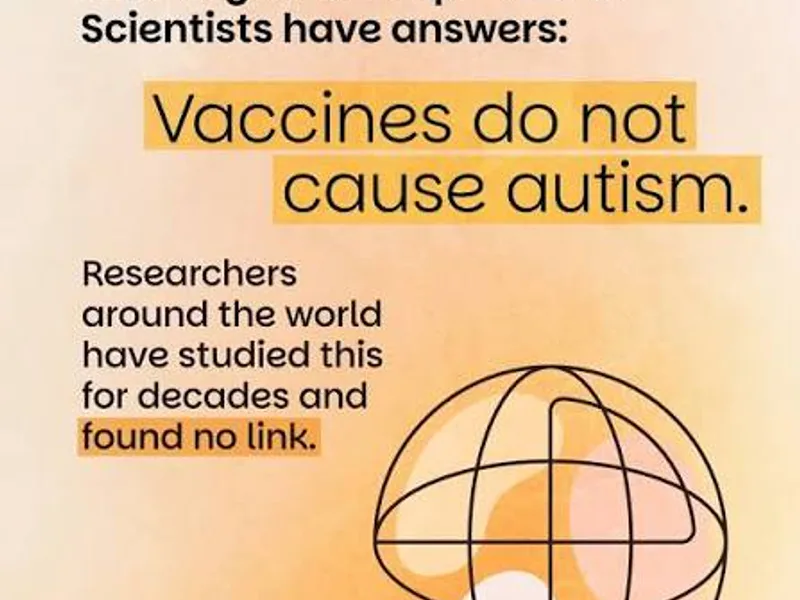
None of the policy activity described above reflects a change in the underlying science. Multiple large studies have found no link between vaccines and autism, including research conducted after thimerosal, a preservative once used in some childhood vaccines, was removed from the childhood schedule in 2001. If thimerosal exposure were driving autism rates, removing it should have coincided with a drop in autism diagnoses; instead, rates continued climbing afterward, which is one of the stronger pieces of evidence against the thimerosal hypothesis specifically.
Genetic and prenatal developmental factors remain the primary focus of legitimate autism research, a body of work now complicated by some of the newly appointed federal advisory members' focus on vaccine-related theories that mainstream researchers consider unsupported by current evidence.
Frequently Asked Questions
Has new scientific evidence emerged linking vaccines to autism? No. The policy changes since 2025 reflect shifts in federal health leadership and advisory processes, not new research findings. The scientific consensus against a vaccine-autism link, built over more than two decades of large-scale studies, has not changed.
Why were all of ACIP's members replaced in 2025? HHS Secretary Robert F. Kennedy Jr. removed all 17 sitting members in June 2025, stating the move was meant to restore public trust in vaccine science. Independent reviews of the reconstituted committee's subsequent meetings have raised concerns about reduced transparency and clinical expertise.
Are states following the CDC's current vaccine guidance? Not uniformly. Several states have passed laws letting health commissioners set vaccine policy independent of federal ACIP recommendations, often aligning instead with groups like the American Academy of Pediatrics.
Does the public still trust vaccines even if they don't trust the CDC? Largely, yes. While only about half of adults say they trust the CDC for health recommendations, more than three-quarters still support existing school vaccination requirements, according to 2026 polling.
What is the Independent Autism Coordinating Committee? It's a group formed in March 2026 by former federal autism research officials and scientists, created specifically to keep autism research grounded in established science after changes to the official federal committee.