The Childhood Immunization Controversy of 2026, Explained
Ask two different sources for a child's vaccine schedule this year and you might get two different answers. That's not a glitch. It's the actual state of things in 2026.
What Changed, Specifically
The CDC's revised schedule, unveiled in January, cut six vaccines that had previously been routinely recommended, including flu, COVID-19, and rotavirus, and it also narrowed the RSV recommendation and suggested one HPV dose instead of two. That's a real, substantive change, not a rewording exercise.
Two specific pieces of it drew the sharpest reaction. Federal officials formally ended the longstanding policy that every newborn receive a hepatitis B vaccine dose at birth, and a separate ACIP vote recommended against combining measles, mumps, rubella, and chickenpox into a single MMRV shot, splitting it back into two separate injections.
The Hepatitis B Fight, Up Close
The hepatitis B change is worth sitting with, because it shows how a technical-sounding vote can carry real weight. Previously, infants born to mothers who tested negative for hepatitis B still received their first dose within 24 hours of birth, with two more doses to follow by 18 months. The new guidance instead lets parents decide when, or if, to start that series, and suggests waiting until at least two months of age if the birth dose is skipped.
The AAP's reaction wasn't measured. Dr. Susan Kressly of the AAP called the change "heartbreaking," saying pediatricians were already seeing more parents decline the birth dose after the vote, and the organization separately described the new guidance as "irresponsible" and "purposely misleading," noting the birth-dose policy had been in place since 1991 and had driven a roughly 99% drop in pediatric hepatitis B infections. If you want the underlying disease context rather than the policy fight, Doctar has a plain explainer on how hepatitis B actually spreads and how vaccination prevents it, plus a separate piece connecting chronic hepatitis infection to long-term liver disease risk,
Why the AAP Walked Away From the Table
This didn't stay contained to one vote. The AAP has been suing to have the reconstituted vaccine advisory committee's decisions reversed, and in June, the organization boycotted the committee's meeting entirely, with its infectious disease chair calling the restructured panel "illegitimate" and rejecting the claim that current vaccine policy needed fixing.
In clinical practice, this kind of open institutional break is genuinely rare, and it tells you something about how seriously pediatricians are taking this, beyond the headlines. The AAP's own 2026 schedule kept all 18 previously recommended diseases in place, and twelve major medical organizations, including the American Medical Association, have formally endorsed that broader AAP schedule instead of the federal one.
Why It Matters Right Now, Not Hypothetically
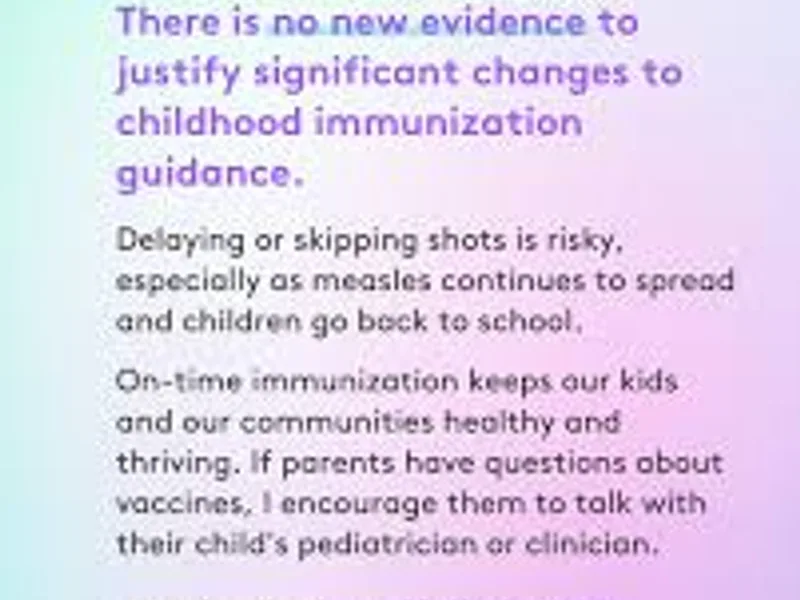
This isn't an abstract policy dispute. The U.S. has confirmed over 2,300 measles cases in 2026, the highest single-year total in 35 years, with children making up a large share of infections and roughly a tenth of children under five who caught measles requiring hospitalization. National MMR coverage among kindergartners has slipped from about 95% before the pandemic to roughly 92.5% now, below the 95% threshold generally needed to keep the disease from spreading community-wide.
Experts studying the outbreak point to more than one cause, and it's worth naming that plainly rather than picking a single villain. Public health specialists have said the conflicting guidance itself, separate from any single vote, is likely contributing to rising vaccine declination among confused parents.
The Court Case Still Deciding Which Schedule Is "Official"
A federal judge stayed the CDC's narrowed schedule back in March, and the government has appealed that ruling, which means the AAP's broader schedule is functionally the one most pediatricians are working from right now, even while the legal fight continues. That's confusing to explain to a worried parent in an exam room, and I don't think there's a way around that honestly.
What to Actually Do With All This
Bring your child's specific circumstances to their pediatrician rather than trying to resolve a federal dispute yourself. If you're deciding on the hepatitis B birth dose, ask directly what your baby's individual risk factors are, since that's the piece shared decision-making is supposed to weigh. Doctar's overview of how vaccines work and support community-level protection is useful background before that conversation, alongside their pieces on rotavirus vaccine side effects and the BCG tuberculosis vaccine, since both come up in the same newborn visits.
If COVID vaccination for your child specifically is the open question, Doctar has compared Pfizer and AstraZeneca's vaccines and addressed heart-related side effect concerns that come up often in these conversations. For unrelated newborn concerns during the same stretch, their guides on necrotizing enterocolitis, neonatal galactorrhea, and choosing infant formula get asked about at the same appointments fairly often, and their Sms Drops page covers general post-vaccination fussiness guidance, though any medication call should go through your pediatrician. You can find a pediatrician near you in Mumbai through Doctar if you need to book a visit before school starts.
Parents managing a family history of heart or vascular issues alongside vaccine timing might also find Doctar's pieces on common heart symptoms, coronary artery disease basics, how stress tests work, atherosclerosis versus arteriosclerosis, stroke risk, and small vessel brain conditions useful for general context, alongside finding a cardiologist, a general physician, or a dietitian through Doctar if a referral comes up.
And if the constant back-and-forth genuinely has you on edge, that's not an overreaction. Doctar's guides on managing everyday stress and anxiety and recognizing your body's stress signals are worth a look, not as a substitute for the real decision, but because decision fatigue around your kid's health is exhausting and real